Why Community Structure Matters for Mental Health
When we talk about community and mental health, conversation often centres on individual coping strategies — journaling, exercise, therapy. But the groups we belong to shape our wellbeing at a collective level too. Research in social psychology and public health consistently links strong community ties to lower rates of depression, greater life satisfaction, and improved resilience during difficult periods.
What makes this topic richer than it first appears is that "community" isn't one thing. A grieving parents' support group and a Saturday morning running club both count — yet they serve quite different psychological needs. Understanding the distinct forms community takes helps you identify which types might be missing from your own life, and why that gap might matter. For a deeper look at the psychology behind this, see what belonging actually means for mental health.
These Categories Overlap in Practice
A faith community might also run a mutual aid network. A hobby club might evolve into a genuine peer support circle. A neighbourhood group might take on civic advocacy. The seven forms described here are meant to highlight distinct psychological mechanisms, not to suggest that real communities fit neatly into one box. Pay attention to what a group actually provides — not just what it calls itself.
The list below explores seven distinct community structures. These categories overlap in practice — a faith community might also run a mutual aid network, and a hobby club might become a genuine support circle. The goal is to highlight what each structure uniquely offers, not to draw rigid boundaries.
Seven Community Forms That Support Collective Wellbeing
Faith and Spiritual Congregations
Religious and spiritual communities are among the oldest and most studied forms of collective support. Beyond shared belief, congregations offer regular structured gathering, rituals that mark life transitions, and a built-in network for practical help during illness, loss, or hardship. Research published in public health literature suggests that frequent religious participation is associated with lower rates of depression and greater social support — though researchers note these benefits are linked more to the community component than to doctrine specifically. People who don't hold formal religious beliefs can find analogous structures in secular congregations, humanist groups, or meditation communities that emphasise shared values and consistent gathering.
The community component of faith groups — not doctrine alone — appears to drive much of their mental health benefit.
Mutual Aid Networks
Mutual aid operates on a straightforward principle: community members share resources, skills, and care without transactional exchange. This might look like a neighbourhood food pantry, a tool-lending library, childcare swaps, or organised transport for elderly residents. What distinguishes mutual aid from charity is its reciprocity — participants are simultaneously givers and receivers, which research in social welfare suggests reduces stigma and fosters genuine interdependence. The mental health benefits extend beyond material relief. Knowing that your neighbours will show up — and that you can show up for them — creates a form of security that individual resources rarely provide. Building a personal support network often begins with identifying exactly these kinds of reciprocal relationships.
Mutual aid reduces stigma because everyone is both a giver and a receiver — interdependence is the point.
Peer Support and Recovery Groups
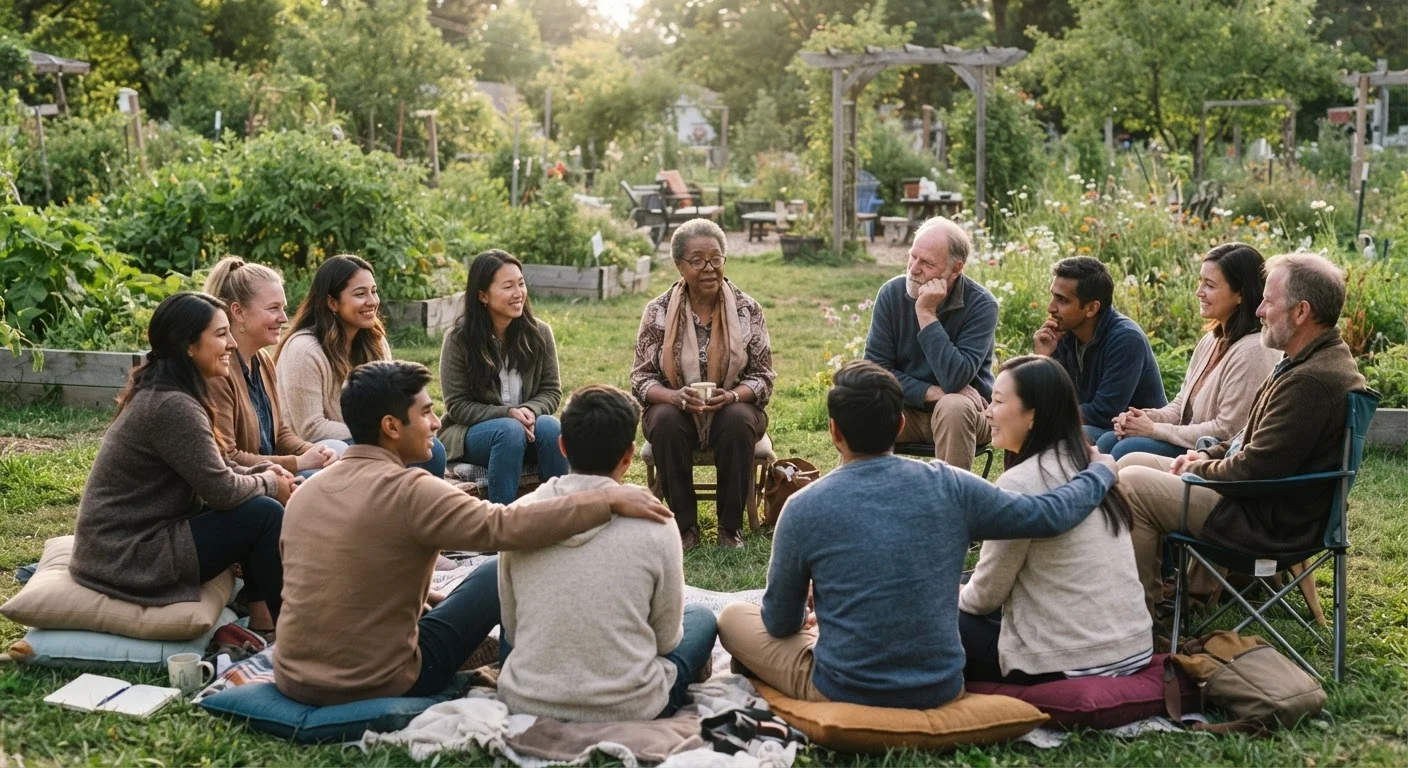
Structured peer support groups — including twelve-step programmes, grief circles, chronic illness communities, and mental health peer groups — offer something distinct from professional therapy: the lived experience of people who have faced similar challenges. The therapeutic mechanism here is often described as "universality" — the relief of realising you are not uniquely broken or alone. Peer support groups also provide what researchers call "helper therapy": the act of supporting others improves the supporter's own sense of purpose and self-efficacy. For a fuller picture of how these groups function, peer support groups and their role in emotional wellbeing provides helpful context on structure and what to expect.
Supporting others in peer groups strengthens your own sense of purpose — a phenomenon researchers call the helper therapy effect.
Hobby and Interest Clubs
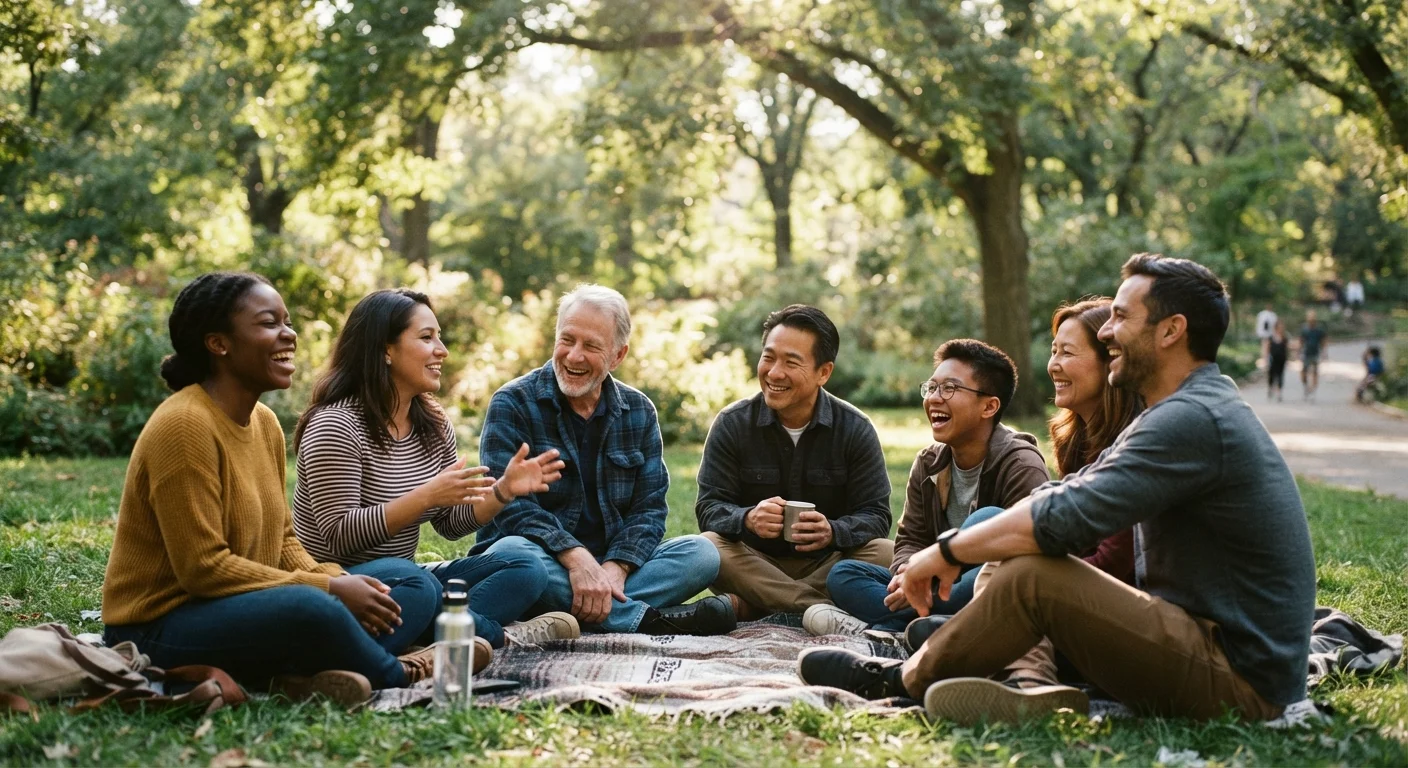
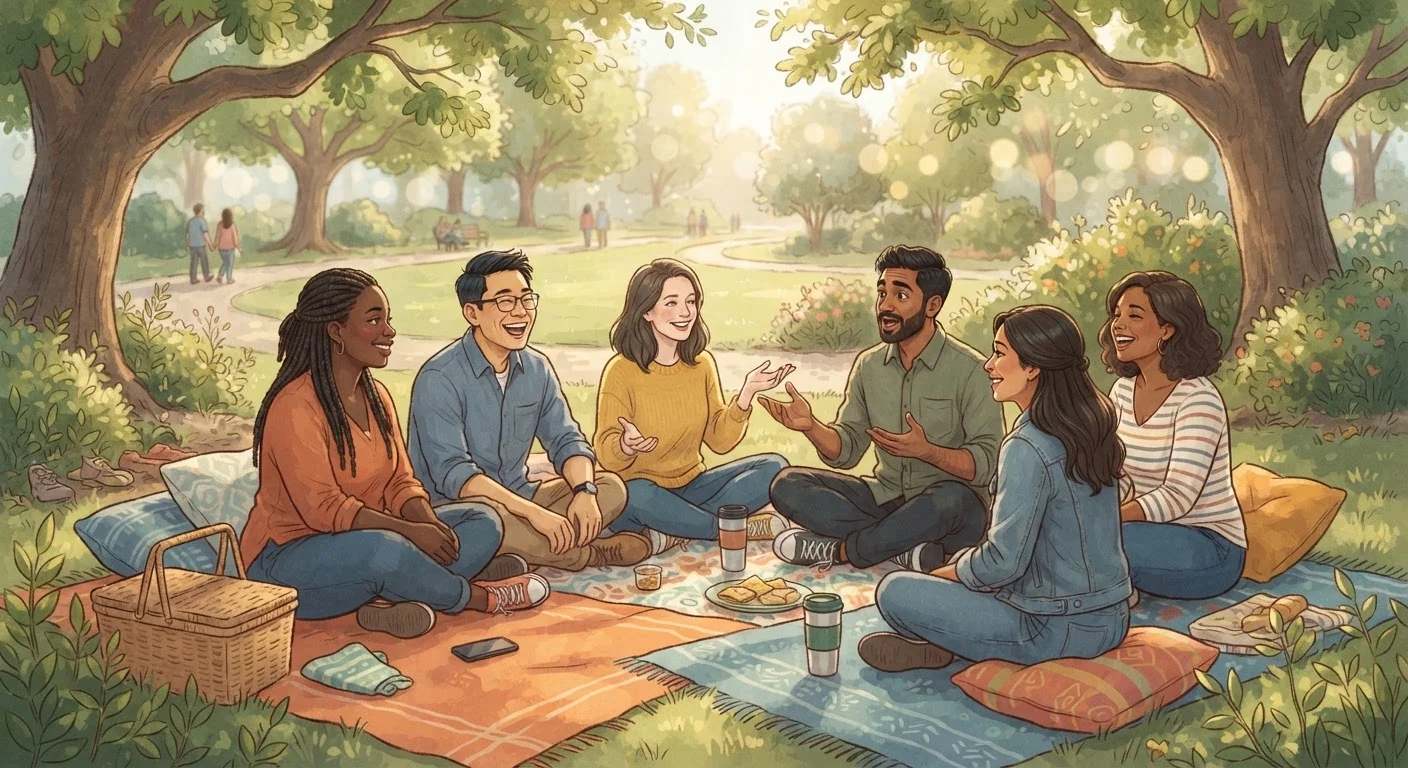
Book clubs, hiking groups, community orchestras, ceramics classes, chess leagues — communities built around shared interests lower the social barrier to entry considerably. You don't have to disclose personal struggles or navigate heavy emotional territory; shared activity provides a ready-made conversational anchor. Over time, these lighter touchpoints build genuine trust and familiarity. Psychologists refer to this as "weak ties" becoming meaningful: acquaintances who share a context with you provide cognitive variety, broaden your sense of identity, and buffer against the tunnel vision that often accompanies stress or depression. Hobby communities are also remarkably accessible entry points for people who don't know where to start with community.
Shared interests lower the barrier to connection — acquaintances formed around hobbies often become meaningful supports over time.
Civic and Advocacy Groups
Neighbourhood associations, tenant unions, environmental groups, and local political organisations connect people through shared concern for their wider world. The mental health benefit here is partly about agency — acting collectively on problems that feel overwhelming individually reduces helplessness. Involvement in civic life also creates cross-demographic relationships that are rarer in interest-based clubs, broadening social understanding and reducing the isolation of living in a narrow social world. For communities to deliver these benefits reliably, they need to remain genuinely inclusive. Principles of inclusive community building are especially important in civic spaces, which can inadvertently replicate existing social hierarchies.
Acting collectively on shared concerns counters helplessness — one of the quieter but significant mental health benefits of civic participation.
Neighbourhood and Place-Based Communities
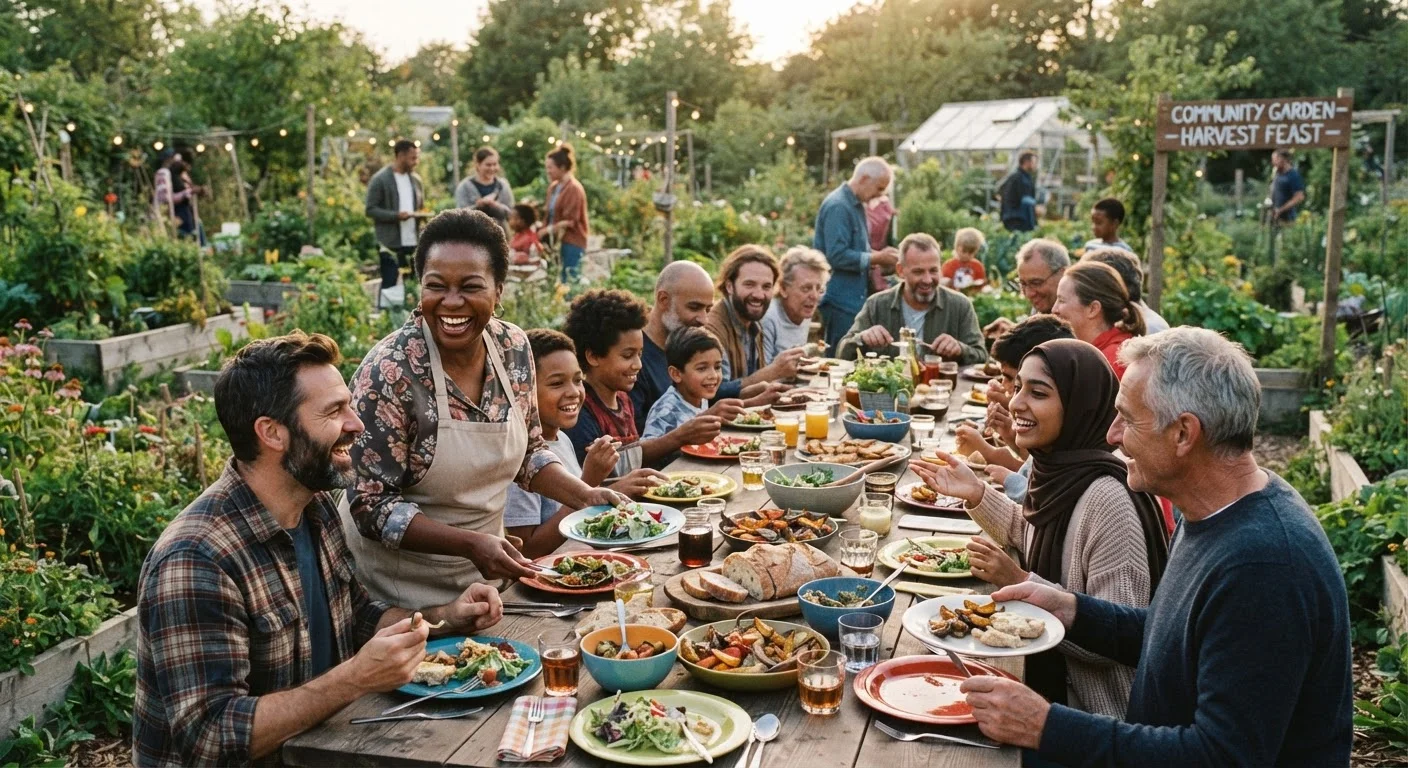
Simply living near one another can form the basis of meaningful community, though it rarely happens automatically. Block associations, community gardens, shared common areas, and casual "third places" like local cafes or parks create the conditions for repeated, low-stakes contact that sociologists consider essential to community formation. Research in urban health suggests that neighbourhood social cohesion — residents knowing and trusting one another — is independently associated with better mental health outcomes, even after accounting for income and access to services. These connections are also among the most resilient: when crises hit, neighbours are often the first to respond. How collective participation builds emotional resilience explores this dynamic in depth.
Neighbourhood social cohesion is independently linked to better mental health — even when controlling for income and access to services.
Identity-Based and Cultural Communities
Communities organised around shared identity — cultural heritage, language, ethnicity, disability, sexual orientation, or gender identity — offer something that general-population groups often cannot: the experience of being fully understood without having to explain yourself. For people who regularly navigate environments where their identity is marginalised or misunderstood, these communities provide what researchers describe as "identity affirmation," which is associated with higher self-esteem and lower psychological distress. Cultural communities also transmit protective practices — storytelling, ritual, intergenerational knowledge — that support resilience across generations. It is worth noting that like any community, identity-based groups benefit from internal norms of openness and care; signs of a genuinely supportive community apply here just as much as anywhere else.
Identity affirmation — the experience of being fully understood — is associated with higher self-esteem and lower psychological distress.
You Don't Have to Choose Just One
Many people find their wellbeing is best supported by belonging to two or three different community types simultaneously — perhaps a peer support group for emotional depth, a hobby club for lighter connection, and a neighbourhood network for practical grounding. Rather than searching for one perfect community, consider what combination might meet different needs in your life. Formal and informal communities serve distinct purposes — and both have real value.
This article is for general informational purposes only and is not a substitute for professional mental health support. If you are experiencing significant distress, please reach out to a qualified healthcare provider.
Finding the Right Fit for You
No single community form is universally best. What matters is whether the group fosters genuine belonging — a sense that you are known, valued, and not alone. If you're unsure where to begin, a practical step-by-step approach to finding community can help you identify options even when starting from scratch.
It's also worth recognising that some groups, despite good intentions, don't always support wellbeing. Reviewing signs that a community is genuinely supporting your mental health can help you assess what's working. And if you're curious how online participation compares to in-person groups, a balanced look at digital versus face-to-face communities offers a clear-eyed comparison of both formats.
The communities that tend to sustain collective wellbeing share a few qualities: they welcome people as they are, they create space for honesty, and they show up consistently — not just in good times. For more on how those qualities are built, building inclusive communities that support everyone explores the principles that make groups genuinely safe for all members.