How Families Assign Roles Without Realizing It
Families are not just collections of individuals — they function as interconnected systems. Each member plays a part in maintaining the group's emotional equilibrium, often without anyone consciously deciding who does what. To understand this process in depth, see our overview of family systems theory.
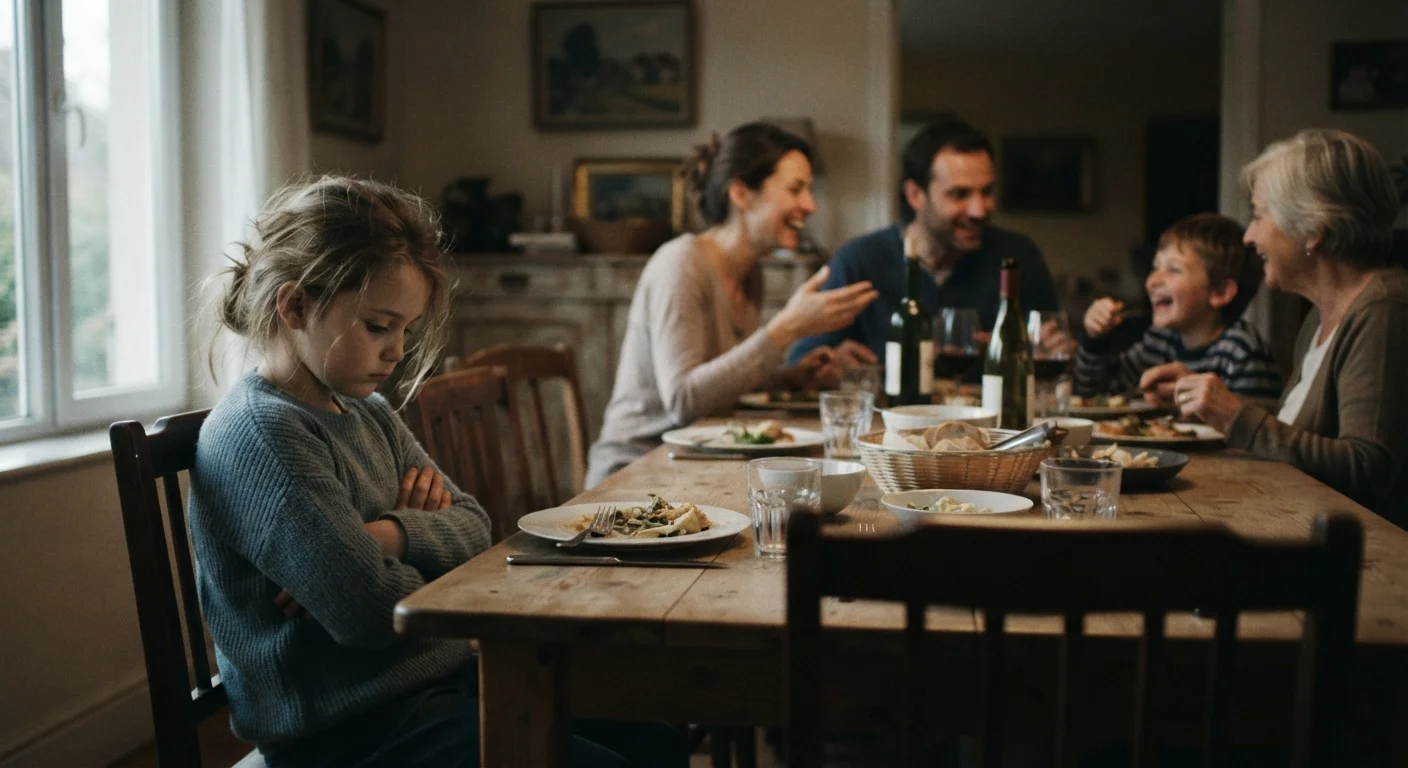
Role assignment typically begins early. A firstborn may step into a leadership or caretaking position simply because they were the only child for a period, and parents naturally leaned on them for help or modeled adult behavior more directly. When a second child arrives, the family system shifts — and the new sibling must find their own niche. That niche is partly shaped by what roles are already occupied.
Common informal sibling roles include:
- The responsible one — often the eldest, expected to set an example and manage younger siblings
- The rebel or black sheep — may act out in ways that draw family tension away from deeper issues
- The peacemaker — skilled at mediating conflict, often at the cost of their own needs
- The invisible child — quiet, self-sufficient, frequently overlooked in the family narrative
- The mascot — uses humor or charm to lighten family tension
These roles aren't inherently harmful, but problems arise when they become rigid — when a child feels they have no identity outside their assigned function.
Roles Exist on a Spectrum
Not every family assigns rigid roles, and not every child experiences their role as harmful. Some people look back on their sibling role with warmth and feel it contributed positively to their identity. The concern arises when a role becomes inflexible, all-consuming, or tied to conditional love and acceptance.
Birth Order as One Piece of a Larger Puzzle
Popular culture often treats birth order as destiny. Firstborns are leaders, middles are diplomats, youngest children are free spirits. Research on birth order does identify some tendencies — for example, firstborns statistically receive more one-on-one parental time before siblings arrive — but the effects are modest and highly context-dependent.
What shapes sibling roles more powerfully than birth order is the family's emotional climate: how conflict is handled, whether one parent struggles with mental health or addiction, whether the household feels safe or unpredictable. A middle child in a calm household may carry none of the classic "middle child" traits, while a firstborn in a household marked by parental stress may develop caretaking behaviors that look more like parentification than leadership. For more on that particular dynamic, our article on parentification and its long-term effects explores the emotional costs in detail.
~45%
Adults who identify with a clear childhood family role
Research in family psychology consistently finds that a large proportion of adults can identify a distinct role they played within their family of origin, often shaping later interpersonal patterns.
1st born
Most likely to take on caretaking responsibilities
Studies on sibling dynamics suggest firstborns are disproportionately assigned caregiving tasks, though this pattern varies significantly by family culture and structure.
Gender, temperament, and spacing between siblings also interact with birth order. A shy firstborn may not assume the expected leadership role if a bold second child naturally takes charge. Families adapt continuously, and so do the roles within them.
When Roles Become Burdens
A sibling role becomes a problem when it functions as a cage rather than a feature of personality. Children who are consistently praised only for being responsible, helpful, or funny may grow into adults who feel invisible when they're not performing that function. Their sense of worth becomes conditional — tied to behavior that serves others rather than to who they actually are.
In some families, one child is consistently blamed for the family's difficulties — a dynamic known as scapegoating. This role is particularly harmful because the child internalizes a negative identity that can persist for decades. Our article on scapegoating in family systems explores why this happens and what it means for long-term wellbeing.
“The family is the patient. When we treat individuals without understanding the system they come from, we often miss the most important context for their pain.”
— Murray Bowen, Psychiatrist and founder of Bowen Family Systems Theory
Rigid roles also tend to create unhealthy patterns that follow people into adult life — in their careers, friendships, and intimate relationships. Recognizing these patterns is the subject of our guide to identifying inherited family patterns.
Stepping Out of the Role You Were Given
Recognizing that your personality was partly shaped by a family role — rather than being your whole, unchangeable self — can be both disorienting and liberating. It doesn't mean your family was dysfunctional or your childhood was invalid. Most families assign roles with no harmful intent; it's simply how systems naturally organize themselves.
What matters is what you do with that awareness. Some approaches that can help include:
- Naming the role: Simply identifying "I was the responsible one" creates useful distance from the pattern.
- Noticing automatic behaviors: Do you over-apologize, take charge before anyone asks, or shrink from conflict? These may be role-based reflexes rather than core preferences.
- Practicing new responses: Letting someone else lead, expressing a need, or staying out of a family argument are small acts that can shift deeply held patterns.
- Working with a therapist: A professional trained in family systems or attachment approaches can help you untangle what belongs to the role versus what belongs to you.
It's worth noting that when one family member begins to change, the system often pushes back. Our article on why families resist change offers grounded strategies for navigating that resistance.
Start With Curiosity, Not Judgment
If you're exploring how family roles shaped you, approach the process with curiosity rather than blame — toward yourself or your family. Most roles develop because they served a function, not because anyone intended harm. Gentle self-inquiry tends to be far more productive than self-criticism.
This article is for general informational purposes only and does not constitute professional mental health advice. If you're concerned about how family dynamics have affected your wellbeing, please speak with a qualified mental health professional.