
What Parentification Actually Looks Like
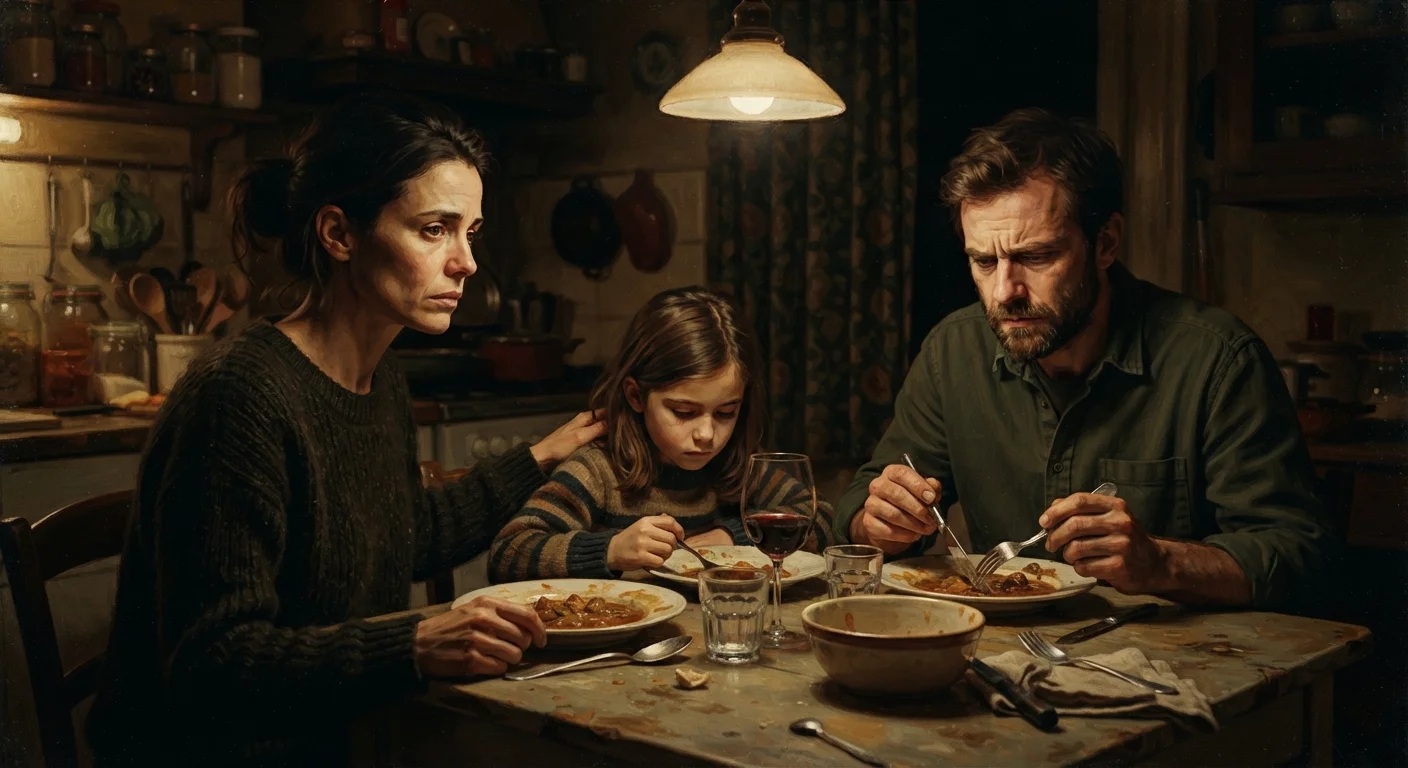
Parentification rarely announces itself. For many children, it simply feels like normal life — translating for a parent at medical appointments, staying home from school events to comfort a distressed mother, or becoming the emotional anchor for younger siblings after a family breakdown.
There are two primary forms. Instrumental parentification involves taking on practical adult tasks: cooking meals, managing bills, coordinating medical care, or acting as a parent figure to younger children. Emotional parentification is subtler and often more damaging — a child becomes a parent's confidant, therapist, and emotional regulator. They learn to scan for a parent's mood before anything else, suppressing their own needs to keep the household stable.
Both forms share a common thread: the child's developmental needs — for play, exploration, peer connection, and simple dependence — are consistently displaced by the needs of adults around them. This is what distinguishes parentification from ordinary family responsibility. It is not about how much a child contributes; it is about whether the child is allowed to still be a child.
Parentification Is Not Always Obvious to the Child
Children who are parentified often do not recognize it as unusual — it is simply the family environment they know. Many only connect the pattern to their childhood in adulthood, sometimes triggered by therapy, parenting their own children, or reading about family dynamics. This delayed recognition is entirely normal and does not diminish the validity of the experience.
Why It Happens: Family Contexts That Create Role Reversal
Parentification rarely emerges from cruelty. More often, it develops in families under significant strain — where a parent's capacity to fulfill their role is genuinely compromised. Common contexts include:
- Parental mental illness or addiction: A child may learn to manage a parent's emotional crises or cover for their behavior.
- Chronic illness or disability: Practical caregiving responsibilities shift to the child, sometimes out of necessity.
- Single-parent households under stress: A child becomes a confidant and co-manager of the family's emotional life.
- Divorce or family instability: Children are drawn into adult conflict as messengers, mediators, or emotional supporters.
- Intergenerational transmission: Parents who were themselves parentified may recreate the same dynamic without recognizing it.
Understanding context matters — not to excuse harm, but because it helps adults who experienced parentification make sense of what happened without either minimizing it or viewing their family through a purely adversarial lens. This is also closely related to enmeshment in family systems, where emotional boundaries between generations become blurred in ways that constrain everyone involved.
The Long-Term Emotional Cost
Children are remarkably adaptive. A parentified child often appears mature, capable, and composed — and may even receive praise for those qualities. But adaptation has a cost.
Up to 25%
Children estimated to experience parentification
Research in family systems therapy suggests parentification is more common than widely recognized, affecting a significant minority of children across diverse family backgrounds.
3x
Greater risk of anxiety and depression
Studies in clinical psychology have found that emotional parentification in particular is associated with significantly elevated rates of internalizing disorders in adulthood.
Adults who carried parental roles in childhood frequently describe a persistent internal pressure to be useful, responsible, and self-sufficient. Asking for help can feel shameful. Resting can feel irresponsible. Relationships may be unconsciously organized around caretaking — gravitating toward people who need rescuing, or feeling uncomfortable being cared for in return.
Emotionally parentified adults often report a disconnection from their own needs and desires — not a dramatic absence, but a quieter one, as though their inner life was never fully given space to develop. Boundaries, too, can be a significant struggle: when saying no was never safe as a child, it rarely feels safe as an adult either.
These patterns are not permanent. They are learned responses to early circumstances, and with awareness and support, they can shift. Recognizing parentification as part of a broader set of unhealthy family patterns that follow people into adulthood is often the first meaningful step.
“The parentified child learns early that love is conditional on performance — on being needed. Unlearning that equation is often the deepest work of adult recovery.”
— Gregory Jurkovic, Clinical psychologist and author of research on parentification in family systems
Finding Your Way Forward
If any of this resonates, it is worth knowing that recognition itself is meaningful. Many adults spend years feeling vaguely responsible for everyone around them, or quietly exhausted by relationships that feel one-directional, without ever having a framework for why.
Naming what happened — parentification — does not require assigning blame or rewriting your childhood in entirely negative terms. Many people hold both genuine love for their family and valid grief for the childhood experiences they missed. Both can be true.
Start With Curiosity, Not Judgment
If you suspect you were parentified, approaching your history with curiosity rather than self-blame or blame of your parents can make the exploration more productive. Journaling about which of your current habits feel like obligation versus genuine choice can be a simple, low-stakes starting point. A therapist familiar with family systems dynamics can help you go deeper at your own pace.
Therapy that is attuned to early family dynamics — particularly trauma-informed, attachment-based, or Internal Family Systems (IFS) approaches — can offer a space to explore these patterns without judgment. In parallel, learning about sibling roles in family systems can also illuminate how roles like "the responsible one" become fixed and self-reinforcing across an entire childhood.
Healing is not about erasing the past. It is about making room for a present where your needs matter too — and where care no longer has to be earned through relentless self-sacrifice.
This article is for general informational and educational purposes only. It is not a substitute for professional mental health advice, diagnosis, or treatment. If you are concerned about your wellbeing or that of someone you care about, please speak with a qualified mental health professional.