
Why Omega-3s Matter for Brain Health
Omega-3 fatty acids are structural and functional components of the brain. DHA (docosahexaenoic acid) makes up a significant portion of the brain's gray matter, while EPA (eicosapentaenoic acid) plays a role in reducing neuroinflammation and supporting mood regulation. Research has linked adequate omega-3 status to cognitive function and emotional wellbeing, though findings vary across study populations and designs.
For a deeper look at how these fats interact with brain structure and mood, see our evidence-based overview of omega-3s and the brain. The key issue for plant-based eaters is that most dietary omega-3 research focuses on DHA and EPA - the forms found almost exclusively in marine sources.
The Three Forms of Omega-3: ALA, EPA, and DHA
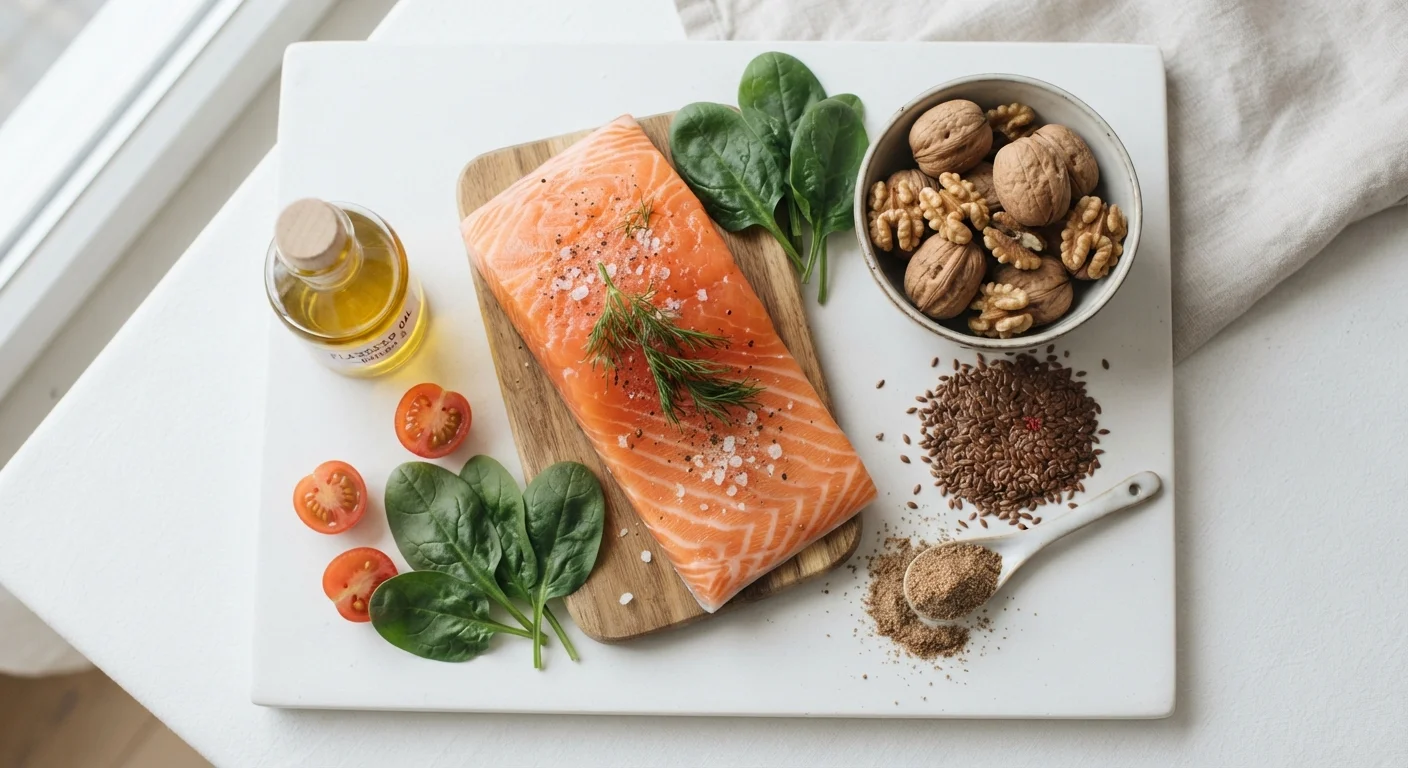
Plant foods deliver omega-3s primarily as ALA (alpha-linolenic acid), a short-chain fatty acid found in flaxseeds, chia seeds, walnuts, hemp seeds, and some leafy greens. ALA is an essential nutrient - the body cannot synthesise it - but it is not the form the brain preferentially uses.
The brain relies on DHA and EPA, long-chain omega-3s that must either come directly from the diet or be converted from ALA. Humans can perform this conversion, but the process is slow and limited. Research estimates that conversion of ALA to EPA is around 5-10%, while conversion to DHA is generally below 5% and can be considerably lower in some individuals.
| ALA (Plant Foods) | Algae-Derived DHA/EPA | Fish/Fish Oil | |
|---|---|---|---|
| Primary sources | Flaxseed, chia, walnuts, hemp | Microalgae supplements | Fatty fish, fish oil capsules |
| Form provided | Short-chain ALA | Long-chain DHA and EPA | Long-chain DHA and EPA |
| Conversion to DHA needed | Yes - inefficient (<5%) | No - direct delivery | No - direct delivery |
| Suitable for vegans | Yes | Yes | No |
| Evidence for brain DHA levels | Indirect; limited by conversion | Comparable to fish oil in studies | Strong; well-established |
| Practical accessibility | Widely available in whole foods | Available as supplements | Widely available |
Understanding the distinction between EPA and DHA is also valuable - our article on DHA vs EPA for mental wellbeing explores how each contributes differently to brain and mood health.
Factors That Influence ALA Conversion
ALA conversion efficiency is not fixed. Several dietary and biological factors affect how much EPA and DHA the body ultimately produces from plant-derived ALA:
- Omega-6 competition: ALA and linoleic acid (the dominant omega-6 in vegetable oils) compete for the same conversion enzymes. Diets high in omega-6 fats - common in Western eating patterns - can suppress ALA conversion. Reducing intake of refined vegetable oils high in linoleic acid may help improve the ratio.
- Sex: Some research suggests pre-menopausal women convert ALA to DHA at higher rates than men, potentially related to estrogen activity, though evidence is still developing.
- Overall diet quality: Adequate zinc, iron, and B vitamins support the enzymatic pathways involved in conversion. Nutritional deficiencies in these areas, which can be more prevalent in poorly planned plant-based diets, may further limit DHA synthesis.
Practical Steps for Plant-Based Omega-3 Support
Including a variety of ALA-rich whole foods daily - such as ground flaxseed, chia seeds, and walnuts - provides a consistent supply of the essential precursor. To support better conversion, consider reducing high-omega-6 refined oils like corn or sunflower oil and replacing them with olive oil where possible. If you are uncertain whether your omega-3 intake supports your individual health needs, a registered dietitian can help you assess your dietary pattern and discuss whether an algae-derived supplement may be appropriate for you.
Even with optimised dietary conditions, conversion rates are unlikely to produce DHA levels equivalent to direct consumption from marine or algae sources.
Algae-Derived Omega-3s: A Direct Plant-Based Option
Marine fish are rich in DHA and EPA not because fish synthesise these fats independently, but because they consume microalgae, the original producers. Algae-derived omega-3 supplements bypass fish entirely and provide DHA and EPA directly from their primary source, making them a genuinely plant-based option.
<5%
ALA to DHA conversion rate
Research consistently estimates that conversion of dietary ALA to DHA in humans is generally below 5%, and often considerably lower.
~60%
Brain dry weight that is fat
Approximately 60% of the brain's dry weight is fat, with DHA being one of the most abundant fatty acids in neural membranes.
Clinical studies examining algae-derived DHA supplementation in vegetarians have found that it can raise blood DHA levels comparably to fish oil supplementation, though individual responses vary. This positions algae oil as the most evidence-supported direct omega-3 option for those avoiding animal products.
For broader context on evaluating omega-3 supplements, see our balanced guide to omega-3 supplements - it outlines what the evidence does and does not support, and what to discuss with a healthcare professional before starting.
This article provides general health information only and is not a substitute for personalised medical or nutritional advice. Consult a qualified healthcare professional before making changes to your diet or supplement routine.