
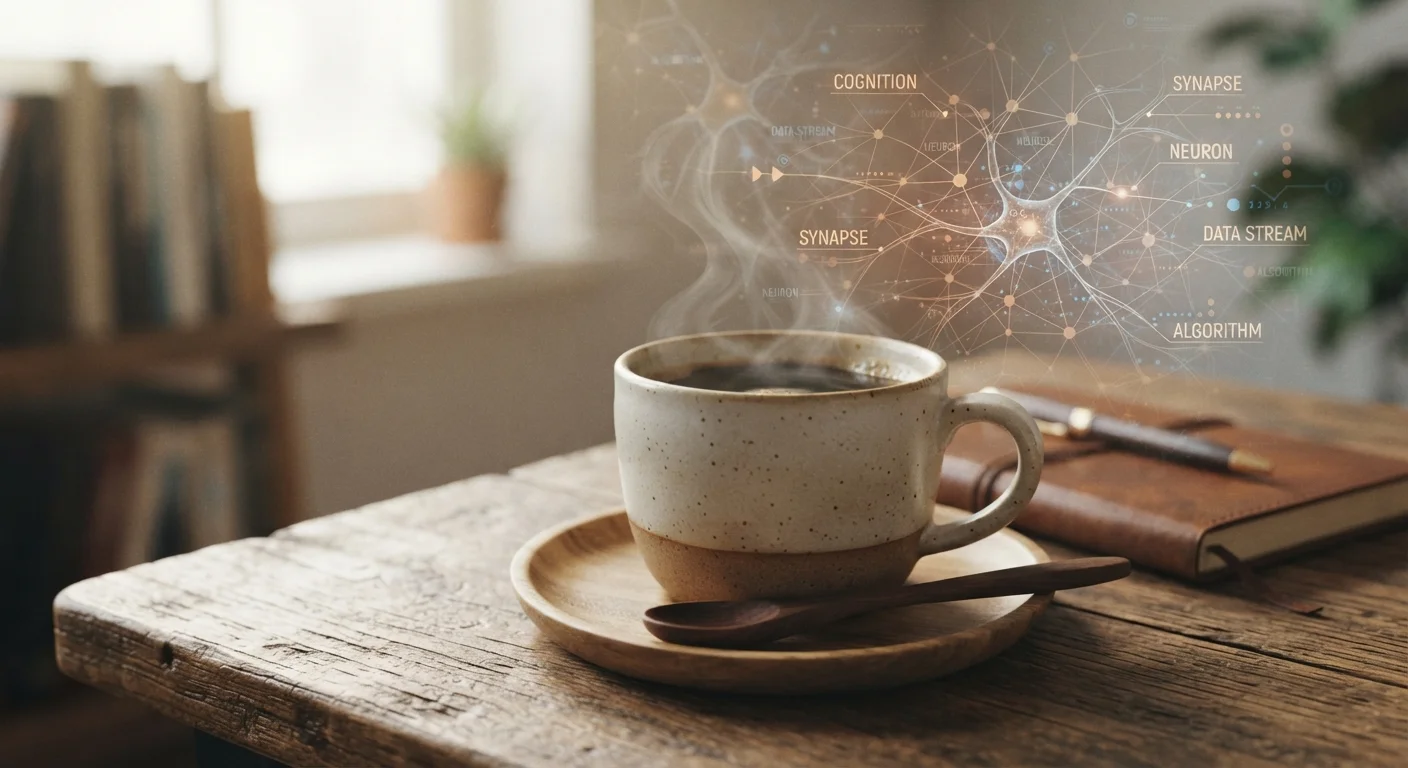
How Caffeine Works in the Brain
To understand caffeine's link to anxiety, you first need to understand adenosine - a chemical that accumulates in the brain throughout the day and progressively signals fatigue. Caffeine's primary mechanism is straightforward: it occupies adenosine receptors without activating them, effectively acting as a blocker. By preventing adenosine from binding, caffeine delays the sensation of tiredness and sustains alertness.
This receptor blockade has a downstream effect. When adenosine is suppressed, inhibitory brakes on other neurotransmitter systems are lifted. Dopamine and norepinephrine - chemicals associated with motivation, attention, and the fight-or-flight response - become more active. This is what delivers the familiar cognitive lift, but it is also what sets the stage for anxiety in vulnerable individuals.
Understanding how anxiety manifests in the brain helps put this into context: anxiety involves an overactive threat-detection system, and elevating norepinephrine can push that system closer to its tipping point.
~5 hrs
Average half-life of caffeine in adults
Caffeine's half-life means half the dose from an afternoon cup remains active in the body at bedtime for many people.
400 mg
Common daily upper reference for healthy adults
Major health organizations often cite 400 mg per day as a general reference point, though sensitive individuals may experience effects at lower amounts.
~11%
Estimated prevalence of caffeine-induced anxiety
Research cited in psychiatric literature suggests a meaningful subset of regular caffeine users experience notable anxiety symptoms linked to their intake.
Caffeine, Cortisol, and the Stress Hormone Connection
Caffeine doesn't just act on neurotransmitters - it also stimulates the release of cortisol, the body's primary stress hormone, via the hypothalamic-pituitary-adrenal (HPA) axis. Research has shown that caffeine can raise cortisol levels, particularly when consumed in the morning or during periods of psychological stress.
For people already managing elevated stress or anxiety, this cortisol spike can feel indistinguishable from the body's natural anxiety response - accelerated heartbeat, heightened alertness, a sense of unease. The body essentially receives a stress signal from an external chemical source.
This cortisol connection is explored in greater depth in our dedicated article on caffeine and cortisol. It's also worth noting that blood sugar fluctuations from sugar intake can produce similar stress-like arousal, a factor worth considering for people assessing their overall diet and anxiety.
Timing Your Caffeine Intake Strategically
If you're prone to anxiety, consider limiting caffeine to the first half of your day and avoiding it during periods of high stress. Spacing out smaller doses - rather than consuming a large amount at once - can help smooth the neurochemical response and reduce peak cortisol spikes. Always discuss significant dietary changes with your healthcare provider.
Why the Same Dose Affects People Differently
Two people can drink identical cups of coffee and have entirely different experiences - one feels sharp and focused; the other feels jittery and on edge. This variability is real and well-documented. Several factors explain it:
- Genetics: Variations in the CYP1A2 gene affect how quickly the liver metabolises caffeine. Slow metabolisers accumulate caffeine in their system longer, amplifying its effects.
- Baseline anxiety: People with existing anxiety disorders or high trait anxiety show greater sensitivity to caffeine's arousal-inducing properties.
- Tolerance: Regular caffeine consumers develop partial tolerance to some effects, including the anxiety response, though tolerance is not complete.
- Medication interactions: Certain medications alter caffeine metabolism, which can intensify or reduce its effects.
For a thorough look at individual sensitivity, see why caffeine affects some people more than others.
The Sleep-Anxiety Loop Caffeine Can Trigger
Caffeine's half-life in the body is approximately five hours, meaning a mid-afternoon cup can still be partially active at bedtime. Poor sleep is itself one of the strongest drivers of next-day anxiety, creating a reinforcing cycle: caffeine disrupts sleep architecture, sleep loss elevates anxiety, and heightened anxiety may prompt more caffeine use for energy.
This loop is one of the most clinically relevant mechanisms linking caffeine to sustained anxiety. Understanding how caffeine timing interacts with sleep is a practical first step for anyone looking to manage caffeine's anxious effects without eliminating it entirely.
For a broader evidence review, what the research actually says about caffeine and anxiety provides an accessible summary of current findings.
This article is for general informational and educational purposes only and does not constitute medical advice. Always consult a qualified healthcare professional before making changes to your diet or if you have concerns about anxiety symptoms.