Mental Health Is Never Just One Thing
If you've ever wondered why some people seem to struggle emotionally while others appear to cope more easily - even under similar circumstances - you're asking one of the most important questions in mental health. The honest answer is: it's complicated, and that's okay.
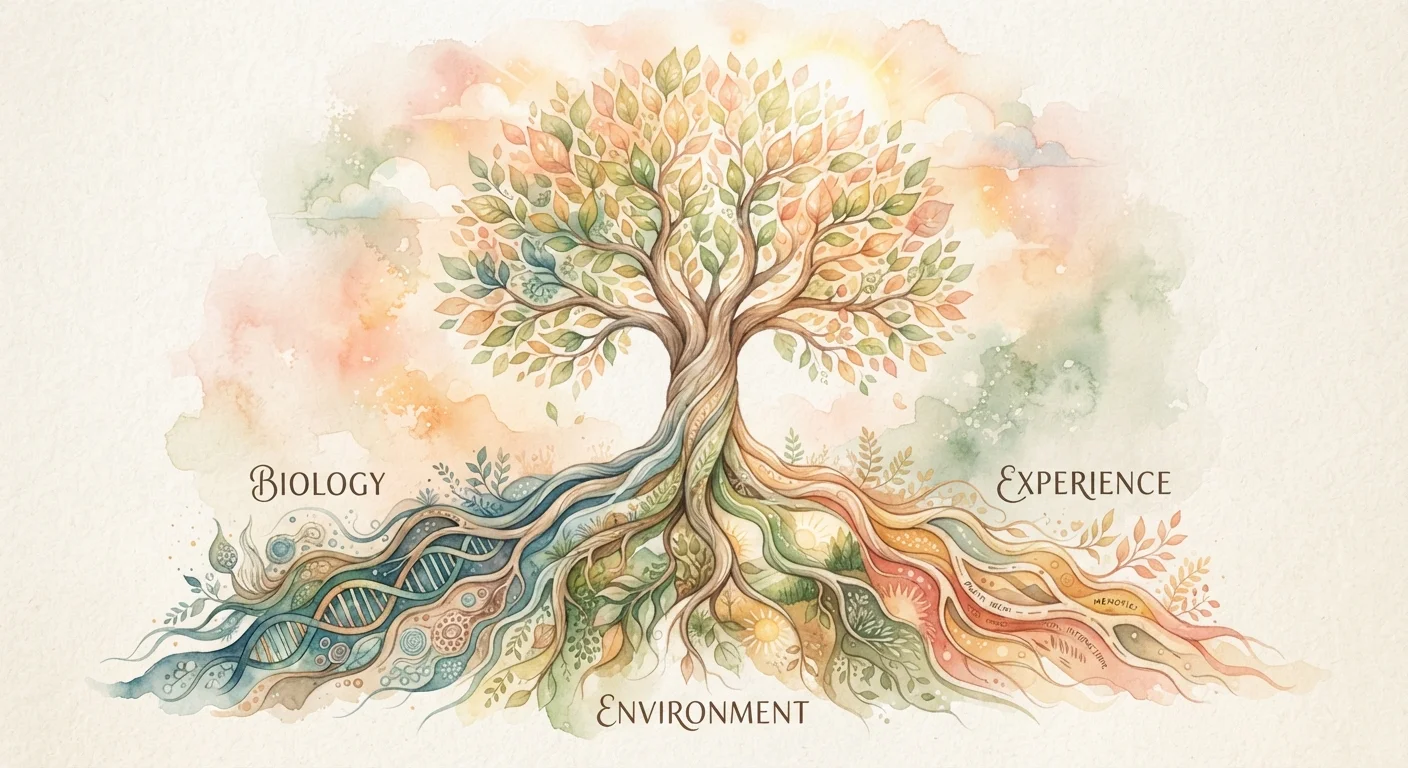
Mental health is shaped by a web of overlapping influences: the biology you were born with, the environments you've lived in, and the experiences that have marked your life. No single factor tells the whole story. As our guide Mental Health Explained: What It Really Means and Why It Matters explores, mental health is far more than the absence of illness - it's a dynamic state affected by many forces at once.
This article walks through the main categories of influence so you can begin to understand - without judgment - what contributes to mental wellbeing.
The Role of Biology and Genetics
Your biology forms a kind of foundation. Genes inherited from your family can influence how your brain develops, how it regulates mood and stress, and how vulnerable or resilient you may be to certain conditions. Research consistently shows that conditions such as depression, anxiety disorders, bipolar disorder, and schizophrenia tend to run in families - though having a relative with a condition does not mean you will develop it.
40-50%
Heritability estimate for major depression
Twin and family studies suggest roughly 40-50% of the risk for major depression is attributable to genetic factors, according to established psychiatric research.
3x
Increased depression risk linked to childhood adversity
Individuals who experienced significant childhood adversity are estimated to be roughly three times more likely to develop depression in adulthood, per public health literature.
1 in 5
U.S. adults experiencing a mental illness annually
The National Institute of Mental Health estimates approximately one in five U.S. adults lives with a mental illness in any given year.
Beyond genes, brain chemistry plays a role. Neurotransmitters - chemical messengers like serotonin and dopamine - help regulate emotions, motivation, and the stress response. Hormonal changes (such as those during puberty, pregnancy, or menopause) and physical health conditions can also influence mental wellbeing from the inside out.
When reviewing your own family health history, treat it as useful information rather than a verdict. Knowing a risk exists means you can take proactive steps - including seeking support early.
Early intervention consistently produces better outcomes across most mental health conditions, and awareness of genetic predisposition can motivate timely help-seeking.
If someone in your life dismisses mental health struggles as simply a 'chemical imbalance' or purely a 'life choice,' the biopsychosocial model gives you a more accurate framing: it's genuinely both - and more.
Oversimplified explanations of mental health can increase stigma and discourage people from seeking appropriate support. A more complete picture validates experience and encourages action.
It's worth noting that biology is not destiny. Genes interact constantly with your environment and experiences - a concept researchers call gene-environment interaction. This means that even a strong genetic predisposition may only become significant under particular life circumstances.
Environment and Social Conditions
Where and how you live matters enormously. Social and environmental conditions - sometimes called the social determinants of health - include factors like income, housing stability, access to education, neighborhood safety, and social support networks. These are not peripheral details; they are core influences on mental wellbeing.
Chronic poverty, food insecurity, exposure to violence, and discrimination create ongoing stress that can tax the brain's ability to regulate emotions over time. Conversely, stable housing, meaningful work, and strong community connections tend to be protective. Family dynamics are a particularly significant piece of this picture - family roles and patterns can either buffer stress or amplify it across a person's lifetime.
Chronic Stress Has Cumulative Effects
Ongoing exposure to stressful social conditions - such as financial hardship or discrimination - doesn't just feel difficult in the moment. Over time, it can affect the body's stress-regulation systems in ways that increase vulnerability to anxiety and depression. If you're navigating persistent stressors, seeking support sooner rather than later is worthwhile.
Loneliness and social isolation also deserve special mention. A substantial body of research links chronic loneliness to elevated rates of anxiety and depression. Human connection is not a luxury for mental health - it functions more like a basic need.
Life Experiences and Their Lasting Impact
The events we live through - especially in childhood - leave meaningful imprints. Early adverse experiences such as neglect, abuse, parental loss, or witnessing violence are associated with a higher likelihood of mental health difficulties later in life. These experiences can affect how the brain's stress-response systems develop, shaping emotional patterns that persist into adulthood.
Trauma is not limited to childhood, of course. Significant adult experiences - bereavement, relationship breakdown, serious illness, accidents, or prolonged work stress - can shift mental wellbeing at any age. Our article on how mental wellbeing shifts across a lifetime explores this in more depth.
Positive experiences matter too. Secure attachments, experiences of mastery and success, and exposure to supportive communities can build resilience - a kind of psychological buffer that helps people navigate difficulty without being overwhelmed.
How These Factors Work Together
Biology, environment, and experience don't operate in separate lanes - they interact constantly. A useful framework here is the biopsychosocial model, widely used in mental health care, which holds that wellbeing emerges from the interplay of biological, psychological, and social factors. No single dimension fully explains mental health on its own.
“Mental health is not a destination but a process. It's about how you drive, not where you're going.”
— Noam Shpancer, Clinical psychologist and professor
Consider how this plays out in practice: a person may carry a genetic sensitivity to stress, grow up in a financially unstable household, and then experience a significant loss in adulthood. Each layer amplifies the others. Conversely, strong social support, access to mental health resources, and learned coping skills can meaningfully offset biological or environmental risks. Understanding this complexity is one reason that conditions like depression rarely have a single, simple cause.
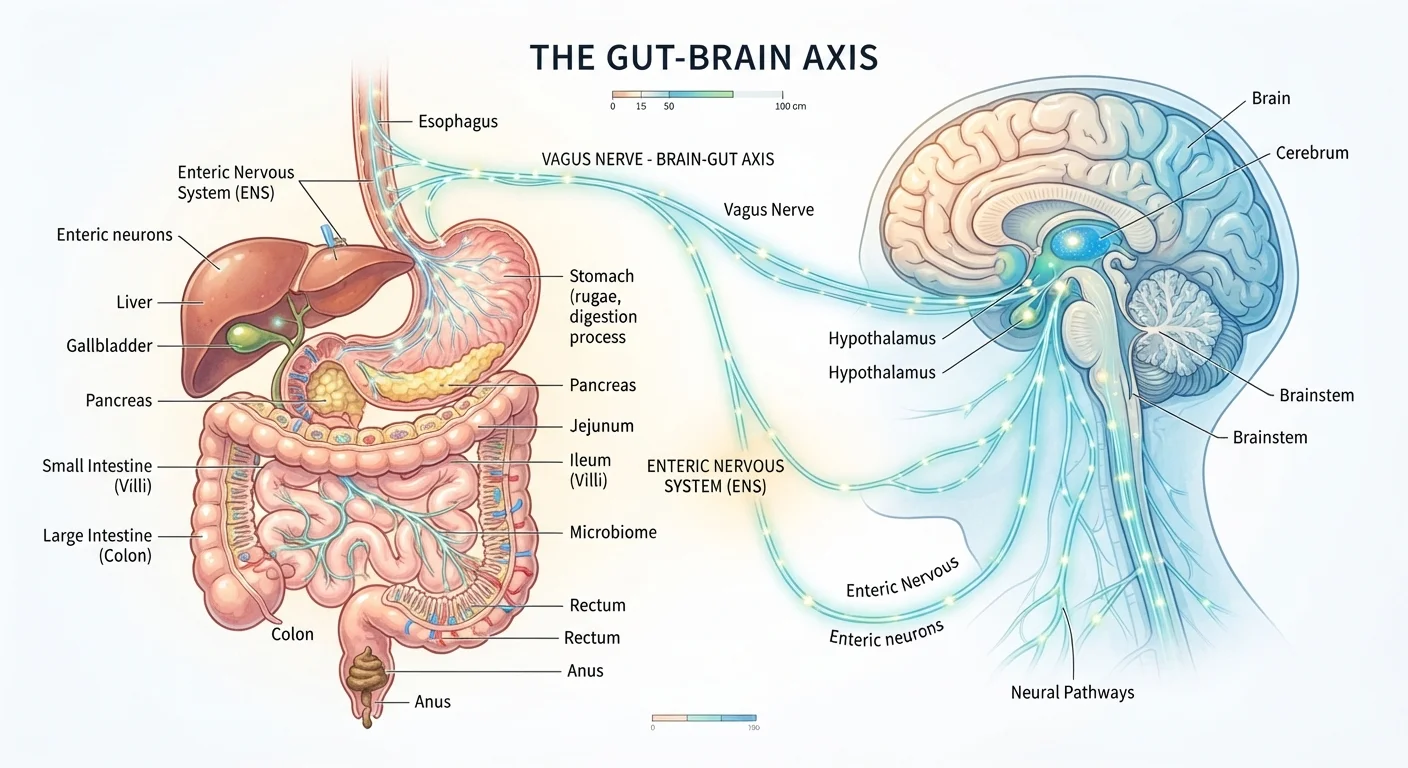
Nutrition is another emerging thread in this picture. Research is beginning to explore how diet and the gut microbiome may intersect with mood - topics covered in our articles on the gut-brain link and how diet and mood connect.
What This Means for You
Understanding the roots of mental health has a practical purpose: it can replace self-blame with self-awareness. If you've struggled emotionally and wondered what's wrong with you, the answer is almost always more nuanced - and more forgiving - than a personal failing.
This Is General Information, Not Personal Advice
The factors described in this article apply at a population level - they represent patterns observed across research, not predictions about any individual. Every person's experience is unique. A mental health professional can help you understand what's most relevant to your own situation.
Recognizing these influences is a meaningful first step, but it's only that - a first step. If you're concerned about your mental health or that of someone you care about, speaking with a qualified healthcare professional is always the right move. General information like this article can help you feel less alone and more informed, but it is not a substitute for personalized guidance.
Whatever combination of biology, environment, and experience has shaped your path so far, it does not define what's possible going forward. Mental health can shift - sometimes significantly - with the right support, understanding, and time.
This article is for informational and educational purposes only and is not a substitute for professional medical or mental health advice, diagnosis, or treatment. Always consult a qualified healthcare provider with any questions you may have about your mental health.