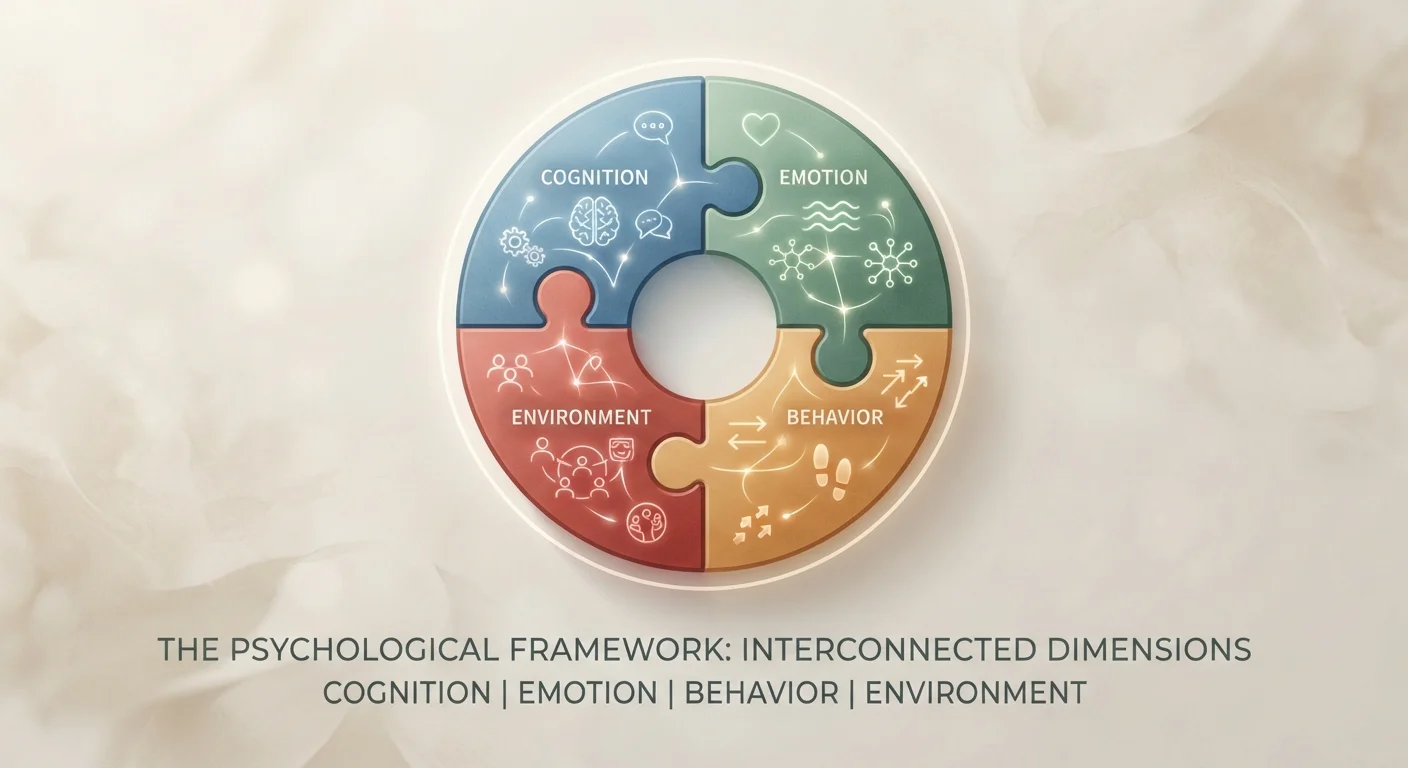

Why PTSD Looks Different Than Expected
Most people picture PTSD as a combat veteran startling at loud noises. That image captures one narrow slice of a condition that affects millions of people across every walk of life - after car accidents, childhood abuse, natural disasters, medical emergencies, assault, and more. PTSD is not limited to military service; the range of triggers is far broader than the stereotype suggests.
What makes PTSD especially hard to recognize is that its symptoms span four distinct areas of human experience: intrusive memories, deliberate avoidance, negative shifts in mood and thinking, and changes in physical arousal. A person may show symptoms heavily in one cluster and barely at all in another, making the condition look very different from one individual to the next.
| DSM-5 symptom clusters | 4 (intrusion, avoidance, negative mood/cognition, arousal) (American Psychiatric Association, DSM-5) |
| Minimum symptom duration for diagnosis | More than 1 month (DSM-5 diagnostic criteria) |
| US adults affected by PTSD in their lifetime | Approximately 6-7% (National Center for PTSD, U.S. Department of Veterans Affairs) |
| Common trauma types beyond combat | Assault, accidents, natural disasters, childhood abuse, medical emergencies |
| Symptom onset | Usually within 3 months; can be delayed by years (National Institute of Mental Health) |
The Core Symptom Clusters Explained
Clinicians use the DSM-5 to organise PTSD symptoms into four clusters. Understanding each one helps you see the full picture. For a deeper look at how these groups inform diagnosis, see the four core clusters that define a PTSD diagnosis.
1. Intrusion Symptoms
These involve unwanted re-experiencing of the traumatic event. Common forms include:
- Flashbacks - vivid, sensory episodes where the event feels like it is happening again right now
- Nightmares - distressing dreams related to the trauma that disrupt sleep
- Intrusive memories - unwanted mental images or thoughts that arise without warning
- Emotional or physical reactivity - a racing heart or panic response triggered by reminders of the event
2. Avoidance
People with PTSD often work hard - consciously or not - to stay away from anything connected to the trauma. This means avoiding certain places, people, conversations, news stories, or even their own memories and feelings about what happened.
3. Negative Changes in Mood and Thinking
This cluster is frequently overlooked but is central to the diagnosis. It can include:
- Persistent feelings of guilt, shame, or self-blame that are distorted or unfounded
- Difficulty feeling positive emotions - sometimes called emotional numbing or anhedonia (loss of interest or pleasure)
- A persistent sense that the world is entirely dangerous, or that oneself is permanently damaged
- Feeling detached or estranged from other people
- Memory gaps specifically related to the traumatic event
4. Changes in Arousal and Reactivity
The nervous system of someone with PTSD can remain stuck in a state of high alert. Signs include hypervigilance (being constantly on guard for danger), exaggerated startle responses, irritability or angry outbursts, difficulty concentrating, and trouble falling or staying asleep.
Flashback
A vivid, involuntary re-experiencing of a traumatic event in which the person feels as though the event is happening again in the present moment. Flashbacks can involve sights, sounds, smells, and intense emotion.
Hypervigilance
A state of being persistently and exhaustingly on alert for signs of threat, even in objectively safe environments. It is a common arousal symptom of PTSD.
Anhedonia
A reduced ability to feel pleasure or interest in activities that were once enjoyable. In PTSD, anhedonia falls within the cluster of negative changes in mood and thinking.
Dissociation
A mental experience of feeling detached from one's thoughts, body, or surroundings. In the context of PTSD, it can appear as a sense of unreality or emotional distance during stress.
Avoidance
A deliberate or unconscious effort to stay away from people, places, conversations, or internal thoughts that are associated with a traumatic experience.
Emotional numbing
A blunted or restricted range of emotional experience, often described as feeling disconnected or 'flat.' It is part of the negative mood and cognition cluster in PTSD.
Symptoms That Are Often Missed
Because public awareness focuses on flashbacks and startle responses, several symptoms are frequently attributed to other causes or simply overlooked.
- Emotional numbness is sometimes mistaken for depression or personality change rather than recognised as part of PTSD.
- Reckless or self-destructive behaviour - including substance use or dangerous driving - can be a PTSD symptom driven by emotional dysregulation.
- Dissociation, a sense of feeling detached from one's body or surroundings, occurs in a subset of people with PTSD and can be alarming if not understood in context. See key PTSD terms explained in plain English for a full definition.
- Physical complaints such as chronic pain, headaches, or gastrointestinal problems are common but rarely linked to PTSD by people experiencing them.
Duration and Severity Matter for Diagnosis
Experiencing some of these symptoms after a traumatic event does not automatically mean a person has PTSD. Clinicians look for symptoms persisting beyond one month that significantly impair work, relationships, or daily functioning. Only a qualified mental health professional can make a formal diagnosis. If you are concerned about your own symptoms, speaking with a doctor or therapist is the right first step.
Symptoms must persist for more than one month and cause meaningful disruption to daily life before a clinician can diagnose PTSD. Acute stress reactions in the days immediately after trauma are normal and do not automatically indicate the condition will develop. Age also shapes how these symptoms appear - children and older adults often present differently. Learn more in PTSD across the lifespan.
This article is for informational purposes only and does not constitute medical advice. If you or someone you know is struggling after a traumatic experience, please consult a qualified healthcare or mental health professional.