
Why Clinicians Think in Clusters
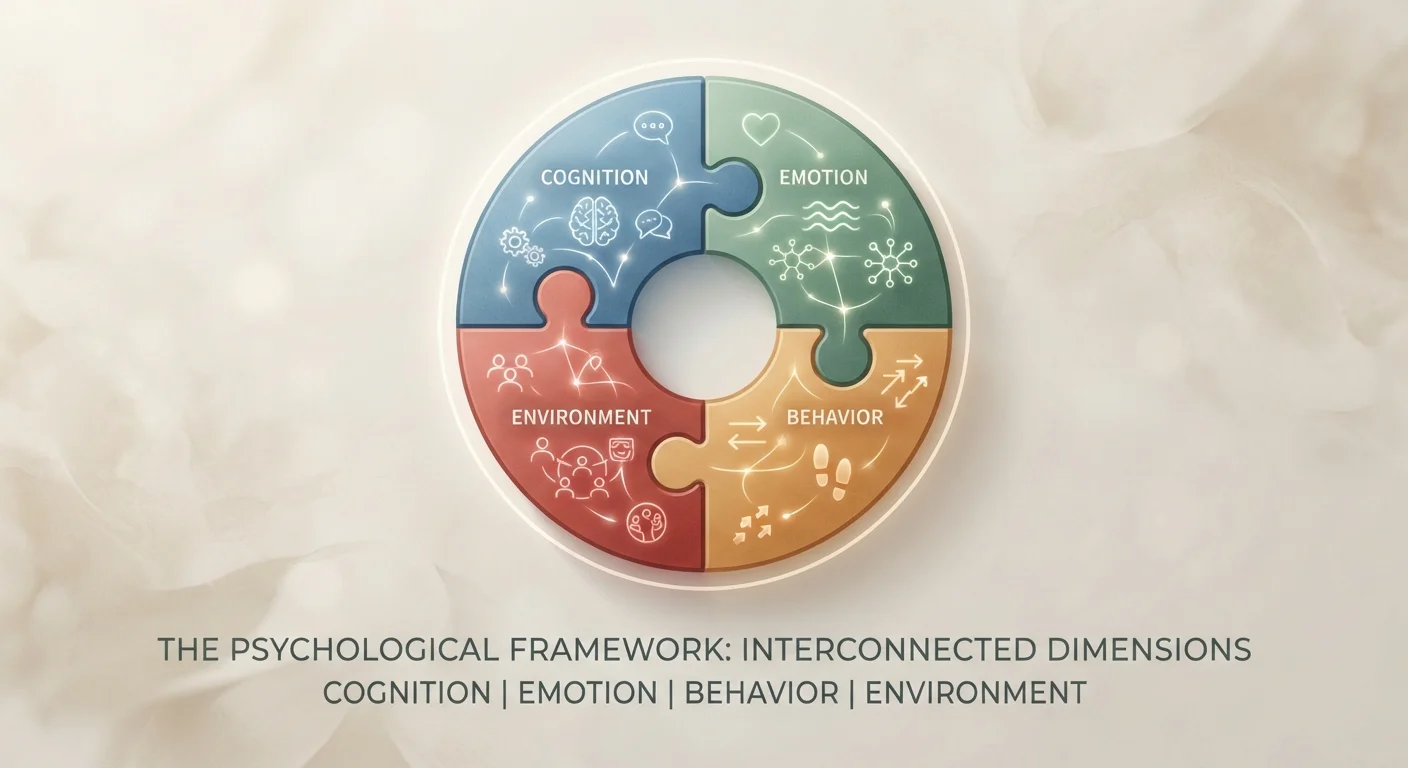
PTSD produces a wide range of symptoms, and no two people experience it identically. To make diagnosis consistent and reliable, mental health professionals group symptoms into four clusters - each one describing a distinct way the condition disrupts a person's mental and physical experience. For a formal diagnosis to be made, a person must show symptoms in all four areas, not just one or two.
This structure, established in the DSM-5, also helps clinicians track which areas of functioning are most affected and tailor treatment accordingly. Understanding the clusters gives anyone seeking information - whether for themselves or someone they care about - a clearer map of what PTSD actually looks like in daily life. For a broader introduction to the condition itself, see our starting-point guide to PTSD.
~6%
U.S. adults who will develop PTSD in their lifetime
According to the National Center for PTSD, approximately 6 out of every 100 Americans will experience PTSD at some point in their lives.
4
Symptom clusters required for a DSM-5 PTSD diagnosis
The DSM-5 requires symptoms across all four clusters - intrusion, avoidance, negative cognition, and hyperarousal - for a diagnosis to be made.
>1 month
Minimum symptom duration for PTSD diagnosis
Symptoms that resolve within a month after trauma may indicate acute stress disorder; PTSD requires the pattern to persist beyond that threshold.
Cluster 1: Intrusion
Intrusion symptoms involve the traumatic event forcing itself back into conscious experience, even when a person does not want to think about it. This can take the form of flashbacks - episodes in which the person feels as though the trauma is happening again - or persistent, distressing memories that feel involuntary. Nightmares related to the trauma are also common. Even exposure to a sight, sound, or smell that resembles something from the event can trigger intense psychological or physical distress.
This cluster is one of the most recognized features of PTSD, partly because flashbacks are dramatic and visible. However, intrusion does not have to be as extreme as a full flashback - recurring, unwanted images or intense emotional reactions to reminders also count.
Cluster 2: Avoidance
Avoidance describes the efforts a person makes - often unconsciously - to stay away from anything associated with the trauma. This includes avoiding internal reminders like memories, thoughts, or feelings about what happened, as well as external ones like places, people, activities, or conversations that might trigger recall.
Avoidance can look like ordinary caution or preference from the outside, which is one reason PTSD is sometimes missed. A person might stop driving after a serious accident, avoid news coverage of certain topics, or withdraw from relationships without fully understanding why. Over time, avoidance tends to narrow a person's world significantly. For a comparison of how this differs from the short-term stress responses seen right after trauma, see how PTSD differs from acute stress disorder.
Cluster 3: Negative Mood and Cognition
This cluster captures changes in how a person thinks and feels that persist after the trauma. Symptoms include persistent negative beliefs about oneself or the world (such as "I am permanently damaged" or "nowhere is safe"), distorted blame of oneself or others for the traumatic event, and a persistent negative emotional state - ongoing fear, guilt, shame, or anger that does not lift.
People in this cluster may also feel detached from others, lose interest in activities they once valued, or find themselves unable to experience positive emotions like joy or love. This emotional narrowing is sometimes called emotional numbing. Because these symptoms can look like depression, they are sometimes misread - which is one reason a thorough clinical evaluation matters. The PTSD glossary explains terms like dissociation and numbing in plain language.
“PTSD is not a sign of weakness. It is a sign that you have been through something overwhelming and that your mind and body are still trying to cope with it.”
— National Institute of Mental Health, U.S. federal agency focused on mental health research
Cluster 4: Hyperarousal and Reactivity
Hyperarousal refers to a state in which the nervous system remains on high alert long after the danger has passed. Symptoms include being easily startled, difficulty sleeping, irritability or angry outbursts, trouble concentrating, and hypervigilance - a near-constant scanning of the environment for potential threats.
This cluster reflects the biological dimension of PTSD: the body's threat-response system becomes dysregulated, making it hard to relax or feel safe. Reckless or self-destructive behavior also falls under this cluster in the DSM-5 criteria. For a fuller picture of how these and other symptoms present across all four clusters, the full spectrum of PTSD symptoms goes deeper into each one.
Recognizing the Pattern Matters
Because PTSD symptoms span four distinct clusters, they can be easy to mistake for separate, unrelated problems - anxiety, depression, anger issues, or sleep trouble. If multiple symptoms from different clusters have appeared together since a traumatic event, that pattern is worth discussing with a mental health professional. Early evaluation leads to earlier support.
This article is for general informational purposes only and is not a substitute for professional medical or mental health advice. If you or someone you know may be experiencing PTSD symptoms, please speak with a qualified healthcare provider.