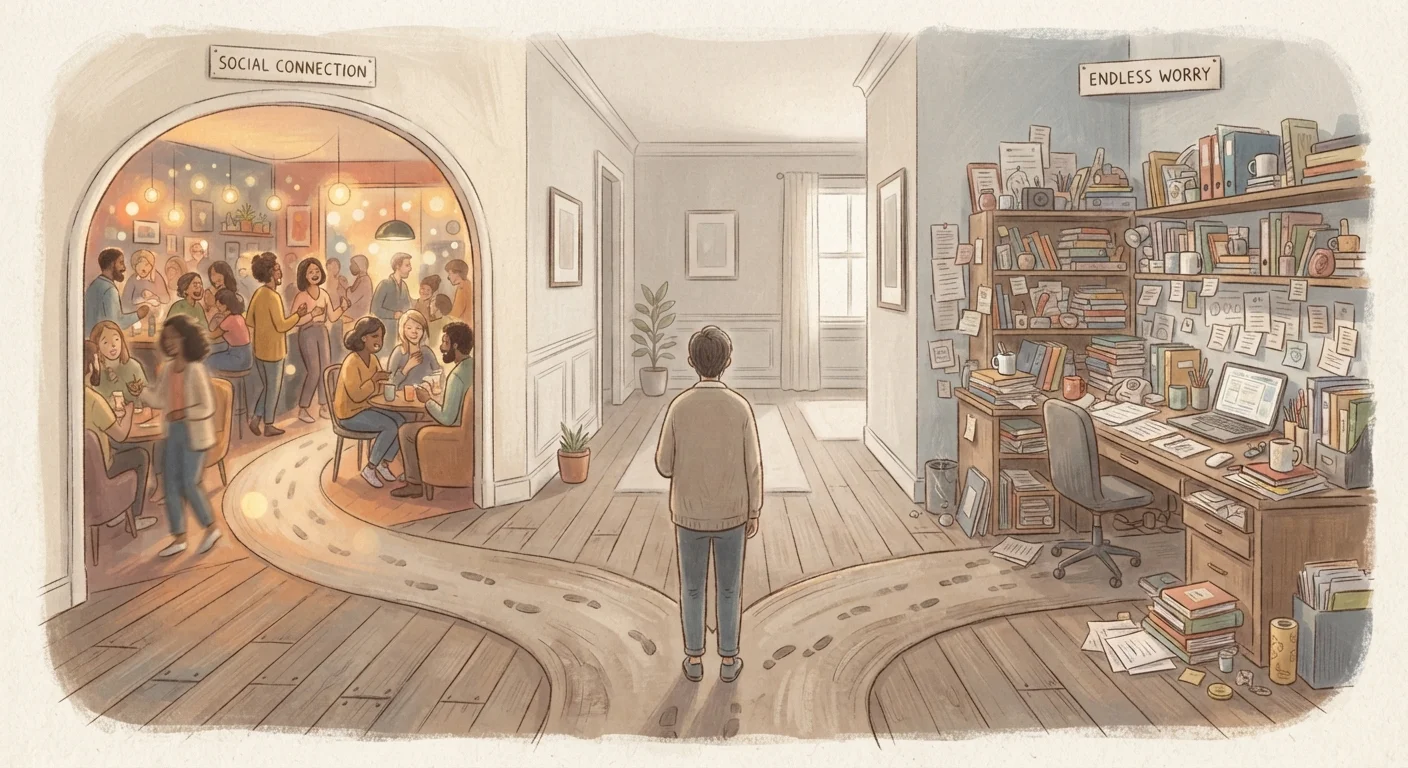

Why These Myths Matter
Misconceptions about Generalized Anxiety Disorder - commonly abbreviated as GAD - don't just cause confusion. They delay the moment a person recognizes what they're experiencing, discourages them from seeking support, and can make friends and family less equipped to help. GAD is one of the most common anxiety disorders in the United States, yet it is consistently misunderstood as a personality quirk, a lifestyle complaint, or something a person should simply push through.
This article addresses the most persistent myths directly, correcting each with what the clinical and scientific evidence actually shows. For a fuller picture of how GAD is defined and diagnosed, see our guide to when worry becomes a disorder.
Myth
Everyone gets anxious - GAD is just normal worry taken too far by people who can't cope.
Fact
GAD involves a neurologically and psychologically distinct pattern of worry that is excessive, persistent, and very difficult to control - not simply a coping style.
Anxiety is a normal human experience, but GAD is not just anxiety turned up a notch. The DSM-5 defines GAD by worry that is excessive relative to the actual likelihood or impact of an event, occurs more days than not for at least six months, spans multiple life domains, and comes with physical symptoms such as restlessness, fatigue, or difficulty concentrating. Research using neuroimaging has shown differences in how the brains of people with GAD process threat and uncertainty. Framing GAD as a coping failure overlooks this underlying biology and discourages people from seeking effective care.
Myth
If you can still function at work or home, your anxiety can't really be a disorder.
Fact
Many people with GAD maintain daily routines while experiencing significant internal distress - functioning on the outside does not mean the disorder is absent or mild.
GAD is sometimes called a 'high-functioning' condition because people with it often push through responsibilities despite chronic, exhausting worry. The clinical standard is whether the anxiety causes meaningful distress or impairment - and impairment is not always visible. Someone may meet every deadline while losing sleep, avoiding social situations, or experiencing persistent muscle tension and headaches. The physical symptoms of GAD are frequently overlooked for this reason. Appearing to 'hold it together' should never be used to dismiss what a person is experiencing internally.
Myth
GAD is only a mental problem - it doesn't cause real physical symptoms.
Fact
GAD commonly produces physical symptoms including muscle tension, chronic fatigue, headaches, stomach upset, and sleep disturbance, all of which are well-documented in clinical literature.
The mind-body divide is especially misleading when applied to anxiety disorders. GAD activates the body's stress response systems - the hypothalamic-pituitary-adrenal (HPA) axis and the autonomic nervous system - on a near-constant basis. Over time, this produces genuine physical wear. Muscle tension so persistent it causes soreness, fatigue that doesn't improve with rest, gastrointestinal discomfort, and difficulty falling or staying asleep are all recognized symptoms in the DSM-5 criteria for GAD. People with these complaints often see multiple specialists before GAD is identified as the underlying cause, which is why awareness of its physical dimension matters.
Myth
People with GAD just need to relax, exercise more, or think positively.
Fact
While healthy habits can support overall wellbeing, they are not treatments for GAD, which typically requires professional intervention such as cognitive behavioral therapy or medication.
Advice to 'just relax' or 'stop worrying' is not only unhelpful - it misunderstands the nature of the disorder. A defining feature of GAD is that the worry is difficult to control even when the person recognizes it is excessive. Lifestyle habits like regular physical activity and sleep hygiene can complement treatment, but they do not address the underlying cognitive and neurological patterns that drive GAD. Evidence-based approaches - particularly cognitive behavioral therapy (CBT), which targets the thought patterns and avoidance behaviors central to GAD, and in some cases medication - have strong research support. Suggesting that willpower or attitude is sufficient can shame people out of seeking the help that actually works.
Myth
GAD only affects anxious or 'nervous' personality types - calm people can't have it.
Fact
GAD can develop in people with a wide range of personalities and temperaments; it is not a character trait but a diagnosable condition with identifiable risk factors.
GAD develops through an interaction of genetic predisposition, life experiences, and environmental stressors. While certain temperamental traits - such as a tendency toward behavioral inhibition in childhood - are associated with higher risk, GAD is not exclusive to people who appear outwardly nervous or anxious. Many people with GAD present as calm, organized, or even perfectionistic. The worry in GAD is often internal and private, not always expressed outwardly. Associating GAD with a 'nervous personality' can prevent people who don't fit that image from recognizing their own symptoms. For a broader look at how anxiety presents across different people, see our anxiety basics hub.
Myth
GAD and social anxiety disorder are basically the same thing.
Fact
GAD and social anxiety disorder are distinct conditions with different triggers, patterns, and clinical criteria, though they can sometimes co-occur.
Social anxiety disorder centers on fear of negative evaluation in social or performance situations - the worry is specifically about how others perceive the person. GAD, by contrast, involves worry that spreads across many topics: health, finances, relationships, work, and global events, often simultaneously. The scope and focus of the worry are fundamentally different. A person with GAD may worry about a meeting going badly, but also about a family member's health, an unpaid bill, and a news story - all in the same hour. Our article comparing GAD and social anxiety disorder details how clinicians distinguish between the two.
What the Evidence Shows
Taken together, these myths share a common thread: they minimize GAD by treating it as a matter of attitude or willpower rather than a recognized medical condition with identifiable causes, symptoms, and treatments. The DSM-5 criteria for GAD are specific - they require excessive, difficult-to-control worry occurring more days than not for at least six months, accompanied by physical and cognitive symptoms that impair daily functioning. That is a meaningful threshold, not a low bar.
5.7%
Lifetime prevalence of GAD in U.S. adults
According to the National Comorbidity Survey Replication, approximately 5.7% of U.S. adults will meet criteria for GAD at some point in their lives.
~40%
People with GAD who receive treatment
Research consistently shows that fewer than half of people with GAD receive any form of treatment, often due to stigma, misidentification, or lack of awareness.
6+ months
Minimum duration required for GAD diagnosis
The DSM-5 requires that excessive, difficult-to-control worry be present more days than not for at least six months before a GAD diagnosis can be made.
Understanding the distinction between normal anxiety and GAD is the first step toward getting - or offering - appropriate support. Our plain-language breakdown of GAD diagnostic criteria explains exactly what clinicians look for. If you or someone you know may be experiencing these symptoms, speaking with a qualified healthcare professional is the right next step.
You may also find it useful to explore how GAD compares to other anxiety conditions. Our article on GAD vs. social anxiety highlights important clinical differences, and our complete GAD overview covers everything from onset to evidence-based support options.
This article is for general informational purposes only and is not a substitute for professional medical advice, diagnosis, or treatment. Always consult a qualified healthcare provider with questions about your health.