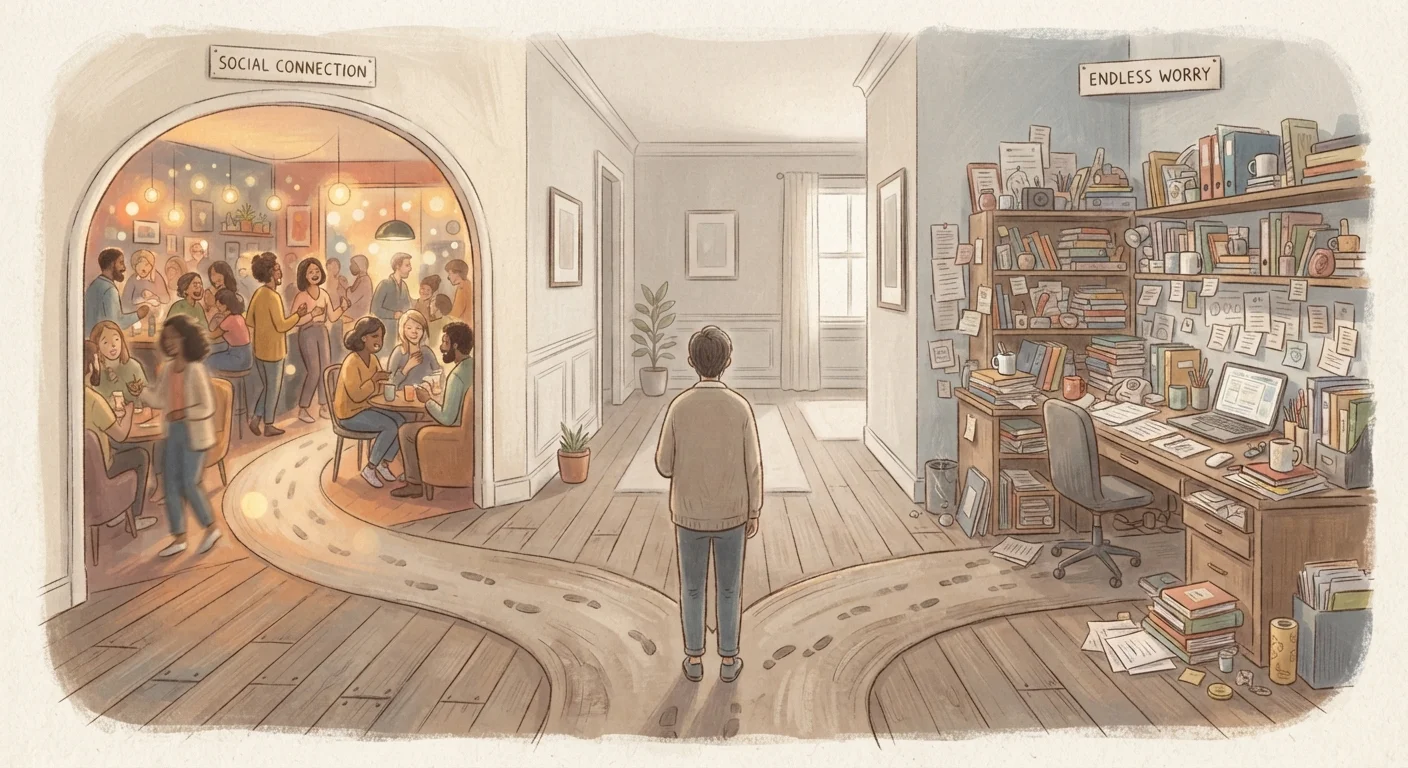

What the DSM-5 Actually Requires
When a clinician evaluates someone for Generalized Anxiety Disorder (GAD), they work through a specific set of criteria published in the DSM-5. These aren't vague impressions - they're structured checkpoints. Here's what each one means in plain terms.
| Diagnostic framework | DSM-5 (American Psychiatric Association) |
| Minimum duration of symptoms | 6 months (DSM-5 Criterion B) |
| Number of associated symptoms required (adults) | 3 or more (from a list of 6) (DSM-5 Criterion C) |
| Number of associated symptoms required (children) | 1 or more (DSM-5 Criterion C) |
| Estimated US adult prevalence | Approximately 3% (National Institute of Mental Health) |
| Symptom frequency threshold | More days than not (DSM-5 Criterion A) |
Criterion A: Excessive, Uncontrollable Worry
The core feature is worry that is excessive and difficult to control, occurring about a number of different events or activities - not just one specific thing. It must happen more days than not for at least six months. "Excessive" here means the worry is disproportionate to the real probability or impact of whatever is feared. "Difficult to control" means the person can't simply decide to stop - it persists even when they try to redirect their thoughts.
Criterion B: Duration
The six-month threshold distinguishes GAD from a shorter-term stress response. Anxiety triggered by a specific stressor - a job loss, a medical scare - can look similar in the short term. Sustained worry across many areas of life, lasting six months or longer, is a different pattern.
Criterion C: Associated Physical and Cognitive Symptoms
Adults must experience at least three of the following six symptoms more days than not. Children need only one.
- Restlessness or feeling keyed up or on edge - a persistent sense of tension or inability to relax
- Being easily fatigued - feeling worn out even without physical exertion
- Difficulty concentrating - or mind going blank, which can interfere with work and daily tasks
- Irritability - a lower threshold for frustration than usual
- Muscle tension - often experienced as tightness in the shoulders, neck, or jaw
- Sleep disturbance - trouble falling asleep, staying asleep, or waking up feeling unrefreshed
The Remaining Criteria: Ruling Things In and Out
Three more criteria ensure that the diagnosis accurately reflects what's happening - and isn't better explained by something else.
This Is Information, Not a Self-Diagnosis Tool
The criteria described here are used by trained clinicians, not as checklists for self-diagnosis. Meeting several of these criteria on your own reading does not confirm a diagnosis, and missing some does not rule one out. Only a qualified healthcare or mental health professional can evaluate your situation fully. If you are concerned about your anxiety, please speak with a licensed provider.
Criterion D: Functional Impairment
The worry and symptoms must cause real distress or get in the way of everyday life - work, relationships, or basic self-care. Someone who worries extensively but functions without disruption does not meet this criterion. This threshold matters: it separates a diagnosable condition from an uncomfortable but manageable personality trait.
Criterion E: Not Caused by a Substance or Medical Condition
Anxiety can be a direct effect of certain medications, recreational substances, or physical health conditions - such as thyroid disorders. A clinician will explore these possibilities before attributing the symptoms to GAD. This step, called differential diagnosis, prevents misidentifying a treatable physical cause as a psychiatric one.
Criterion F: Not Better Explained by Another Mental Health Condition
Other anxiety-related conditions can produce overlapping symptoms. For instance, worry about social situations might point to social anxiety disorder, while fear tied to a specific event might indicate PTSD. GAD is diagnosed only when the pattern of wide-ranging, hard-to-control worry isn't fully accounted for by another condition. See how clinicians distinguish GAD from social anxiety for more on this comparison.
GAD
Generalized Anxiety Disorder - a recognized mental health condition characterized by persistent, excessive worry about multiple areas of daily life that is difficult to control and causes real functional impairment.
DSM-5
The Diagnostic and Statistical Manual of Mental Disorders, Fifth Edition, published by the American Psychiatric Association. It is the primary reference US clinicians use to define and diagnose mental health conditions.
Excessive worry
In a clinical context, worry that is disproportionate to the actual likelihood or impact of the feared event, and that occurs more days than not over an extended period.
Functional impairment
A measurable interference with a person's ability to carry out daily activities - such as work, relationships, or self-care - caused by a symptom or condition.
Differential diagnosis
The process by which a clinician rules out other medical or psychiatric conditions that could better explain a patient's symptoms before settling on a specific diagnosis.
For a broader look at how worry crosses into a diagnosable pattern, see what distinguishes everyday worry from GAD. And if you want end-to-end context - from how GAD develops to what evidence-based support looks like - the complete GAD overview covers it in full.
This article is for general informational purposes only and is not a substitute for professional medical or mental health advice, diagnosis, or treatment. If you have concerns about anxiety or any mental health condition, please consult a qualified healthcare provider.