
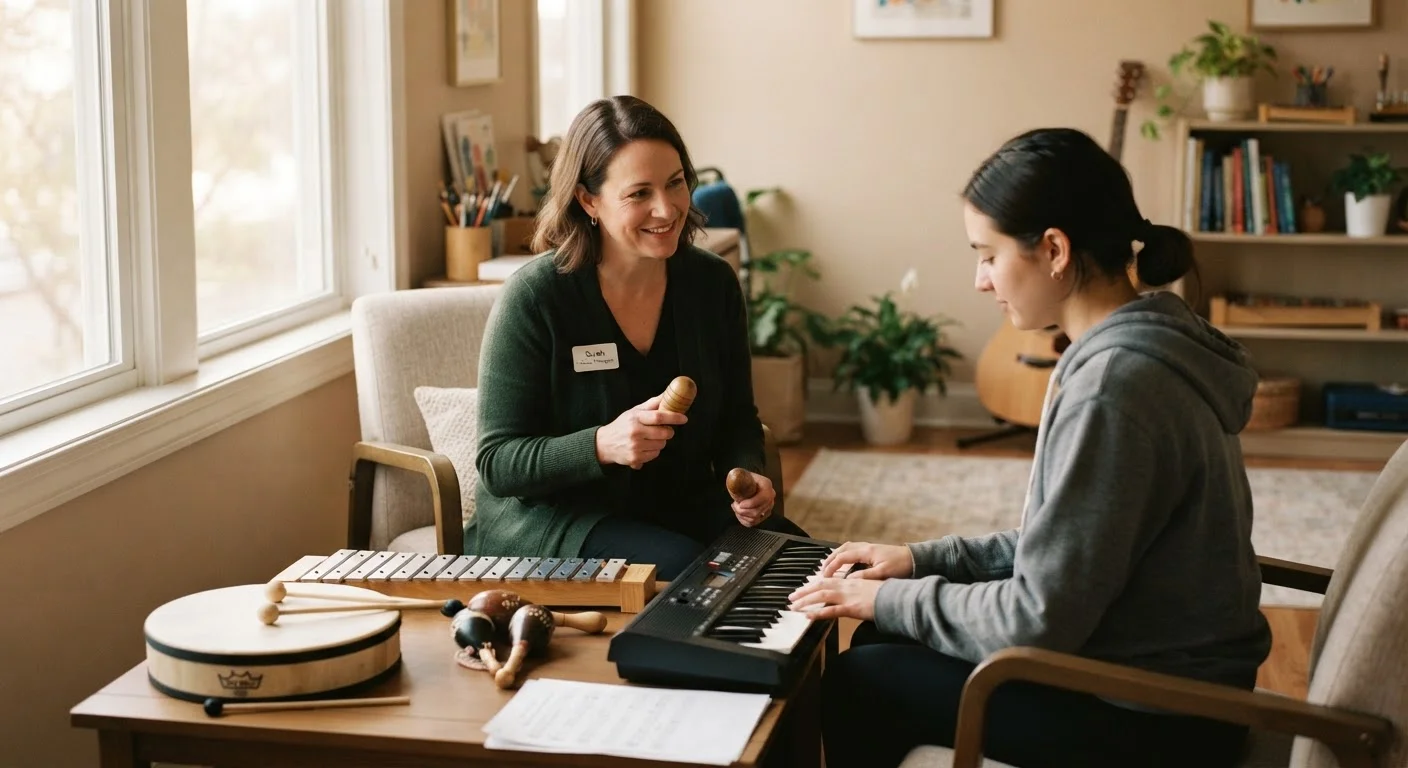
What Clinical Music Therapy Actually Involves
The phrase "music therapy" is sometimes used loosely to describe anything from curated Spotify playlists to sound baths. Clinical music therapy is something more specific. A session led by a board-certified music therapist (MT-BC) might involve structured improvisation on simple instruments, lyric analysis, guided imagery with music, or collaborative songwriting — each chosen based on the individual's therapeutic goals.
Unlike passive listening, these interventions require active engagement between the client and therapist. The therapist observes responses, adjusts techniques in real time, and documents progress toward defined outcomes. This is what separates therapy from wellness: a structured, professional relationship built around measurable goals.
Sessions can occur one-on-one or in groups, and in settings ranging from outpatient mental health clinics to hospitals, schools, and rehabilitation centers. The format is adapted to the person — not the other way around.
Look for the MT-BC Credential
When seeking a music therapist in the United States, verify that the practitioner holds the MT-BC (Music Therapist–Board Certified) designation. This credential, issued by the Certification Board for Music Therapists, confirms that the individual has met nationally recognized education, training, and examination standards. The AMTA website includes a therapist locator tool to help you search by location.
What the Research Says
Music therapy has accumulated a meaningful body of clinical research, though the quality and size of studies vary. A widely cited Cochrane review found that music therapy, when added to standard care, was associated with greater reductions in depression and anxiety symptoms compared with standard care alone. Similar findings have emerged in research on PTSD, with some studies suggesting that music-based interventions may help reduce symptom severity — particularly in populations for whom verbal processing is difficult.
Neurologically, music engages multiple brain systems simultaneously: auditory processing, memory, motor control, and emotion regulation. This broad activation is one reason researchers have explored its use in conditions like Parkinson's disease (where rhythmic auditory stimulation can support gait) and dementia (where familiar music can facilitate memory access and emotional connection).
~1,000+
Published studies on music therapy outcomes
The American Music Therapy Association notes that the evidence base spans mental health, neurology, pain, and rehabilitation settings.
Moderate
Evidence quality for depression and anxiety
A Cochrane systematic review concluded that music therapy added to standard care showed beneficial effects on depression and anxiety, though researchers noted a need for larger, high-quality trials.
It is important to be clear-eyed about what the evidence does and does not show. Many studies in this area are small, and methodologies differ enough that drawing sweeping conclusions is premature. Music therapy is best understood as a well-supported adjunct — one component of a broader care approach rather than a standalone cure.
Who May Benefit — and Who Should Know About It
Research has examined music therapy across a wide range of populations and conditions. Adults experiencing depression, generalized anxiety, or trauma responses have been studied most extensively in the mental health context. Children with autism spectrum disorder have shown improvements in social communication and emotional responsiveness through music-based interventions. Older adults with dementia have demonstrated improvements in agitation, mood, and recall of personal memories.
For people who feel that traditional talk therapy doesn't fully capture their experience, expressive therapies like music therapy can open different pathways. As explored in our overview of alternative approaches to talk therapy, body-based and creative modalities can be especially useful when verbal expression feels limited or exhausting.
Music therapy is not appropriate as a first-line or sole treatment for serious psychiatric conditions. A qualified healthcare provider can help determine whether it makes sense as part of an individual's overall plan.
How to Evaluate Whether It's Right for You
If you're considering music therapy, the same principles that apply to evaluating any non-traditional approach apply here. Credential verification is the starting point: in the US, the MT-BC designation indicates the practitioner has completed an accredited program, supervised clinical hours, and a national board examination. Our guide to evaluating alternative therapies outlines the questions worth asking before committing to any new approach.
It's also reasonable to ask a prospective therapist about their experience with your specific concerns, what a typical session looks like, and how they measure progress. A good clinician will welcome those questions.
Music Therapy Is Not the Same as Sound Healing
"Sound healing" or "sound baths" — using singing bowls, gongs, or tonal vibrations — are distinct practices that are not currently recognized as evidence-based clinical therapies by major health bodies. While some people find them relaxing, they should not be confused with clinical music therapy, which is grounded in peer-reviewed research and delivered by credentialed professionals.
Music therapy may be one piece of a broader mental wellness picture. Building consistent, evidence-supported habits — as discussed in our piece on why small habits support mental health — can complement formal therapeutic work over the long term.
This article is for general informational purposes only and does not constitute medical or therapeutic advice. Always consult a qualified healthcare professional before making decisions about your mental health care.