
What Animal-Assisted Therapy Actually Is
Animal-assisted therapy (AAT) is a goal-directed clinical intervention delivered or guided by a licensed mental health professional, in which a trained animal — most often a dog — is deliberately incorporated into the therapeutic process. It is not the same as visiting a pet café, owning a pet, or even bringing an emotional support animal to a living space.
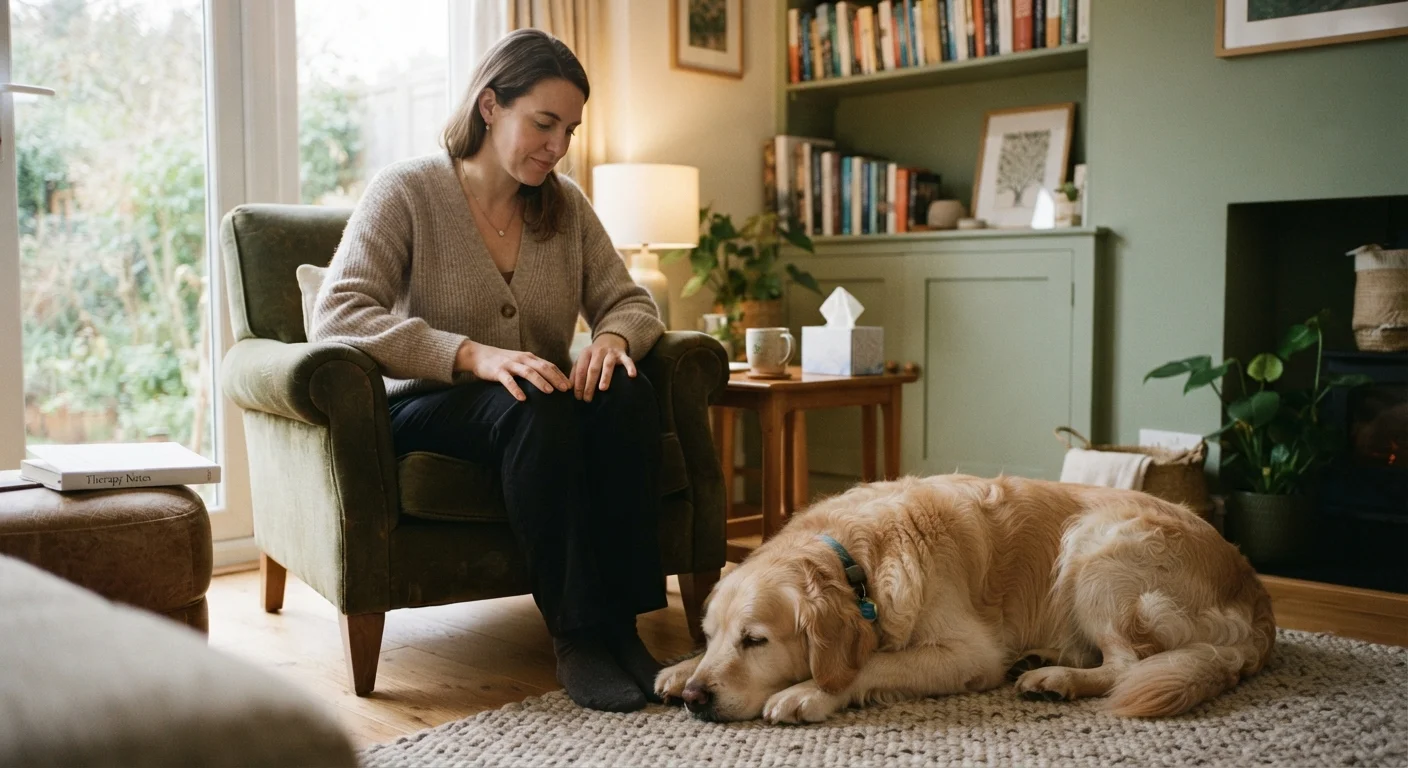
In a structured AAT session, the animal serves as a therapeutic tool. A credentialed therapist might use interactions with the animal to reduce a client's physiological arousal before discussing a traumatic memory, build trust with a child who struggles to engage verbally, or practice social skills in a lower-stakes relational context. The animal's handler, often the therapist themselves or a specialist working alongside them, ensures the animal's welfare and guides the interaction purposefully. For a broader picture of how structured therapeutic sessions are organized, see what actually happens in a therapy session.
This distinction matters because much of the positive popular perception of animals in clinical settings blends evidence from formal AAT with looser anecdotal accounts of pets providing comfort. Separating the two is essential to an honest assessment.
What the Evidence Supports
The research base for AAT has grown considerably over the past two decades. Meta-analyses and systematic reviews — including work published in journals such as Anthrozoös and Frontiers in Psychology — consistently find small-to-moderate improvements in anxiety, depression severity, and markers of physiological stress (such as cortisol levels and heart rate) among AAT participants compared to control groups.
~49%
Reduction in anxiety scores in AAT participants
A 2019 meta-analysis in Anthrozoös found AAT associated with roughly a 49% reduction in anxiety symptom scores relative to control conditions across included studies.
30+
Randomized or controlled AAT studies published
A 2020 systematic review identified over 30 controlled studies on AAT for mental health conditions, though reviewers consistently noted methodological variability across trials.
Evidence is strongest for specific populations: children with autism spectrum disorder, veterans and trauma survivors with PTSD, and individuals in inpatient psychiatric settings. In these contexts, animals appear to reduce avoidance, lower baseline arousal, and support therapeutic rapport — all of which can make the core clinical work more accessible.
There is also a plausible biological mechanism. Human–animal interaction has been associated with increased oxytocin release and reduced sympathetic nervous system activation. These are not trivial effects, though researchers caution that effect sizes are modest and mechanisms are not yet fully established.
AAT vs. Animal-Assisted Activities
It is worth distinguishing animal-assisted therapy (AAT) — a structured, goal-directed clinical intervention — from animal-assisted activities (AAA), which are informal visits that may improve mood but are not designed to meet specific therapeutic objectives. Most of the stronger research evidence applies to AAT specifically, not AAA. When evaluating a program, ask whether it is led by a licensed clinician with defined treatment goals.
The Limitations Are Real
Despite promising signals, the evidence base has well-documented weaknesses. Many studies involve small sample sizes, lack randomization or blinded assessment, rely on self-report measures, and rarely include active control conditions that would isolate the animal's contribution from general therapist attention and novelty effects. Long-term outcomes — whether benefits persist after AAT ends — are rarely tracked.
This mirrors limitations seen across complementary mental health approaches. If you've read about what the evidence actually shows for mental health apps, you'll recognize a similar pattern: promising early data that requires more rigorous replication before strong conclusions can be drawn.
Credentialing is another concern. No single national standard governs who can call themselves an AAT provider. Organizations such as Pet Partners and the Alliance of Therapy Dogs provide training and certification frameworks, but these vary in rigor, and consumers may not know what to look for.
Reduces anxiety and physiological stress markers
Multiple studies document measurable reductions in cortisol and self-reported anxiety during and after AAT sessions, suggesting a genuine calming effect beyond placebo.
Supports therapeutic rapport and engagement
For clients who find one-on-one conversation with a therapist intimidating, the presence of an animal can lower defensiveness and make the clinical relationship more accessible.
Particularly useful for trauma and PTSD populations
Research in veteran populations has found AAT associated with reduced PTSD symptom severity and increased willingness to engage in trauma-focused work.
May help non-verbal or communication-challenged clients
Children with autism spectrum disorder or selective mutism have shown improved social communication and engagement in AAT settings compared to conventional formats.
Provides a non-judgmental relational context
Animals respond to present-moment behaviour rather than history or diagnosis, which clients often experience as freeing — supporting a sense of acceptance that is therapeutically valuable.
Research quality remains inconsistent
Most existing studies involve small samples, lack rigorous controls, and do not track outcomes beyond the treatment period, making it difficult to draw firm conclusions about lasting efficacy.
No standardized national credentialing framework
The absence of uniform professional standards means quality varies considerably between providers, and consumers have limited tools for evaluating whether a program meets a reliable baseline.
Not appropriate for everyone
Allergies, phobias, religious or cultural objections to animals, or past trauma involving animals may make AAT unsuitable or counterproductive for certain individuals.
Animal welfare is an ongoing ethical concern
Therapy animals are working animals, and poorly designed programs risk stress and burnout; responsible programs include welfare monitoring, but standards are not universal.
Access and cost can be significant barriers
AAT is not widely available in all regions, and insurance coverage is limited; it is typically an add-on to existing therapy costs rather than a covered standalone service.
What a Session Typically Looks Like
A structured AAT session generally runs 45–60 minutes and begins with the therapist establishing clinical goals for that day — not simply "spending time with the animal." The animal, certified as a therapy animal through a recognized organization, is assessed for temperament and health before each session.
During the session, interactions might include directed activities: grooming the animal, practicing calm breathing while the dog rests beside you, or using the animal's responses as a prompt for reflection. For example, a therapist working with an anxious adolescent might notice that the dog approaches only when the client's body language is relaxed, and use that observation to explore what emotional regulation feels like in the body.
Throughout, the therapist remains clinically active — this is not supervised playtime. The animal's handler monitors welfare, watching for signs of stress in the animal. Reputable programs have clear protocols for ending animal contact if either the animal or client shows distress.
AAT is almost always offered as a complement to an existing treatment plan rather than a standalone program. If you're weighing how it might fit alongside conventional therapy, setting honest expectations about what therapy can and cannot do is a useful starting point. And if you're already in therapy and wondering how to integrate new approaches effectively, getting the most out of each session offers practical guidance.
This article is for general informational and educational purposes only and does not constitute medical or psychological advice. If you are considering animal-assisted therapy or any other mental health treatment, please consult a qualified healthcare professional to discuss what may be appropriate for your individual circumstances.