
The Factors That Set a Therapist's Fee
When you see a wide range of session fees listed online, it can feel arbitrary. In practice, several concrete factors account for most of the variation.
Credentials and licensure: Therapists hold different licenses depending on their training. Psychiatrists (medical doctors who can prescribe medication) typically charge the most. Psychologists with doctoral degrees (Ph.D. or Psy.D.) generally follow, with licensed counselors and social workers (LPC, LCSW) often — though not always — charging somewhat less. Pre-licensed clinicians completing supervised hours may charge lower rates still.
Specialization and training: Therapists who have invested in advanced training — for instance, in trauma-focused modalities like EMDR or in specialized areas like eating disorders — may reflect that expertise in their fees. Specialty care is often less available and may command a premium accordingly.
Years of experience: More experienced clinicians commonly charge more, reflecting both their track record and typically higher demand for their services.
Ask About Fees Before Your First Appointment
Many therapists are willing to discuss their fee structure and any available sliding-scale options during a brief initial phone consultation. Asking upfront — including whether they accept your insurance — can save you from surprises later and helps you compare options more clearly. Preparing for your first session includes practical guidance on what to ask.
If you're unsure what a provider's credentials mean for your care, our Therapy Basics hub explains different therapy types and what to look for in a provider.
How Location and Setting Shape What You Pay
Where a therapist practices — both geographically and institutionally — has a substantial impact on price.
Geographic market: Session fees in high cost-of-living metropolitan areas tend to be significantly higher than in rural or smaller-market communities, mirroring general professional service pricing. A therapist covering similar overhead costs in New York City and in a mid-sized Midwestern city will need to set fees that reflect very different local economies.
Practice setting: Therapists in private practice set their own rates and carry their own overhead, which is typically reflected in higher fees. Those employed by community mental health centers, federally qualified health centers, university training clinics, or nonprofit organizations often operate on subsidized or income-based fee structures — making them a meaningful lower-cost option for many people.
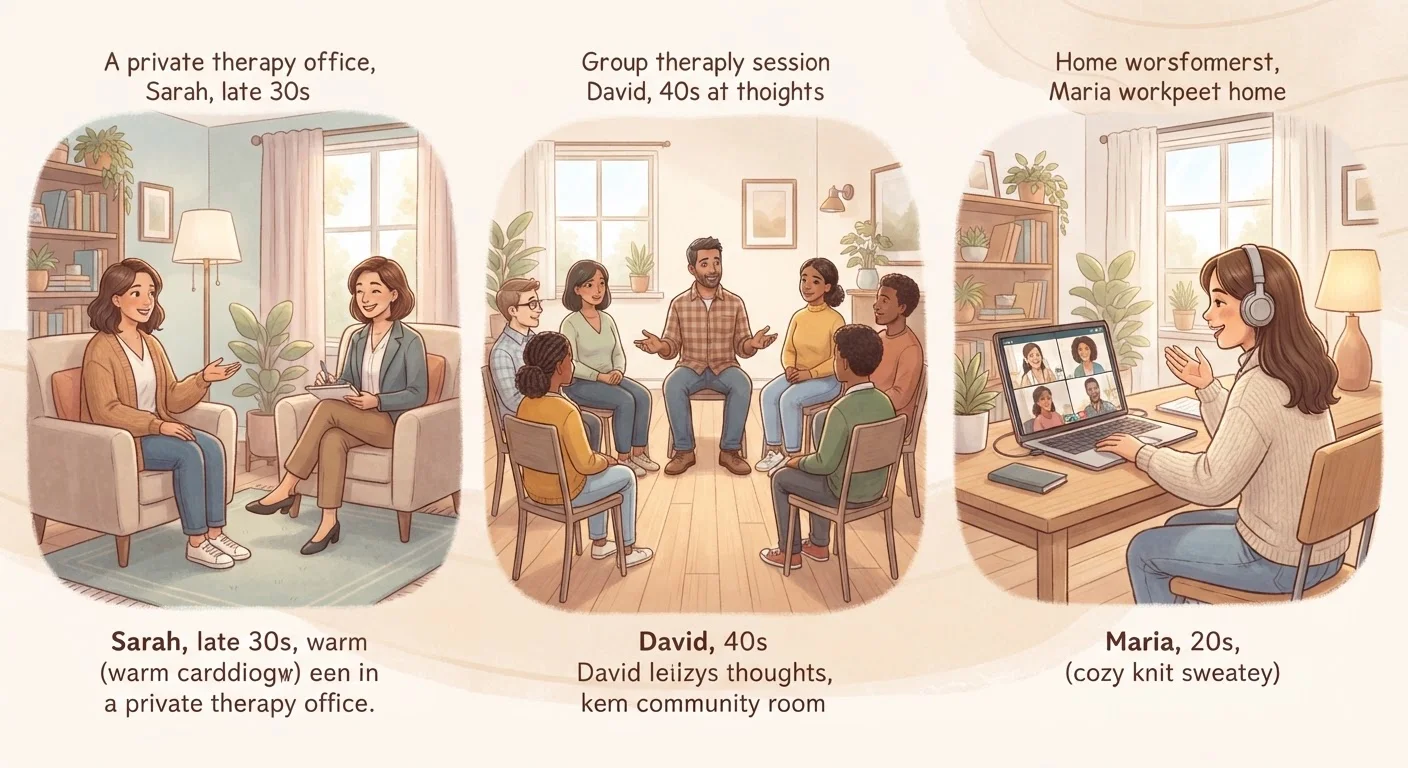
Online versus in-person: Teletherapy can reduce overhead for providers, and those savings are sometimes passed to clients. That said, online therapy rates still vary considerably. Individual, group, and online therapy each have distinct cost profiles worth understanding before you commit to a format.
$100–$250
Typical self-pay session cost range
FAIR Health and other cost-benchmarking sources consistently place the majority of US therapy session fees within this range for individual sessions, with significant regional variation.
~57%
Adults with mental illness who received treatment
According to SAMHSA's National Survey on Drug Use and Health, roughly 57% of US adults with a mental illness received treatment in the most recently reported year, with cost cited as a common barrier among those who did not.
Up to 50%
Potential sliding-scale fee reduction
Many private-practice therapists offer sliding-scale rates that can reduce fees substantially for lower-income clients, though specific reductions vary widely by provider.
Insurance, Sliding Scales, and Other Cost-Shaping Factors
The sticker price of therapy and what you actually pay can differ significantly depending on how care is accessed.
Insurance coverage: If a therapist participates in your insurance network, your out-of-pocket cost may be limited to a copay or your remaining deductible — potentially a fraction of the full fee. Out-of-network therapy can still be partially reimbursed depending on your plan, but the structure is different and often less predictable. Understanding that distinction matters; how in-network and out-of-network therapy costs compare is worth reviewing before you book.
Sliding-scale fees: Many therapists in private practice offer reduced rates based on a client's income. This is more common than many people expect — it's reasonable to ask directly when you contact a provider. Common misconceptions about paying for therapy are worth examining if cost has led you to assume care isn't accessible.
Group therapy: Group sessions are typically less expensive than individual appointments, as the therapist's time is shared across participants. For some concerns, group formats offer both a cost advantage and meaningful peer support.
Costs Vary — and So Does Access to Information
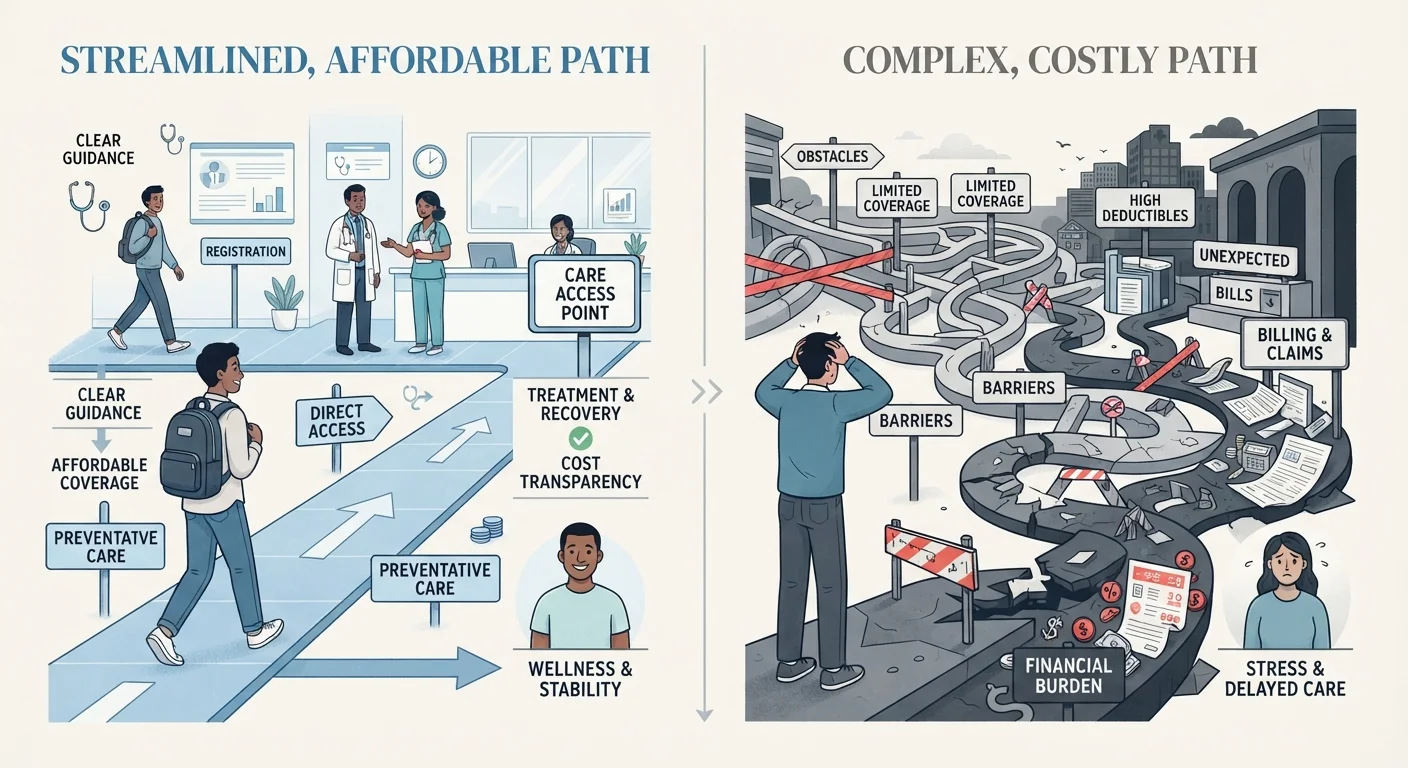
Not all therapists list their fees publicly, and insurance coverage details can be difficult to verify without making direct contact. It's often worth calling both the therapist's office and your insurer to confirm costs before your first appointment. If navigating costs feels overwhelming, understanding where therapy costs tend to break down for people without stable coverage can help you anticipate and plan around common sticking points.
This article is for informational purposes only and is not a substitute for professional financial or mental health guidance. If you are in crisis, please contact a qualified professional or crisis service immediately.