
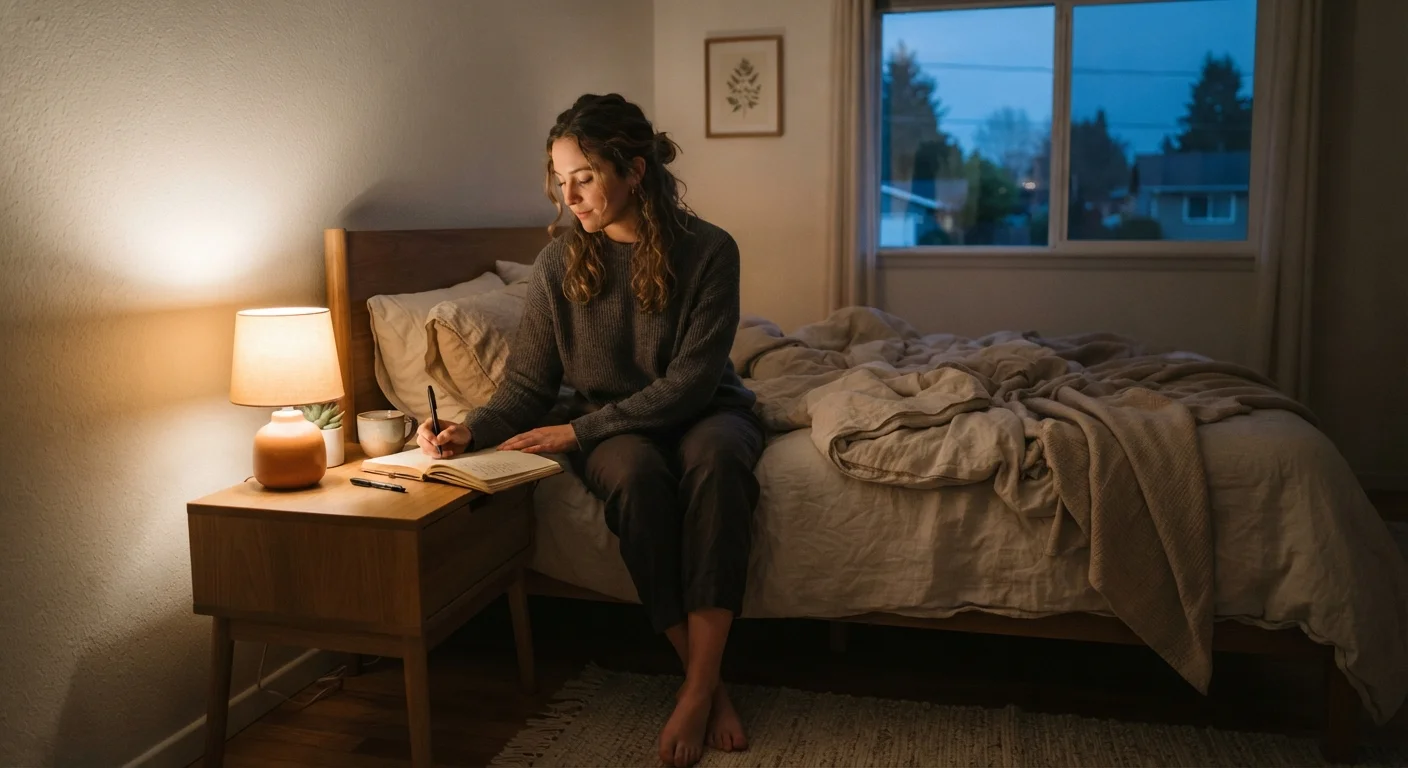
Why Evening Hours Shape More Than Just Sleep
Most people think about stress management as something that happens during the day — at the gym, during a lunch break, or in a meditation session. But the hours between dinner and bedtime may be the most influential window for your nervous system's recovery. How you use this time affects not only how quickly you fall asleep, but how resilient you feel the following morning.
When stress responses stay elevated into the evening, the body struggles to transition out of alertness. Cortisol — often called the stress hormone — naturally declines in the hours before sleep, but evening stressors like unresolved work demands, emotionally charged news, or conflict can blunt that decline. Over time, this pattern contributes to both poor sleep quality and a higher baseline stress level. To understand which specific habits tend to undermine this transition, learn about the evening habits that quietly disrupt sleep quality.
The good news is that intentional evening habits can work in the opposite direction — actively supporting your body's natural wind-down process rather than working against it. The Sleep & Recovery hub covers this broader landscape in depth.
What you will need
Building the Routine: Step by Step
The following steps are designed to be done in sequence, though you can adapt the order to fit your life. What matters most is that the routine feels manageable and repeatable — not perfect. For more on why consistency outperforms perfection, see practical principles for weaving relaxation into everyday life.
Set a consistent start time
Choose a fixed time — ideally 60 to 90 minutes before your target bedtime — and treat it as a gentle but firm boundary. Research on circadian rhythms consistently shows that predictable timing helps the brain anticipate and prepare for sleep. Set a recurring phone reminder if that helps, then silence the phone once it goes off.
Dim your environment and limit screens
Lower overhead lights and switch to lamps or warm-toned bulbs. Bright overhead light — and particularly the short-wavelength blue light from phones and computers — can suppress melatonin production and keep your brain in an alert state. Aim to put screens away at least 45 minutes before bed. For a structured approach to this, see reclaiming your pre-sleep hour from screens.
Do a brief worry offload
Spend five minutes writing down any lingering concerns, unfinished tasks, or tomorrow's to-do list. Research by psychologists studying cognitive arousal and insomnia suggests that externalizing worries — putting them on paper — reduces the mental rehearsal loop that keeps many people awake. You are not solving anything right now; you are simply making a container for these thoughts so your mind can release them.
Try a slow-breathing or body-scan practice
Spend 5 to 10 minutes on a simple relaxation technique. Slow, controlled breathing — such as inhaling for four counts, holding briefly, then exhaling for six to eight counts — activates the parasympathetic nervous system, the body's natural calming response. A body scan, where you shift attention gradually from your feet to your head while releasing tension in each area, works similarly. Neither requires prior experience or special equipment.
End with a sensory comfort ritual
Choose one small, predictable sensory experience to close your routine: a warm (not hot) shower, a cup of caffeine-free herbal tea, or a few minutes of light stretching. The goal is not the activity itself but the signal it sends — your nervous system learns that this cue means safety and rest are near. Over time, these anchors deepen the routine's effectiveness. For guidance on building habits that last, explore designing a daily wind-down routine that actually sticks.
Start Smaller Than You Think You Should
If a 60-minute routine feels overwhelming right now, begin with just two of the five steps for the first week. Research on habit formation suggests that lowering the barrier to entry is more effective than relying on motivation alone. A 15-minute version done consistently is more valuable than a perfect routine you abandon after three days.
Evening Routines Are Not a Substitute for Care
A wind-down routine can meaningfully support stress reduction and sleep, but it is not a replacement for professional support if you are managing anxiety, depression, chronic insomnia, or trauma. If your stress feels unmanageable or your sleep difficulties persist despite consistent effort, please reach out to a licensed mental health professional or your primary care provider.
This article is for general informational purposes only and does not constitute medical advice. If you experience persistent sleep difficulties, chronic stress, or symptoms that concern you, please consult a qualified healthcare professional.