Why Screens Undermine the Hour Before Sleep
The hour before bed is neurologically significant. Your brain begins releasing melatonin in response to dimming light — a signal that evolved long before glowing rectangles existed. Scrolling through a phone during this window introduces two compounding problems: the blue-wavelength light emitted by screens suppresses melatonin production, and the content itself — news, notifications, social comparison — activates the brain's threat-detection system, raising alertness when the opposite is needed.
Research in sleep science consistently links evening smartphone use to longer sleep-onset time, reduced sleep quality, and increased next-day anxiety. This isn't a willpower failure — it's a physiological mismatch between the tools we're using and what our nervous systems actually need at night.
The good news: you don't need to eliminate screens entirely. You need a structured boundary around one specific hour. For broader context on how evening habits shape both sleep and stress recovery, see our evening wind-down routine guide.
Willpower Alone Rarely Works Here
Simply deciding to use your phone less before bed typically fails within days because the pull of notifications is designed to override intentions. This walkthrough focuses on environmental design — changing your physical setup — rather than relying on self-control in the moment, which is a far more durable approach.
What You'll Need Before You Begin
This walkthrough requires very little — but a few simple items make the habit far easier to sustain.
What you will need
Once you have these in place, the steps below take about 10–20 minutes to set up and begin working the same night.
Standalone alarm clock
Removes the last remaining reason to keep your phone in the bedroom overnight.
Physical book or magazine
Provides a low-stimulation, screen-free way to occupy the mind during wind-down time.
Journal or notebook
Supports a brief brain-dump or gratitude practice to offload mental clutter before sleep.
Dim or warm-toned lamp
Replaces overhead lighting with lower-intensity, warmer light that supports melatonin production.
Step-by-Step: Setting Your Phone-Free Hour
Follow these steps in order. Each one builds on the last, making the habit progressively easier to maintain without relying on motivation.
Pick a fixed cutoff time
Decide on a specific time each evening when your phone goes off — say, 9:30 p.m. if you aim to sleep by 10:30 p.m. Naming a specific time anchors the habit far more reliably than a vague intention to "stop scrolling before bed."
Enable Do Not Disturb mode and put the phone face-down
When your cutoff alarm fires, enable Do Not Disturb (or your device's equivalent), silence notifications, and place the phone face-down in a different room if possible. This removes the visual cue that triggers checking behavior.
Move your charger outside the bedroom
Plug your phone in to charge at its new location — a hallway outlet, kitchen counter, or living room. This single environmental change is one of the most evidence-supported strategies for reducing nighttime phone use, because it removes the device from the sleep environment entirely.
Dim the lights in your space
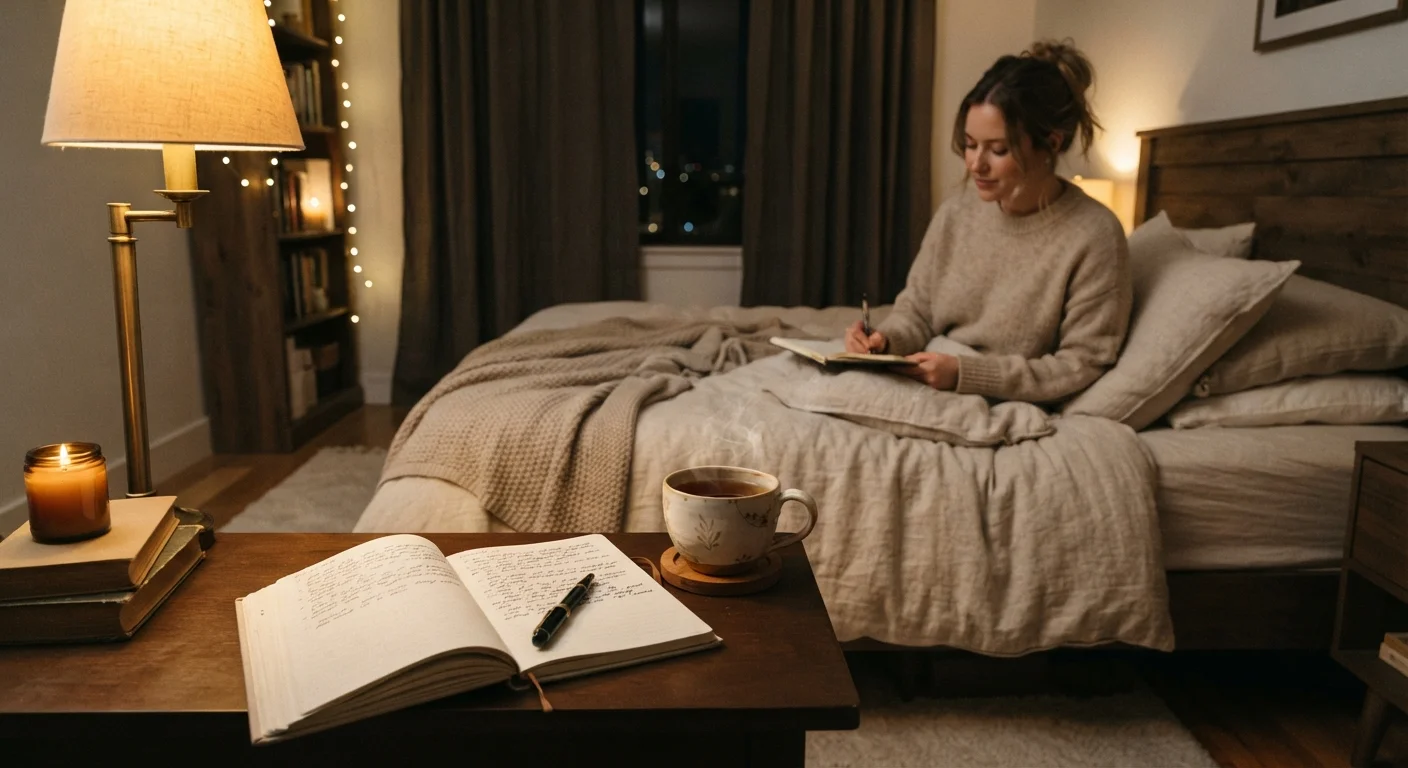
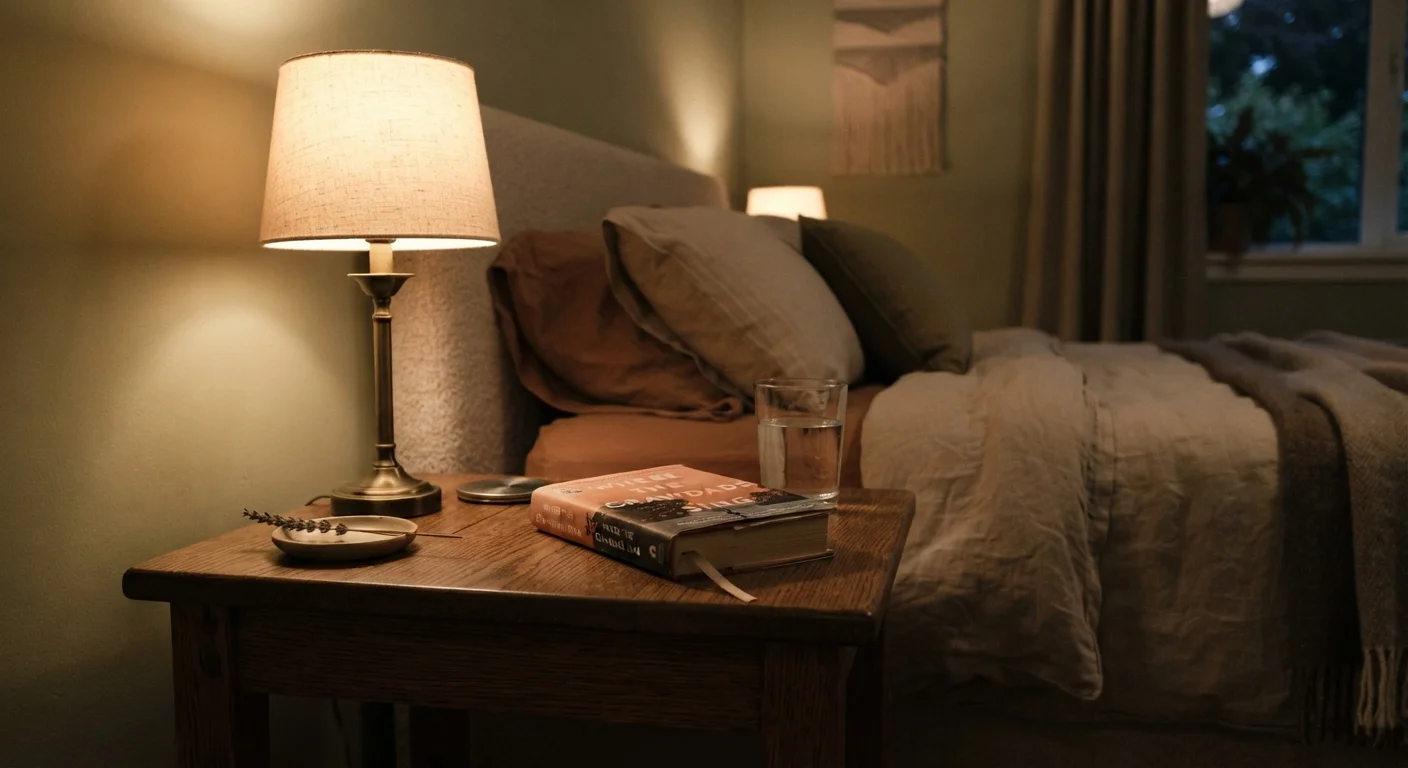
Switch off overhead lighting and use a lamp with warm or amber-toned light. This shift in ambient lighting supports your body's natural melatonin rise and signals to your nervous system that the active part of the day has ended.
Fill the time with a low-stimulation replacement activity
Choose one activity from the following options — or combine two briefly:
- Reading fiction or long-form nonfiction (physical book preferred over e-reader)
- Journaling: jot 3–5 sentences on what went well today or what's on your mind
- Light stretching or progressive muscle relaxation done on a mat or on the bed
- Listening to calm music or an audio program at low volume — without the screen in hand
The goal is not productivity. It's low cognitive load and sensory calm.
Reflect briefly after the first week
After seven nights, take two minutes to notice: Are you falling asleep faster? Do you feel less mentally reactive in the evenings? Is morning anxiety lower? You don't need to track data formally — a quick gut check is enough to reinforce what's working and identify what to adjust.
For complementary strategies on building the rest of your evening routine around stress reduction, explore building a wind-down routine that actually sticks and our broader Sleep & Recovery hub.
Start Smaller If Needed
If a full 60-minute phone-free window feels unrealistic right now, begin with 20–30 minutes and extend gradually. Behavioral research suggests that small, consistent wins build the neural pathways that make larger changes possible over time. Perfection is not the goal — direction is.
Troubleshooting Common Obstacles
"I use my phone as an alarm." A dedicated bedside alarm clock — even an inexpensive one — removes this justification entirely. It also eliminates the temptation to check notifications when you silence your morning alarm.
"What if someone needs to reach me?" Most smartphones have emergency bypass settings that allow calls from specific contacts to ring through even in Do Not Disturb mode. Configure this before bed so urgent contacts can still reach you without requiring the phone to be within arm's reach.
"I can't fall asleep without scrolling." This is extremely common and usually reflects a conditioned association between scrolling and winding down — not a genuine sleep need. The replacement activities in Step 5 directly address this. Give the new routine at least one week before evaluating whether it's working. Consistency matters more than perfection; see building a daily wind-down routine that actually sticks for guidance on sustaining new habits over time.
This article is for informational purposes only and does not constitute medical advice. If you are experiencing significant sleep difficulties or anxiety, please consult a qualified healthcare professional.