Why Posture Is Worth Thinking About
When people imagine meditation, they often picture someone sitting cross-legged with perfect posture on a cushion. In reality, the position you meditate in is a practical decision, not a spiritual one. Your posture affects your alertness, your comfort, and ultimately whether you stick with a session or give up halfway through.
For beginners especially, posture can feel like a stumbling block before practice even starts. If you're exploring meditation for the first time, this is one of those early decisions worth getting right — because the wrong choice can quietly make the whole thing feel harder than it needs to be. For a broader look at what else to expect early on, see Everything a First-Time Meditator Needs to Know.
Seated Meditation: Strengths and Limitations
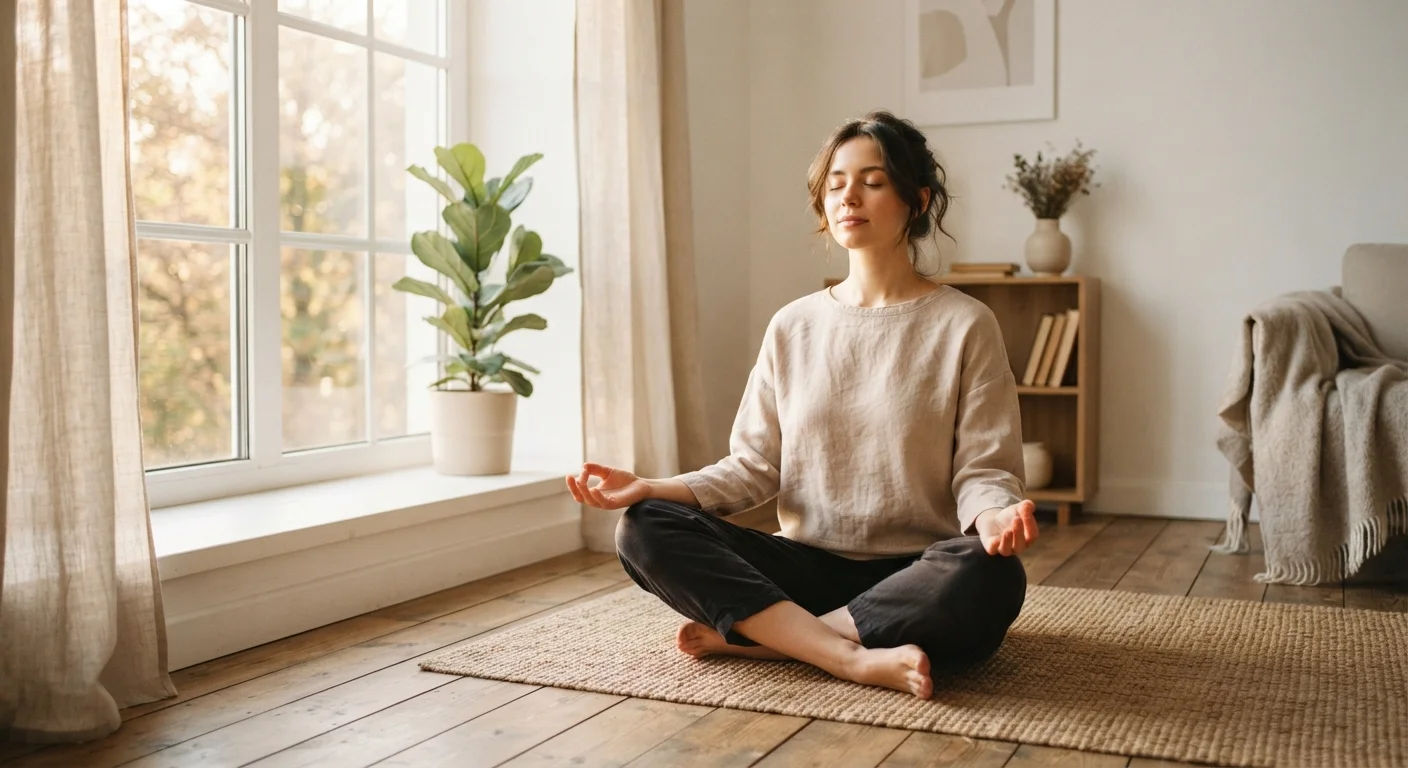
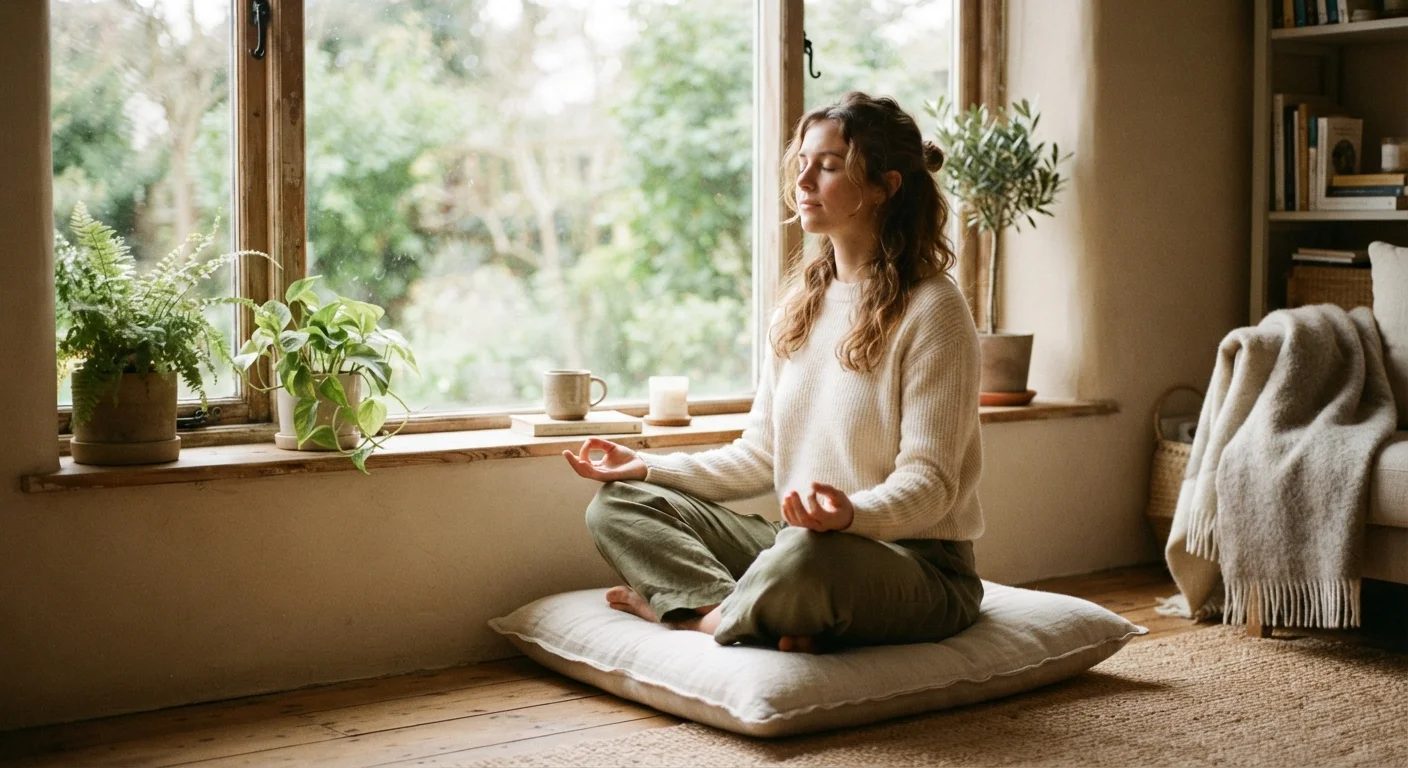
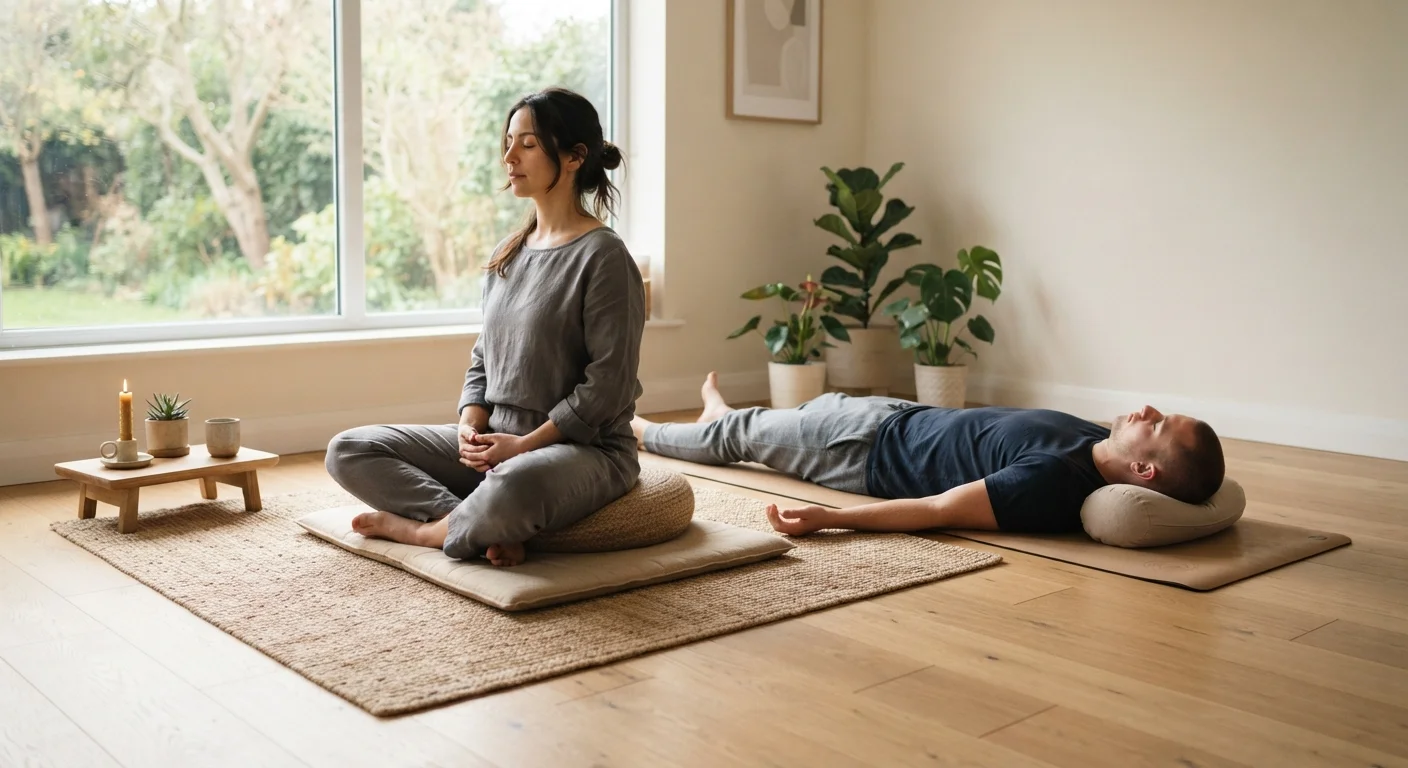
Sitting upright — whether on a cushion, a folded blanket, or an ordinary chair — is the most widely taught beginner posture, and for good reason. An upright spine encourages a state of relaxed alertness: calm enough to settle, engaged enough to stay aware. This physical cue signals to your brain that this time is different from rest or sleep.
You don't need a special cushion or a floor-based pose. Sitting on the edge of a firm chair with feet flat on the floor works well for most people and is often more sustainable over time. The key is that your back is self-supporting rather than slumped.
The limitation is physical: if you have lower back pain, hip tightness, or knee problems, maintaining a seated posture for even five minutes can feel distracting or discouraging. Sitting through discomfort isn't a requirement of meditation — it's a common reason beginners quietly give up. The guide Small Stumbles That Stall New Meditators covers exactly this kind of early friction.
| Criterion | Seated | Lying Down |
|---|---|---|
| Alertness support | High — upright posture promotes wakefulness | Lower — drowsiness risk is real |
| Physical accessibility | Moderate — can be difficult with back or hip issues | High — removes most physical strain |
| Best practice types | Breath focus, concentration, mantra | Body scan, guided imagery, wind-down |
| Equipment needed | Chair or cushion (minimal) | Yoga mat or firm surface (minimal) |
| Risk of falling asleep | Low | Moderate to high |
| Ideal time of day | Morning or daytime | Evening or pre-sleep |
Lying Down Meditation: Strengths and Limitations
Lying flat on your back — in what yoga practitioners call savasana — removes almost all physical strain and makes meditation genuinely accessible to people with chronic pain, mobility limitations, or extreme fatigue. It's also the natural position for body scan practices, where you move attention systematically through different parts of the body.
The significant trade-off is drowsiness. The lying-down position is closely associated with sleep, and your nervous system may interpret it accordingly. Many beginners find they doze off, especially when they're already tired or practicing in the evening.
Strategies that help: keeping your eyes slightly open, placing your arms away from your sides rather than along your body, or bending your knees with feet flat on the floor. These small adjustments introduce just enough mild engagement to help you stay awake. If you're interested in other calming techniques that work in a similar way, Calming Practices Beyond Deep Breathing covers a range of options including body scans and grounding exercises.
~35%
Adults reporting chronic pain in the US
CDC survey data suggests a substantial portion of US adults live with chronic pain, making standard seated postures a genuine barrier for many new meditators.
8 weeks
Typical duration of structured MBSR programs
Mindfulness-Based Stress Reduction (MBSR), one of the most studied meditation programs, runs over eight weeks and incorporates both seated and lying-down postures as standard practice.
Making the Choice That Actually Works for You
The practical question isn't which posture is theoretically better — it's which one you'll use consistently. A five-minute seated session done regularly will serve you far better than a lying-down practice you fall asleep through every time, and vice versa.
A useful starting point: try seated for your first few sessions. If physical discomfort is genuinely getting in the way, switch to lying down and experiment with the alertness strategies above. You can also alternate — seated for morning sessions when you're more awake, lying down for evening wind-down practice.
As your practice develops, posture tends to matter less. Experienced meditators can maintain focus in almost any position. At the beginner stage, the goal is simply to reduce friction so the habit can take root. For practical strategies on doing exactly that, Building a Meditation Habit from Scratch is a helpful next step.
You might also find it useful to pair your posture choice with a specific type of practice — Guided, Silent, or Mantra-Based explains how different approaches may suit different positions and goals.
This article is for informational purposes only and is not a substitute for professional medical or mental health advice. If you have a physical condition or health concern affecting your ability to meditate, please consult a qualified healthcare provider.