How the Diaphragm Controls Your Breath
Most adults breathe in a shallow, chest-dominant pattern — particularly when stressed. The diaphragm, a large dome-shaped muscle located just below the lungs, is designed to do the heavy lifting of respiration. When it contracts and flattens downward, it creates negative pressure that draws air deep into the lower lobes of the lungs. The belly visibly expands; the chest stays relatively still.
When you breathe shallowly from the chest, only the upper lungs fill. This pattern is less efficient, requires more muscular effort over time, and — crucially — keeps the body in a mild state of physiological alertness. Retraining the breath to use the diaphragm changes not just how much air you take in, but how the entire nervous system responds.
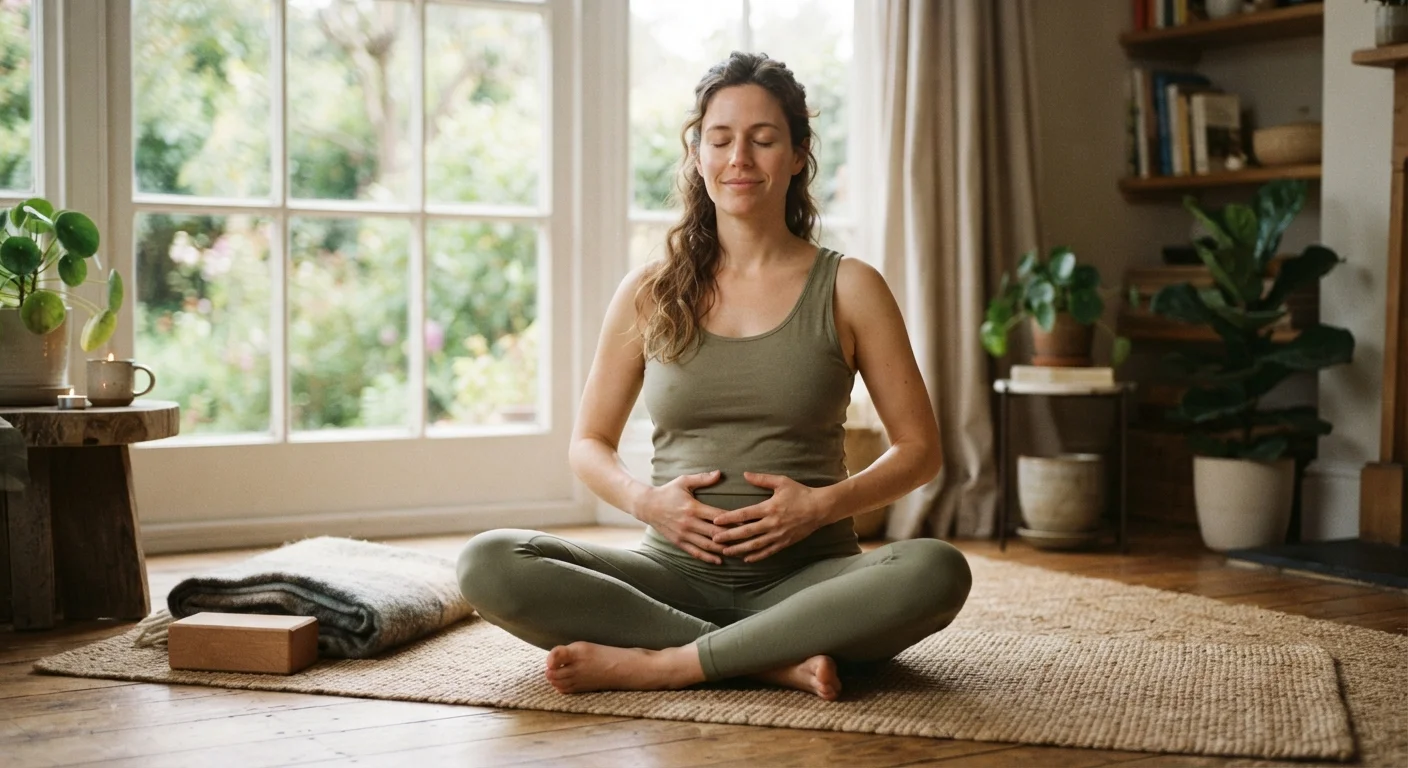
To feel the difference right now: place one hand on your chest and one on your belly. Breathe normally. If only the chest hand rises, you are breathing thoracically. Now try letting the belly hand rise first on each inhale — that is diaphragmatic engagement.
Why Slow Belly Breathing Calms the Nervous System
The body's stress response — the familiar "fight-or-flight" activation — is governed by the sympathetic branch of the autonomic nervous system. Its counterpart, the parasympathetic nervous system, is sometimes called the "rest-and-digest" system. These two branches constantly balance each other, and the breath is one of the few involuntary processes you can consciously influence to shift that balance.
Slow diaphragmatic breathing stimulates the vagus nerve, the longest cranial nerve in the body, which carries signals directly to the brainstem. Increased vagal tone — a measure of how readily the parasympathetic system activates — is associated with lower resting heart rate, reduced blood pressure, and greater emotional regulation capacity. Essentially, deep belly breathing sends the brain a credible physiological signal that the threat has passed.
“The breath is the only autonomic function we can consciously control, and that gives us a direct line to the nervous system that most people never use.”
— Andrew Weil, Physician and author specializing in integrative medicine
For a broader look at how the body's systems respond to calming practices, see the science behind relaxation. Diaphragmatic breathing sits alongside mindfulness as one of the most researched tools in this space — you can also explore how mindfulness interacts with the stress response.
How to Practice: A Simple Starting Method
You do not need a quiet room, a meditation cushion, or prior experience. Here is a straightforward approach used in many evidence-based programs:
- Find a comfortable position. Sit upright in a chair with your feet flat on the floor, or lie on your back with your knees bent. Place one hand on your belly, just below the navel.
- Exhale fully first. Breathe out slowly through your mouth to clear the lungs and create natural readiness for a deeper inhale.
- Inhale slowly through the nose. Breathe in for a count of four, consciously letting the belly rise and push your hand outward. Keep the chest and shoulders relaxed.
- Exhale slowly through the mouth. Breathe out for a count of six, letting the belly fall. A slightly longer exhale amplifies the parasympathetic effect.
- Repeat for five minutes. Start with three to five cycles and work up to five to ten minutes once daily.
Make the Exhale Longer Than the Inhale
A four-count inhale paired with a six- or eight-count exhale tends to produce a stronger parasympathetic response than equal-length breaths. If counting feels effortful at first, simply focus on making each exhale noticeably slower and longer than the breath in. Even a small ratio difference is meaningful.
Diaphragmatic breathing is one component of a broader approach to everyday stress. It fits naturally alongside physical movement and sleep hygiene — learn how these connect in movement, breath, and sleep as stress management pillars. If you are curious how breathing compares with other calming strategies, calming practices beyond deep breathing offers a useful overview.
This article is for general informational purposes only and is not a substitute for professional medical or mental health advice. If you are experiencing significant anxiety, stress-related health problems, or any medical condition, please consult a qualified healthcare provider.