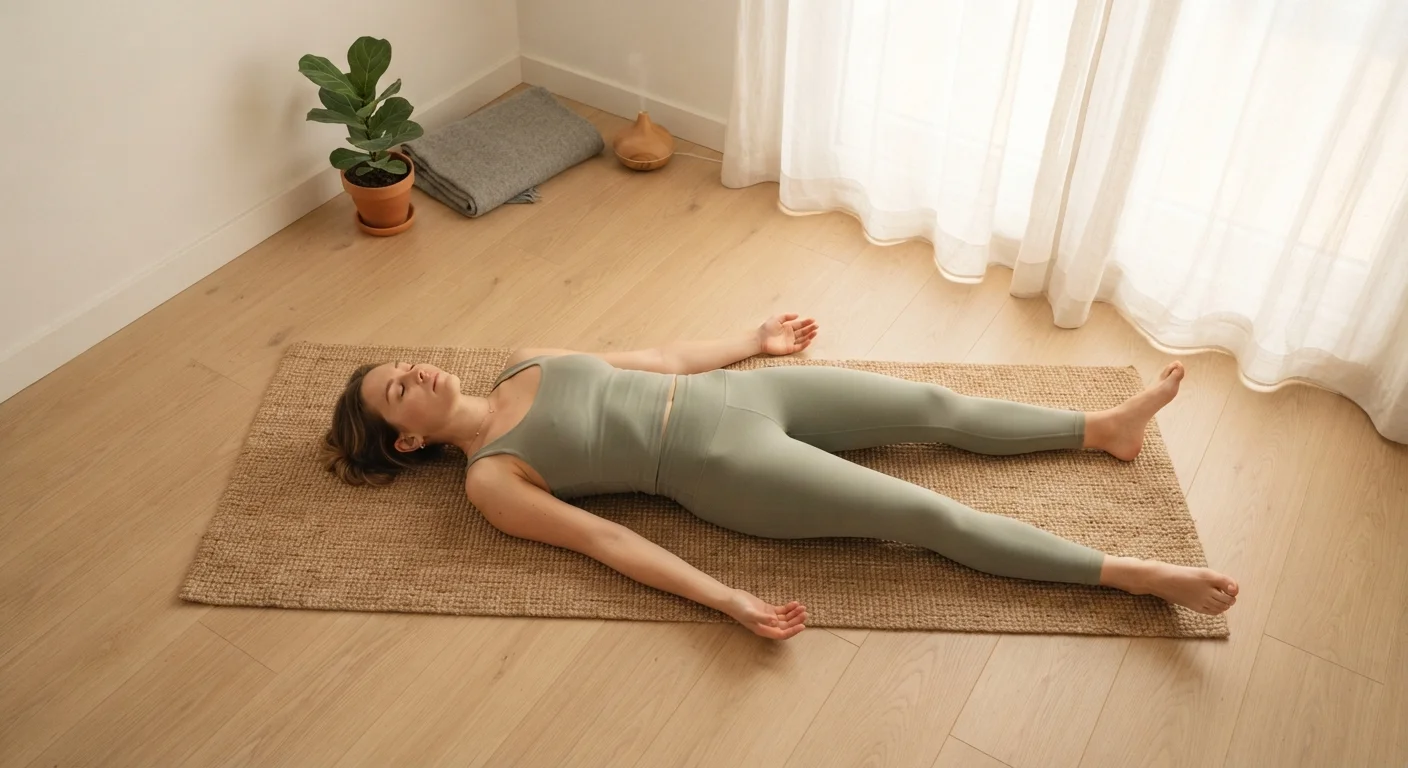

What Actually Happens During a Body Scan
In a body scan, you direct attention to one area of the body at a time — often starting at the soles of the feet and moving gradually toward the top of the head — and simply notice whatever is present. You might feel tingling, heaviness, tightness, warmth, or nothing at all. The instruction is the same regardless: observe, don't evaluate.
This steady, non-reactive observation is what makes the body scan distinctly mindfulness practice rather than relaxation exercise. Relaxation may follow, but the mechanism is different — you are training the capacity to notice experience without immediately reacting to it. Over time, that capacity extends beyond formal practice into everyday life.
For a practical walkthrough of your first session, see our step-by-step guide for complete beginners. You can also explore the Meditation Starters hub for other entry-level practices.
The Science Behind the Mind-Body Connection
Emotions do not live only in the mind. Fear tightens the chest. Shame drops the shoulders. Chronic stress accumulates as persistent muscle tension, often in the neck, jaw, or lower back. Body scan practice works partly by making these patterns visible — you cannot regulate what you cannot notice.
8 weeks
Standard length of MBSR programs using body scan
The Mindfulness-Based Stress Reduction program, developed at the University of Massachusetts, structures body scan as a core weekly practice over an eight-week course.
~58%
Participants reporting reduced stress after MBSR
A review published in general mindfulness literature has found that a majority of MBSR participants self-report meaningful reductions in perceived stress following program completion, though effect sizes vary by study design.
Research on MBSR programs — which use body scan as a central practice — has found associations with reduced self-reported stress and improved measures of psychological wellbeing. Studies examining the neurological effects of mindfulness practice more broadly suggest it may influence activity in brain regions linked to emotional regulation, including the prefrontal cortex and the insula, a region involved in processing internal bodily states (interoception). These findings are promising, though researchers emphasize that the field is still developing.
To explore how physical tension and emotional experience intertwine, see how body scanning supports emotional regulation.
“The body scan is one of the most powerful meditations for cultivating both a deep level of relaxation and a precise, penetrating awareness of moment-to-moment experience.”
— Jon Kabat-Zinn, Founder of Mindfulness-Based Stress Reduction (MBSR), Professor Emeritus of Medicine, University of Massachusetts
Who Benefits Most — and What to Expect
Body scan is accessible to almost anyone. It requires no equipment, no prior meditation experience, and no particular physical ability. It is especially useful for people who find breath-focused meditation frustrating — shifting attention to the body can feel more concrete and grounding.
Start Short to Build the Habit
If 45 minutes feels daunting, begin with a guided five- or ten-minute body scan. Consistency matters more than duration — even brief daily practice builds the interoceptive awareness that makes the technique effective over time. Many free guided audio sessions are available through hospital wellness programs, public libraries, and mental health nonprofits.
People managing chronic pain, stress-related tension, or difficulty sleeping often report the most noticeable short-term benefits, though individual responses vary widely. It is also worth knowing that body scan can occasionally surface difficult emotions — noticing a tight chest may bring awareness to anxiety you had not fully acknowledged. This is not harmful, but it is worth being prepared. Understand what to do when strong feelings arise before beginning regular practice.
If you are weighing body scan against other techniques, comparing body scan to breathing exercises can help you choose an approach that fits your stress style.
This article is for informational purposes only and does not constitute medical or mental health advice. Always consult a qualified healthcare professional for guidance specific to your situation.