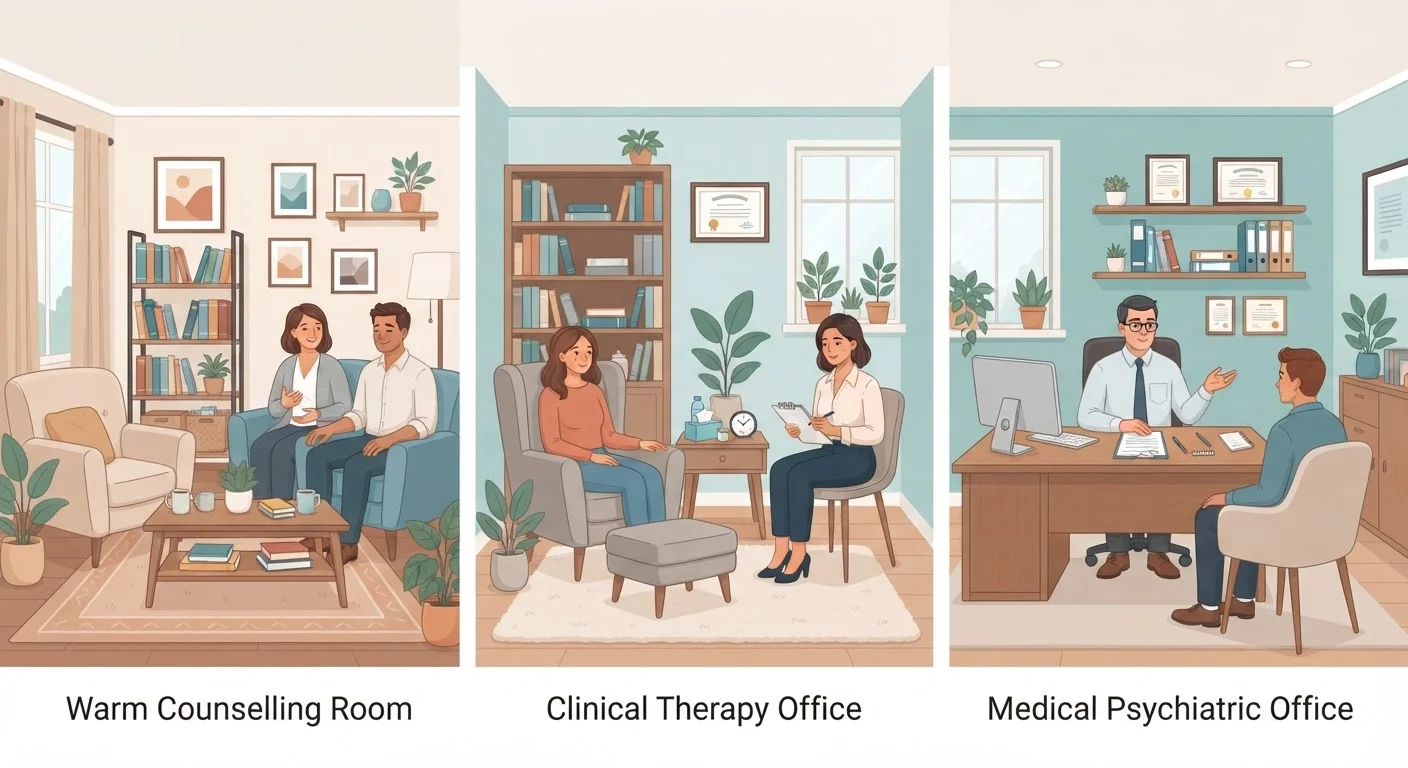

What Sets These Two Roles Apart?
The confusion between psychologists and psychiatrists is completely understandable - both work in mental health, both can diagnose conditions, and their names sound remarkably similar. But their training, tools, and day-to-day roles are meaningfully different.
A psychiatrist is a fully qualified medical doctor who then specializes in psychiatry. After completing a medical degree and residency, they are trained to understand mental health through a biological and medical lens. In most U.S. states, prescribing medication is a central part of their role - though they may also offer some therapy depending on their practice.
A psychologist holds a doctoral degree in psychology (typically a PhD or PsyD) and specializes in understanding how people think, feel, and behave. Their primary tool is talk therapy, using approaches like cognitive behavioral therapy (CBT), which helps people identify and shift unhelpful patterns. In most states, psychologists cannot prescribe medication, though a small number of states have passed limited prescribing rights for specially trained psychologists.
For a broader look at the full landscape of professionals who support mental health, see The Different Types of Mental Health Professionals Explained.
| Criterion | Psychologist | Psychiatrist |
|---|---|---|
| Core degree | PhD or PsyD in Psychology | Medical degree (MD or DO) |
| Can prescribe medication? | Generally no (most states) | Yes |
| Primary treatment method | Talk therapy (e.g., CBT) | Medication management; may offer therapy |
| Can diagnose mental health conditions? | Yes | Yes |
| Training length (approx.) | 5-7 years post-bachelor's | 8+ years post-bachelor's (incl. medical school) |
| Typical session focus | Thoughts, feelings, behavior patterns | Symptom evaluation, medication review |
| Best suited for | Therapy for anxiety, depression, trauma | Complex diagnoses, medication needs |
When Each Professional Is Typically the Right Fit
Choosing between them isn't about one being better - it's about matching the kind of support you need to the professional best equipped to provide it.
A psychologist may be a good starting point if:
- You're experiencing anxiety, persistent low mood, grief, or relationship difficulties
- You want to explore your thoughts, feelings, and behaviors in depth
- You're looking for structured, evidence-based therapy over a series of sessions
- You'd like a thorough psychological assessment to better understand what you're experiencing
A psychiatrist may be more appropriate if:
- Your symptoms are significantly affecting your ability to function day-to-day
- You or a doctor suspect a condition like bipolar disorder, schizophrenia, or severe depression
- Medication has been suggested or you want to explore whether it might help
- You're already in therapy but your progress feels limited without additional support
It's also worth knowing that seeing both is common and often beneficial. Many people work with a psychologist for regular therapy while a psychiatrist oversees any medication. Good communication between the two tends to make care more cohesive. You might also find it useful to read about the differences between therapy, counselling, and psychiatry to further clarify your options.
1 in 5
U.S. adults experiencing mental illness annually
According to the National Institute of Mental Health (NIMH), approximately 1 in 5 U.S. adults lives with a mental illness in any given year.
~57%
Adults with mental illness who receive no treatment
NIMH data indicates that a majority of adults with mental illness do not receive treatment, often due to uncertainty about where to turn.
16,000+
Practicing psychiatrists in the U.S.
The American Psychiatric Association notes ongoing shortages, particularly in rural areas, making psychologists an important point of access for many people.
Practical Steps for Finding the Right Support
If you're not sure where to begin, your primary care physician is often a reasonable first call. They can rule out physical causes for your symptoms, provide referrals, and help you navigate the system. Many people also start with a psychologist for an initial assessment, which can then clarify whether a psychiatric evaluation would be helpful.
When researching professionals, look for licensing information and areas of specialty. In the U.S., psychologists are licensed by state boards, and psychiatrists are board-certified medical doctors. Both credentials are publicly verifiable.
Insurance and Access Can Affect Your Choice
Availability and cost are real factors. Psychiatrists tend to see patients less frequently (often for medication check-ins), while psychologists may offer more regular sessions. Insurance coverage varies widely, and wait times differ by region. Your insurance provider's directory or a service like the SAMHSA National Helpline (1-800-662-4357) can help you identify covered providers in your area.
Remember that finding the right fit takes time, and that's completely normal. It's okay to ask a provider about their approach, training, and experience before committing to working with them. The most important thing is that you feel safe, heard, and respected in the room.
For more on how self-help strategies and professional care work alongside each other, see Self-Help and Professional Support: Understanding the Difference.
This article is for general informational purposes only and is not a substitute for professional medical or psychological advice. If you are experiencing a mental health crisis, please contact a qualified healthcare provider or a crisis service immediately.