Two States That Are Easy to Confuse
Most of us have used the words stressed and burned out interchangeably. And it makes sense - both involve exhaustion, irritability, and difficulty functioning. But understanding what separates them isn't just a matter of semantics. It can shape how you respond to what you're going through.
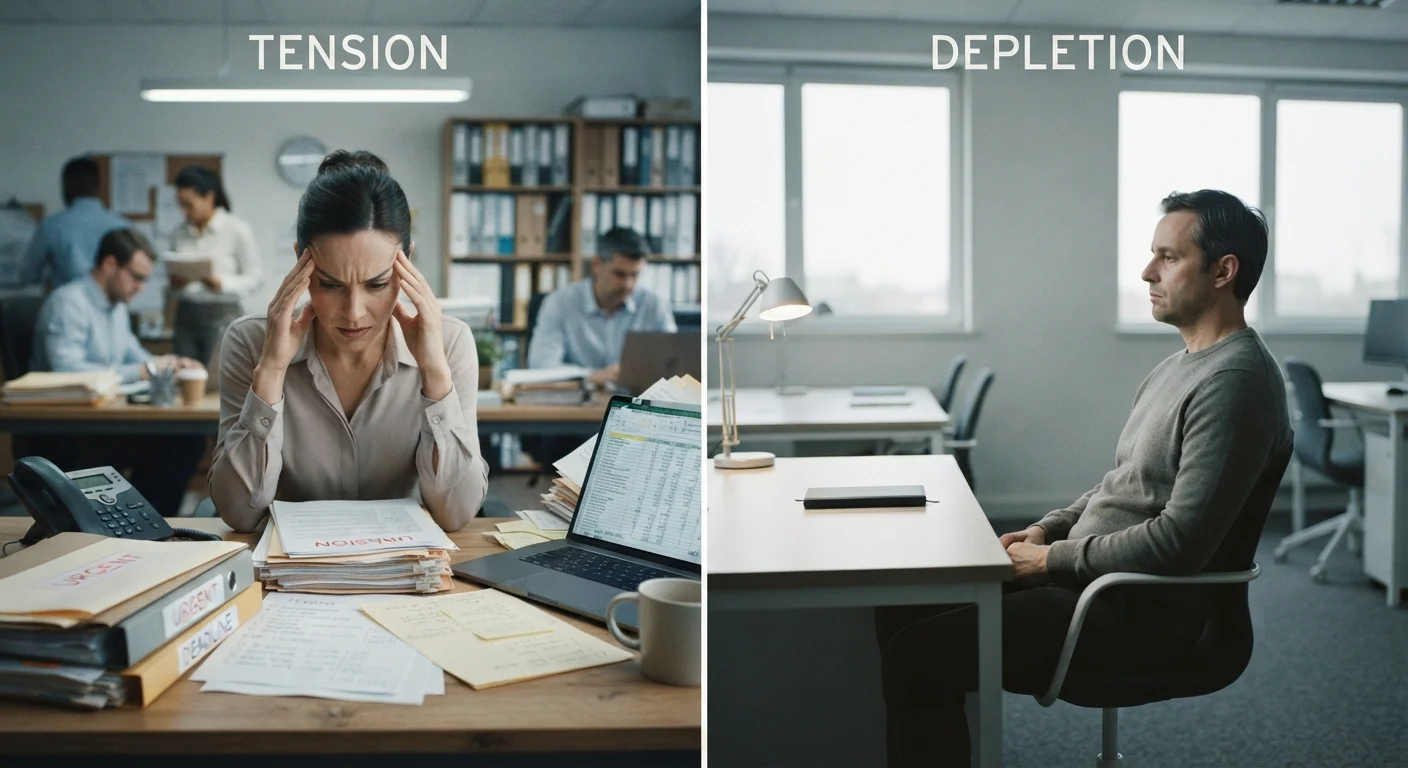
Stress symptoms - physical tension, racing thoughts, and a sense of being overwhelmed - typically point to a system under pressure. Burnout, on the other hand, signals that the system has been under pressure for too long. Think of it as the difference between a sprinter who is winded and an athlete who has lost the will to run at all.
Both experiences deserve attention. Knowing which one you're in helps you ask for the right kind of help.
How Stress and Burnout Actually Differ
Stress tends to feel urgent. There's too much to do, not enough time, and too many competing demands. Even when it's painful, stress usually carries some emotional charge - worry, frustration, or a drive to fix things. That emotional engagement is actually a clue: it means something still feels worth caring about.
Burnout, by contrast, often presents as a kind of flatness. Work that once felt meaningful feels hollow. People you care about feel distant. You may feel beyond tired - not just sleepy but deeply, persistently depleted in a way sleep doesn't repair. Cynicism, emotional detachment, and a loss of personal effectiveness are the hallmarks that researchers and clinicians use to define it.
| Criterion | Stress | Burnout |
|---|---|---|
| Core feeling | Too much to handle | Nothing left to give |
| Emotional state | Anxious, urgent, frustrated | Detached, numb, empty |
| Onset | Can appear quickly | Builds gradually over time |
| Response to rest | Often improves with recovery | Rest rarely fully restores |
| Sense of purpose | Usually still present | Often lost or severely diminished |
| Typical cause | Specific pressures or demands | Chronic, unrelenting overload |
| Path to recovery | Coping strategies, boundaries, rest | Sustained change, often with support |
One useful way to think about it: stress says "I have too much to handle." Burnout says "I have nothing left to handle it with." That shift - from overload to emptiness - is the emotional core of the distinction. You can learn more about the full picture of what burnout actually is and why it goes beyond ordinary tiredness.
How Each One Develops Over Time
Stress can arrive quickly - a tight deadline, a difficult conversation, an unexpected life event. It can also ease relatively quickly once the pressure lifts or you build in recovery. That doesn't mean all stress is mild; chronic stress is genuinely harmful. But its trajectory tends to follow the presence or absence of the stressor itself.
Burnout doesn't work that way. It builds slowly, often invisibly, as demands consistently outpace recovery. People who eventually experience burnout frequently describe having pushed through stress for months or years, dismissing warning signs, and convincing themselves things would improve soon. By the time burnout sets in, even a vacation may provide only temporary relief.
77%
Workers who report workplace stress
According to the American Institute of Stress, approximately 77% of people in the US report experiencing physical symptoms caused by stress.
3 core dimensions
Defining features of burnout
Researchers Christina Maslach and Michael Leiter identify emotional exhaustion, depersonalization, and reduced personal accomplishment as burnout's three core dimensions.
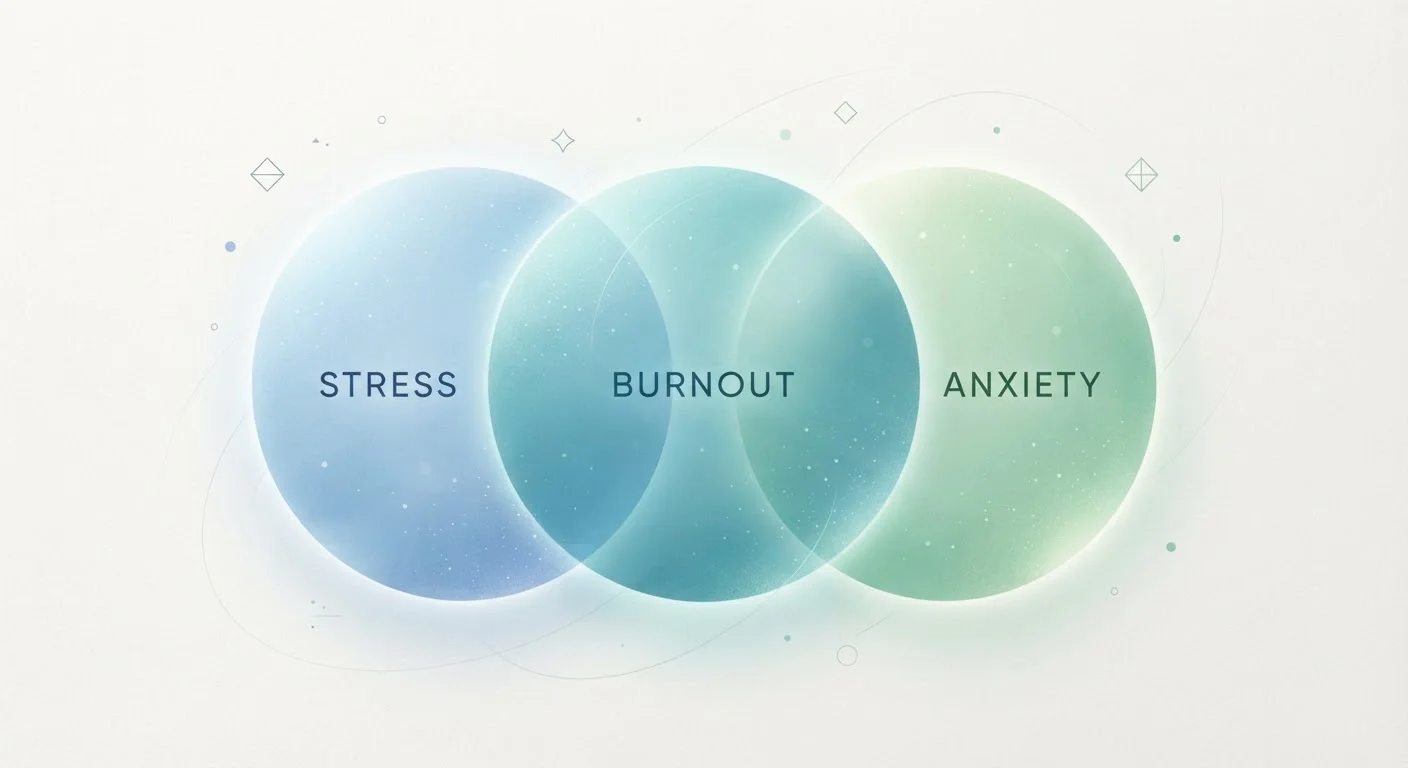
This is also why the two require different responses. Taking a long weekend may genuinely help with stress. Recovering from burnout usually involves identifying and changing the underlying patterns - the workload, the boundaries, the expectations - that allowed depletion to accumulate. If you're uncertain which experience fits you, a symptom reflection guide can help you think it through more carefully. And if anxiety is part of the picture too, it's worth exploring how stress, burnout, and anxiety overlap and differ.
This article is for informational purposes only and is not a substitute for professional medical or mental health advice. If you are concerned about your mental health, please consult a qualified healthcare professional.