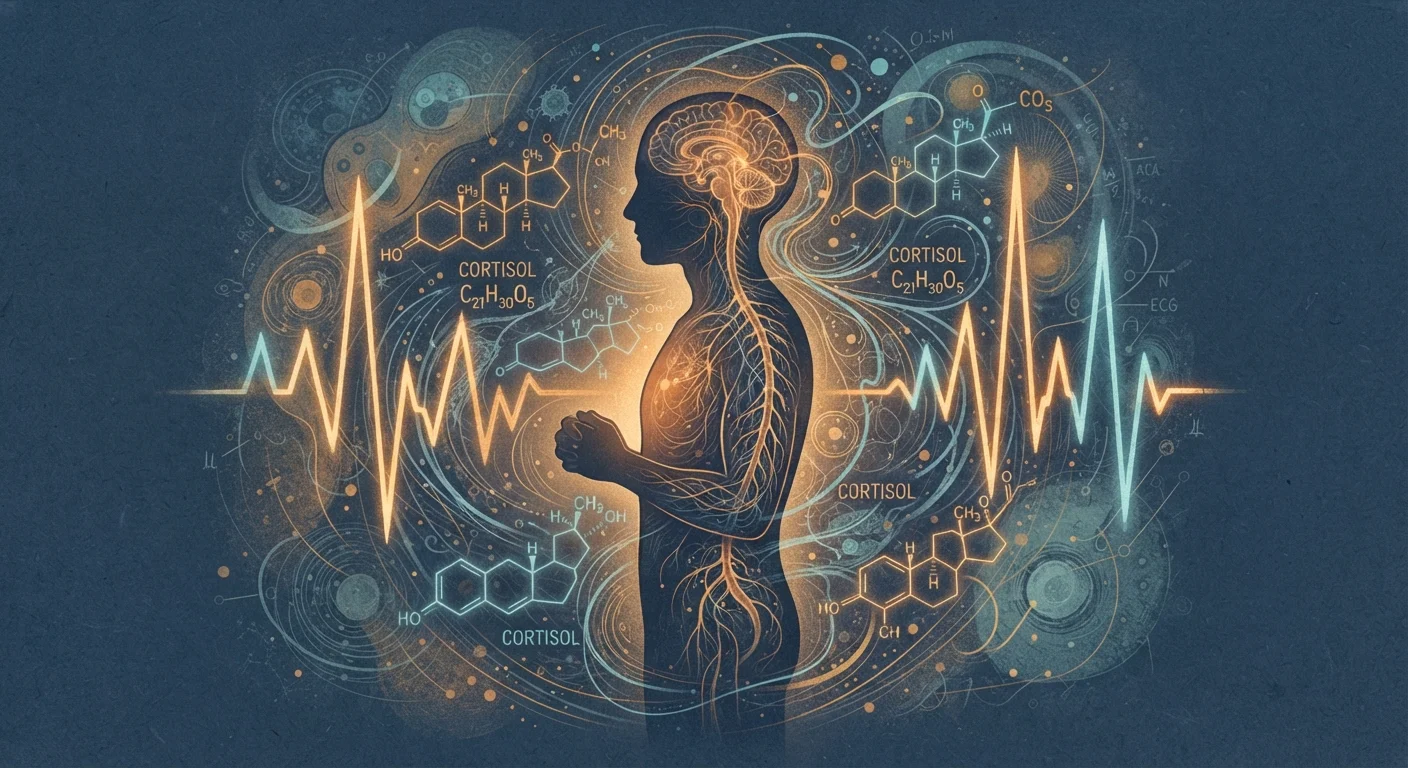

What Makes Chronic Stress Different
A bad day at work, a difficult conversation, an unexpected bill - these are stressful, but they're also temporary. The nervous system spikes, you feel tense, and then the situation passes and the tension eases. That is how stress is supposed to work.
Chronic stress breaks that cycle. Instead of a spike that resolves, the stress response stays activated - sometimes at a lower intensity, but persistently. The source doesn't disappear: the financial pressure doesn't lift, the difficult relationship doesn't improve, the demanding job doesn't let up. The body keeps preparing for a threat that never fully clears.
This is more than a difference in degree. Short-term and long-term stress involve different biological profiles, different psychological effects, and different health consequences over time. Understanding the distinction matters because the strategies that help with a rough afternoon are often insufficient for stress that has been grinding on for months.
77%
Adults reporting physical stress symptoms
According to the American Psychological Association's Stress in America surveys, a large majority of adults regularly experience physical symptoms they attribute to stress.
3x
Increased depression risk with chronic stress
Research consistently shows that people under chronic psychosocial stress face a significantly elevated risk of developing major depressive disorder compared to low-stress counterparts.
1 in 5
Adults experiencing extreme stress levels
APA Stress in America data indicate that roughly one in five adults rates their stress level at 8, 9, or 10 on a 10-point scale - a level associated with significant health risk.
What Happens Inside the Body
When the brain perceives a threat - real or anticipated - it triggers the release of stress hormones including adrenaline and cortisol. Heart rate rises, muscles tighten, attention narrows. This is useful in the short term. It sharpens focus and mobilizes energy.
With chronic stress, cortisol remains elevated far longer than the body intended. Over time, sustained high cortisol levels interfere with a range of systems. Immune responses can become dysregulated - sometimes suppressed, sometimes overactive. Sleep architecture is disrupted. Inflammatory markers rise. The cardiovascular system works harder than it should. Even memory and concentration are affected, because the hippocampus - the brain region central to learning and memory - is sensitive to prolonged cortisol exposure.
For a deeper look at these mechanisms, the science behind what chronic stress does to the body walks through the physiological cascade in detail.
“The stress response is a brilliant short-term survival mechanism. The problem is that it was never designed to stay switched on - and in modern life, for many people, it rarely gets to switch off.”
— Robert Sapolsky, Neuroendocrinologist and author of 'Why Zebras Don't Get Ulcers'
The Mental Health Toll
Chronic stress doesn't stay in the body - it reshapes thinking patterns and emotional regulation. People under persistent stress often report difficulty concentrating, irritability that feels out of proportion, and a growing sense that problems are insurmountable. These aren't character flaws; they're predictable responses to a nervous system that has been in high-alert mode for too long.
Left unaddressed, chronic stress is a recognized risk factor for anxiety disorders and major depression. It can erode the sense of agency - the feeling that one's actions make a meaningful difference - which makes it harder to take the steps that might actually help. This creates a feedback loop where the stress sustains itself.
It's also worth noting how easy it is to normalize this state. When tension has been the baseline for months, it starts to feel ordinary. Why chronic stress gets normalized - and why that's a problem is worth understanding before the cumulative effects become harder to reverse.
Small Resets Can Matter
When chronic stress is the backdrop of daily life, even brief intentional pauses - a short walk, a few minutes of slow breathing, a moment away from screens - can help regulate the nervous system in the short term. These aren't cures, but they can prevent the stress response from compounding unchecked. If stress feels overwhelming or persistent, speaking with a mental health professional is a meaningful next step.
Recognizing It in Everyday Life
Chronic stress rarely announces itself clearly. It tends to show up as a cluster of symptoms that seem unrelated: persistent fatigue that sleep doesn't fix, recurring headaches or stomach problems, a shortened fuse, difficulty enjoying things that used to feel rewarding. Any one of these might be attributed to something else entirely.
The pattern matters more than any single symptom. If multiple signs have been present for weeks and seem tied to an ongoing stressor with no clear resolution, that's worth taking seriously. How chronic and acute stress symptoms compare can help clarify what to look for.
This article is for informational purposes only and is not a substitute for professional medical or mental health advice. If you are concerned about your stress levels or mental health, please consult a qualified healthcare provider.