
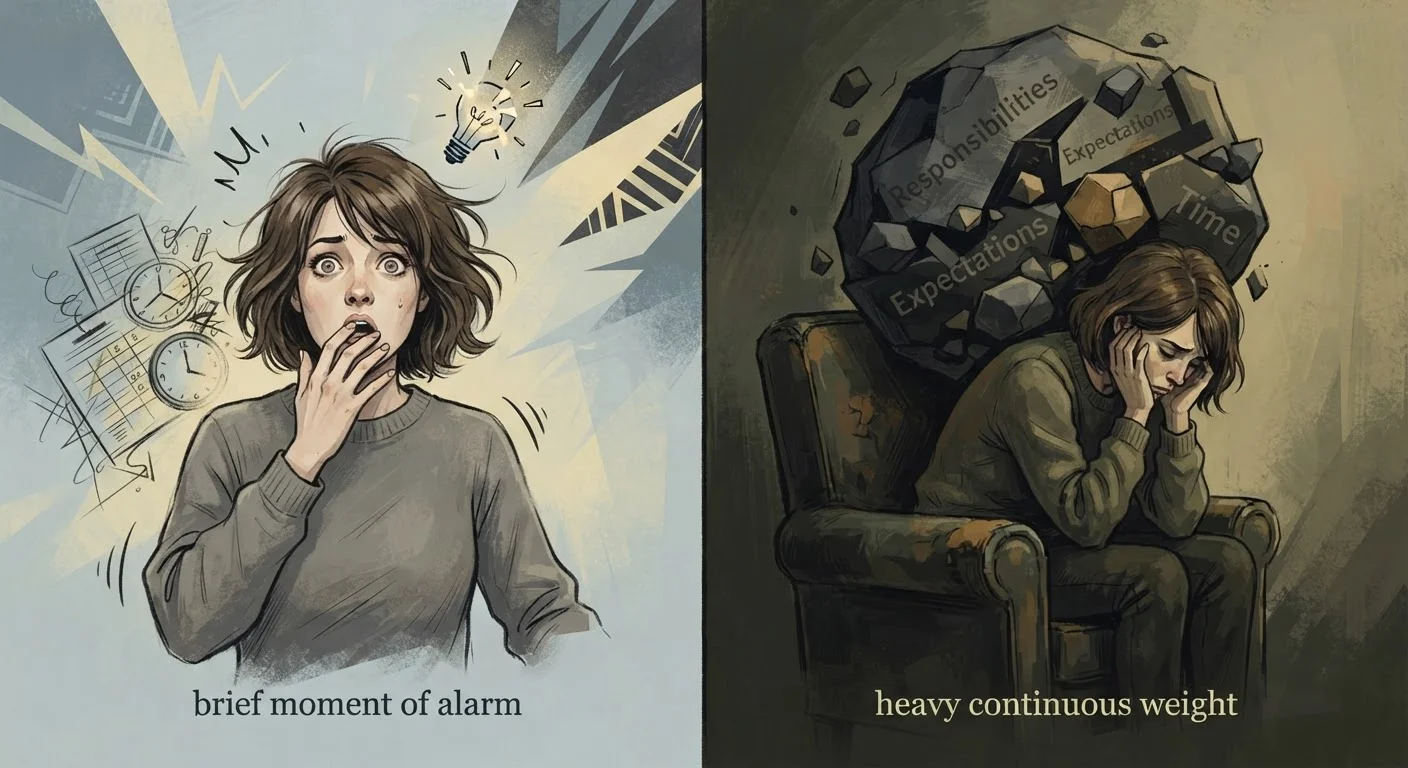
What Makes Them Different at the Root
Both acute and chronic stress begin the same way: the brain detects a threat - real or perceived - and triggers the body's stress response. The hypothalamus signals the adrenal glands to release cortisol and adrenaline, heart rate climbs, muscles tighten, and attention sharpens. In the short term, this is useful. It's why a near-miss on the highway makes you react faster than conscious thought.
The difference isn't in how the stress response starts - it's in how long it runs and whether the body gets a chance to recover.
Acute stress is tied to a specific, identifiable stressor: a confrontation, a medical scare, a job interview. Once that event ends, the nervous system downshifts. Cortisol levels fall, heart rate normalizes, and the body returns to a resting state. This recovery window is what makes acute stress manageable - even adaptive - under normal circumstances.
Chronic stress has no clean endpoint. It arises when stressors are ongoing - financial insecurity, a troubled relationship, long-term caregiving - or when someone can't psychologically disengage from a stressor even after the external situation changes. The stress response stays partially activated for weeks or months. Understanding how these two stress patterns differ is important for anyone trying to make sense of how they're feeling.
| Criterion | Acute Stress | Chronic Stress |
|---|---|---|
| Duration | Minutes to days | Weeks to months or longer |
| Trigger | Specific, identifiable event | Ongoing or unresolved situation |
| Recovery | Body returns to baseline after threat passes | Little or no recovery window |
| Cortisol pattern | Spikes then drops | Remains chronically elevated |
| Physical impact | Generally limited; body recovers | Cumulative damage to heart, immune system, brain |
| Mental health risk | Low if isolated; higher after trauma | Significantly raises risk of depression and anxiety |
| Common coping response | Short-term strategies often sufficient | Usually requires structured professional support |
What Chronic Stress Does to the Body Over Time
A stress system designed for short bursts causes damage when left running continuously. Sustained cortisol exposure affects nearly every major system in the body.
- Cardiovascular: Persistent high blood pressure and inflammation raise the risk of heart disease over time.
- Immune: Chronic stress can suppress immune function, making the body slower to fight off infections and slower to heal.
- Sleep and cognition: High cortisol disrupts sleep architecture, impairs memory consolidation, and makes concentration harder during waking hours.
- Mental health: Long-term stress is a significant risk factor for depression and anxiety disorders. The relationship is bidirectional - stress worsens mood disorders, and mood disorders amplify the stress response.
Chronic stress is fundamentally different from a bad day - it reshapes how the brain and body function at a baseline level. This is why coping strategies that work for acute stress (taking a walk, venting to a friend) are often insufficient when stress is chronic.
77%
Adults reporting physical stress symptoms
According to American Psychological Association surveys, a large majority of US adults regularly experience physical symptoms they associate with stress.
2-3×
Increased cardiovascular risk with chronic stress
Research published in cardiovascular and psychosomatic medicine journals has linked long-term psychological stress to two to three times greater risk of certain heart events.
It's also worth noting that stress doesn't feel the same for everyone. Individual differences in biology, prior experiences, and social support all shape how chronic stress manifests.
Recognizing the Signs - and Knowing When to Seek Help
Acute stress tends to feel urgent and obvious. The symptoms are intense but time-limited: racing heart, sweaty palms, a surge of anxiety or dread. Once the stressor passes, most people feel a wave of relief. If you notice those symptoms persisting or escalating after a traumatic event, understanding the difference between acute stress disorder and PTSD may be a useful next step.
Chronic stress is easier to miss precisely because it becomes a background state. Common signs include:
- Persistent fatigue that sleep doesn't fully resolve
- Irritability or emotional numbness that feels like a new normal
- Frequent headaches, muscle tension, or gastrointestinal problems without a clear medical cause
- Difficulty feeling pleasure or motivation
- Relying increasingly on alcohol, food, or other substances to unwind
If these patterns have been present for several weeks or longer, it's worth discussing them with a primary care provider or mental health professional. This isn't about diagnosing yourself - it's about getting an accurate picture. Stress and anxiety disorders can look alike, and distinguishing between them matters for choosing the right kind of support.
Similarly, if stress has become so constant that it feels indistinguishable from your personality, it may be useful to explore the distinction between chronic stress and burnout.
When Acute Stress Becomes Something More
In most cases, acute stress resolves on its own. However, when acute stress follows a traumatic event and symptoms persist beyond a few days, it may meet criteria for Acute Stress Disorder - a clinical condition defined in the DSM-5. Left unaddressed, this can sometimes progress to Post-Traumatic Stress Disorder (PTSD). If your stress response doesn't seem to be fading after a frightening or traumatic experience, speaking with a mental health professional is a reasonable and important step.
This article is for general informational purposes only and is not a substitute for professional medical or mental health advice. If you are concerned about your stress levels or overall wellbeing, please consult a qualified healthcare provider.