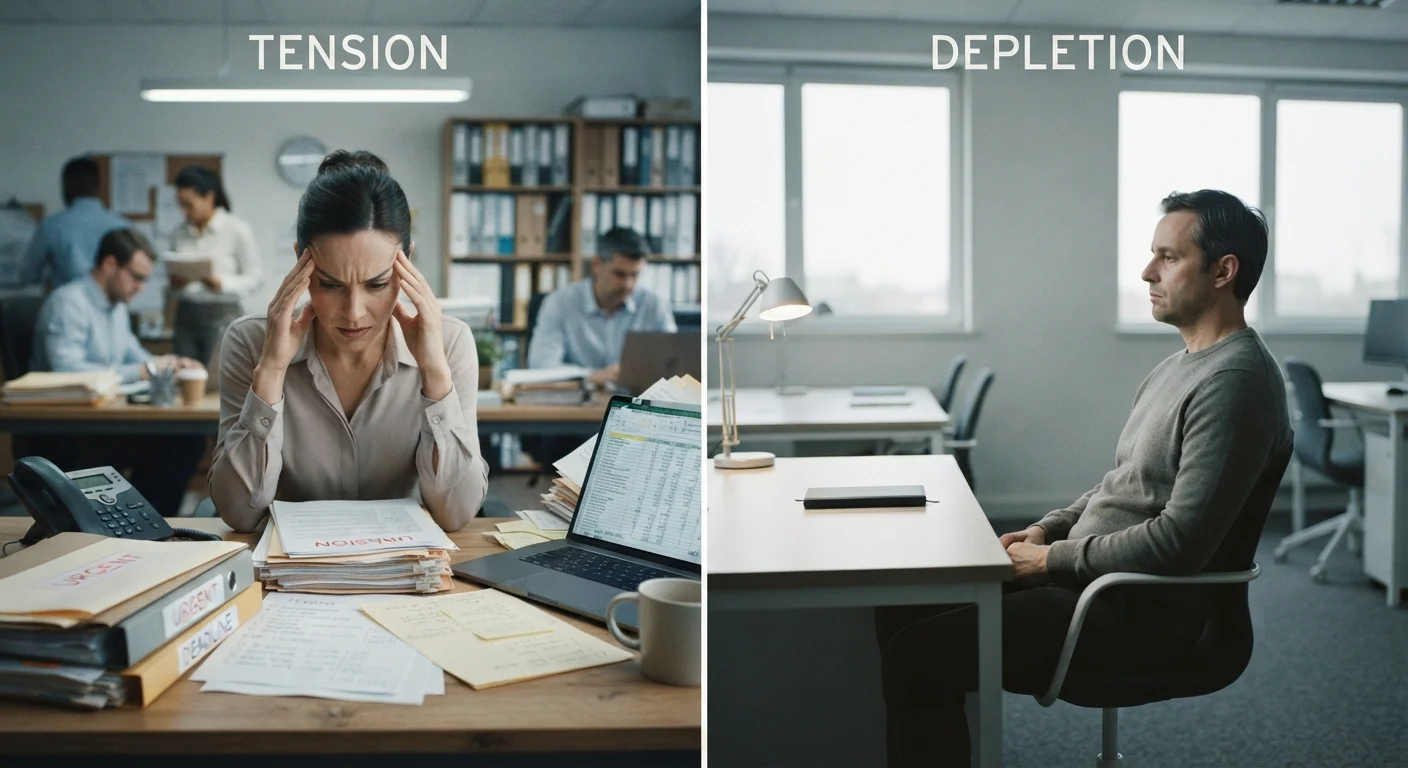

Why Burnout Is More Than a Mental State
Most people describe burnout as feeling mentally drained or emotionally checked out. That framing is accurate - but incomplete. Burnout is also a physical experience, one that shows up in the body in ways that are easy to dismiss as unrelated health complaints.
The reason comes down to biology. When the brain perceives ongoing stress, it signals the adrenal glands to release cortisol - the body's primary stress hormone. In short bursts, cortisol is useful. It sharpens focus, mobilizes energy, and supports the "fight or flight" response. But when stress is unrelenting and cortisol stays elevated for weeks or months, normal biological processes begin to break down. For a broader look at how this unfolds, see how chronic stress affects physical health.
Understanding burnout as a physical condition - not a personal weakness - changes how seriously people take it. Stress and burnout differ fundamentally, and recognizing that difference is the first step toward getting appropriate support.
How the Body Responds to Prolonged Stress
Chronic stress disrupts nearly every major body system. Here are the areas most consistently affected:
Sleep and Energy
High cortisol levels late in the day interfere with the natural cortisol drop that signals the body to wind down for sleep. People in burnout often report difficulty falling asleep, waking repeatedly, or sleeping full nights and still feeling unrefreshed. This is distinct from ordinary fatigue - the exhaustion of burnout doesn't respond to rest in the same way.
Immune Function
Sustained stress suppresses key immune responses, making the body less effective at fighting off infections. People experiencing burnout frequently notice they get sick more often - more colds, longer recovery times, or recurring infections that wouldn't normally take hold.
Cardiovascular System
Chronic stress keeps heart rate and blood pressure elevated above baseline. Over time, this sustained physiological load can contribute to increased cardiovascular risk, including hypertension. Research consistently links prolonged occupational burnout to measurable cardiovascular changes.
Digestion
The gut and brain are tightly connected through the gut-brain axis. Chronic stress can alter gut motility, affect the gut microbiome, and trigger or worsen conditions like irritable bowel syndrome (IBS). Stomach pain, nausea, bloating, and appetite changes are all commonly reported during burnout.
Muscle Tension and Headaches
Sustained psychological stress keeps muscles in a low-grade state of contraction, particularly in the neck, shoulders, and jaw. This contributes to tension headaches, jaw pain, and chronic muscle soreness that may have no obvious physical cause.
77%
Workers reporting burnout-related physical symptoms
According to a Gallup workplace survey, approximately 77% of workers have experienced burnout in their current job, with many reporting physical symptoms such as fatigue and illness.
2x
Increased likelihood of cardiovascular disease in burnout
Research published in peer-reviewed occupational health journals has linked chronic burnout to roughly double the risk of cardiovascular events compared to non-burned-out workers.
3 in 4
Burned-out adults reporting disrupted sleep
Multiple workplace health studies consistently find that sleep disruption is among the most commonly reported physical complaints in people experiencing clinical-level burnout.
Burnout vs. Tiredness: Knowing the Difference
One of the most important distinctions to understand is why burnout cannot be resolved by simply resting more. Ordinary tiredness is a signal that the body needs recovery - and recovery works. Burnout represents a state in which the stress burden has exceeded the body's ability to bounce back through normal rest alone.
People experiencing burnout often describe a specific kind of exhaustion: feeling depleted before the day has started, struggling to concentrate even on simple tasks, and feeling emotionally numb or detached. These experiences overlap with the physical symptoms described above, reinforcing one another in a cycle that makes recovery harder without meaningful change.
Track Physical Symptoms Alongside Mood
If you're unsure whether what you're experiencing is burnout or another condition, keeping a simple daily log of energy, sleep quality, physical complaints, and mood can be valuable. This kind of record helps healthcare providers see patterns that a single appointment might miss. Bring it to your next visit and describe how long symptoms have persisted.
If you notice persistent physical complaints alongside emotional exhaustion, your body may be sending early warning signals worth taking seriously. Noticing these signs early - and acting on them - is associated with better outcomes than waiting for a crisis point.
This article is for informational purposes only and is not a substitute for professional medical advice. Always consult a qualified healthcare provider for concerns about your physical or mental health.