
The Momentary Relief That Backfires
Imagine you have a fear of dogs. You're walking toward the park and spot one ahead. Your heart rate spikes, your chest tightens, and you cross the street before getting close. Instantly, the anxiety drops. That drop feels like a win.
But something subtler just happened: your brain logged that crossing the street worked. The threat felt real, the escape reduced discomfort, and that link is now a little stronger. Next time, your nervous system will push you to avoid a little sooner - and the dog might not even need to be as close.
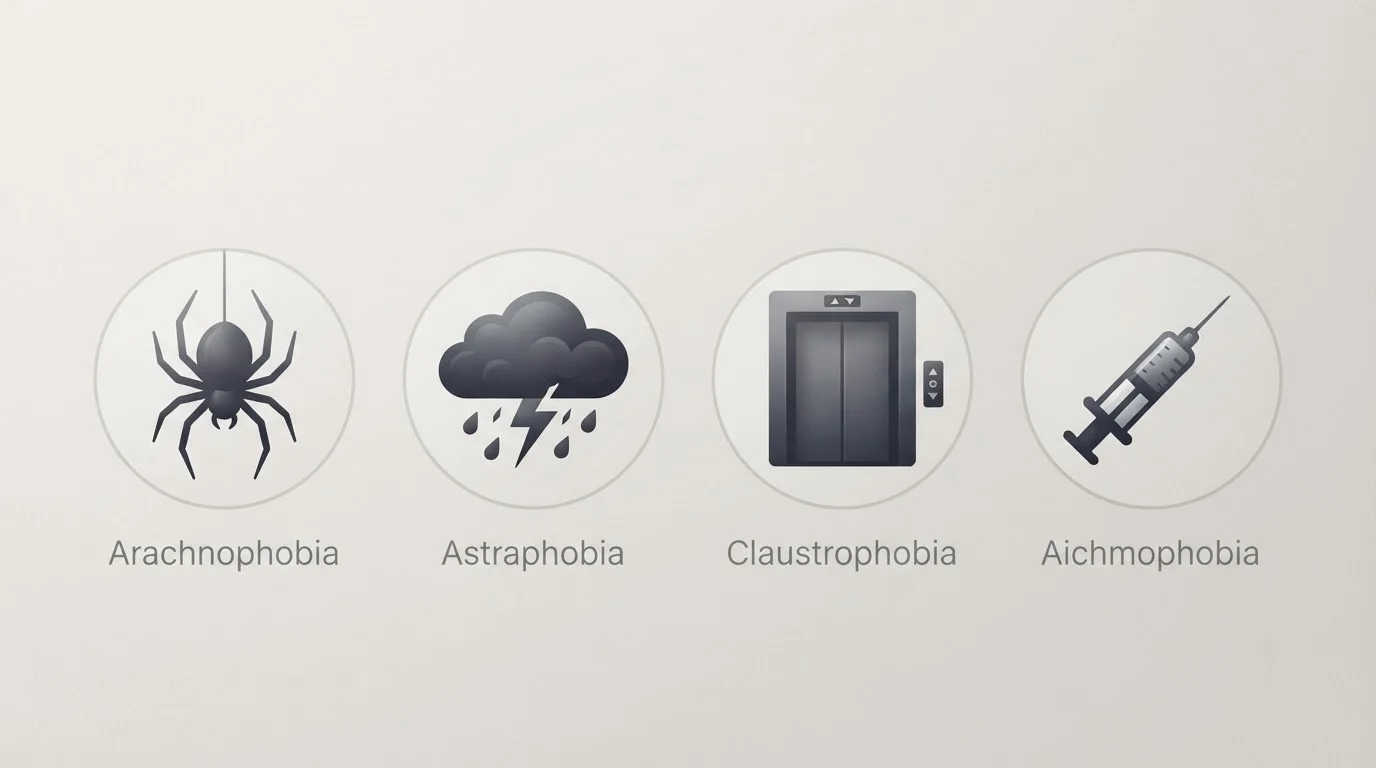
This is the core of how avoidance reinforces phobias. The relief is real, but it comes at a cost. It prevents the brain from ever reaching the most important conclusion: that the feared thing, in most phobia cases, wasn't actually going to cause harm. For a broader look at the range of specific phobias, including what drives each category, that context can help make sense of why avoidance feels so automatic.
Notice the relief, then question it
When you feel the drop in anxiety after avoiding something, try pausing to name what happened: 'I avoided X and felt better. That's avoidance reinforcement.' Simply labeling the pattern - without judgment - can begin to loosen its automatic pull over time.
How the Fear Cycle Expands Over Time
Phobias rarely stay neatly contained. When avoidance is the primary coping tool, fears tend to spread. A person who initially feared highway driving may begin avoiding all multi-lane roads, then unfamiliar streets, then driving with passengers. The original boundary keeps moving outward.
Psychologists describe this as generalization - the brain begins treating similar or associated situations as equally threatening. What started as a specific, manageable fear becomes a wider net of avoided experiences, shrinking the person's world in the process.
Safety Behaviors Can Also Sustain Fear
Not all avoidance is obvious. Safety behaviors - like carrying a specific item, always sitting near an exit, or mentally rehearsing escape routes - provide the same reinforcing relief as full avoidance. Even when a person enters a feared situation, relying heavily on safety behaviors can prevent extinction from fully taking place.
This pattern also shows up clearly in social anxiety. The avoidance cycle in social anxiety follows the same logic - temporary relief purchases long-term entrenchment. Understanding that connection can help readers see avoidance reinforcement as a broader psychological mechanism, not unique to any single fear.
What Happens When You Stay in the Situation
The mechanism that breaks the phobia cycle is called extinction. When a person remains in a feared situation long enough, without the expected harm occurring, the brain gradually revises its threat assessment. The physiological anxiety response - rapid heartbeat, shallow breathing, muscle tension - does peak, but it also naturally subsides. The brain registers: I stayed. Nothing terrible happened. This may not require a danger signal.
This is the foundation of exposure therapy, the most clinically supported treatment for specific phobias. It doesn't require plunging into the worst-case scenario immediately. Graduated approaches begin with the mildest form of exposure and slowly build from there, always at a pace that feels manageable.
It's also worth noting that some habits people reach for to manage anxiety - distraction, reassurance-seeking, subtle safety behaviors - can function like mini-avoidance strategies. The article on stress habits that backfire explores how these well-meaning patterns can quietly sustain the very distress they're meant to relieve.
Recognizing Avoidance in Your Own Patterns
Avoidance isn't always dramatic. It can look like checking the weather before agreeing to a commitment, scanning a restaurant menu online to avoid surprises, or quietly steering a conversation away from a topic that spikes your anxiety. These behaviors feel sensible in the moment - they're often invisible as avoidance until the pattern is pointed out.
A useful starting point is examining what you reorganize your life around. If certain decisions - where you go, what you agree to, who you spend time with - are consistently shaped by a specific fear, that's avoidance doing its work. Identifying your personal triggers, including the less obvious ones, is a meaningful early step. Recognizing your personal panic triggers offers a practical framework for that kind of self-examination.
~12%
U.S. adults estimated to have a specific phobia
According to the National Institute of Mental Health, specific phobias are among the most common anxiety disorders in the United States.
~90%
Response rate to exposure-based therapy
Research consistently finds that graduated exposure therapy produces significant fear reduction in the large majority of people with specific phobias when completed as directed.
This article is for informational purposes only and is not a substitute for professional medical or mental health advice. If a phobia is affecting your daily life, please consult a qualified healthcare or mental health professional.