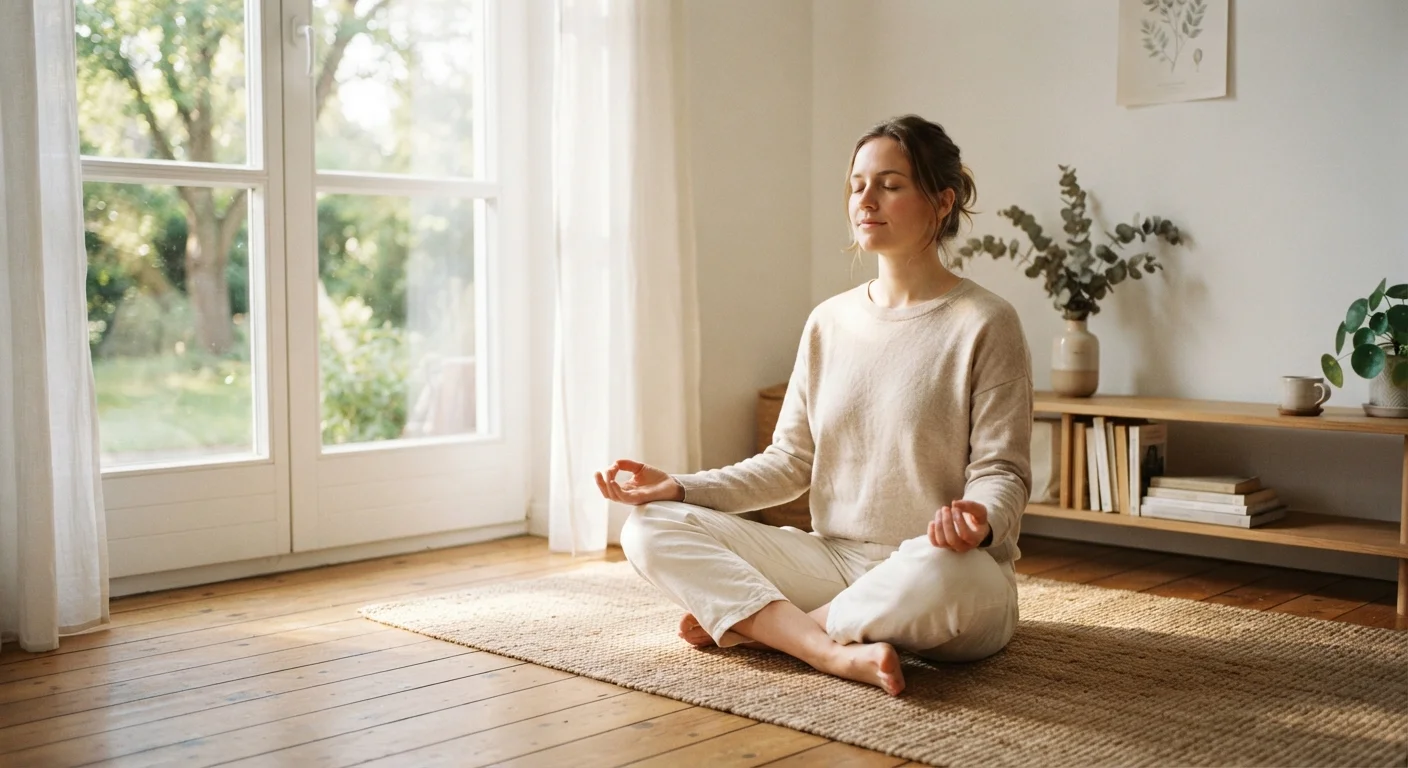

Why Five Minutes Is Enough to Start
When stress peaks, it can feel like there's no time — or mental bandwidth — to try anything new. But research in behavioral health suggests that even brief, intentional pauses can interrupt the body's stress-response cycle, helping to lower the activation of the fight-or-flight system and bring the nervous system back toward balance. You don't need a meditation cushion, a quiet room, or a 30-minute block in your calendar. What matters most is that you actually start.
If you're brand new to this approach, the Mindfulness for Stress beginner's guide is a helpful companion to what follows here. And if you've ever tried mindfulness and found it frustratingly hard when you most needed it, you're not alone — there are real psychological reasons for that, explored in Why Mindfulness Feels Harder When You're Most Stressed.
The five practices below are chosen for their accessibility, their evidence base, and their fit into even the most packed, unpredictable day.
Box Breathing (4-4-4-4)
Box breathing — sometimes called square breathing — is a structured breathing technique used by everyone from athletes to emergency responders to regulate the nervous system quickly. The pattern is simple: inhale for four counts, hold for four, exhale for four, hold again for four. Repeat three to five times.
This deliberate pacing activates the parasympathetic nervous system, the branch responsible for calming the body after stress. You can do it at your desk, in a parked car, or before a difficult conversation. For more breathing options, explore the Breathing Techniques hub.
Box breathing can activate your body's calming system in just a few breath cycles.
The 5-4-3-2-1 Sensory Grounding Exercise
Grounding exercises work by anchoring attention to the present moment through your senses, which interrupts the cycle of anxious or ruminating thought. The 5-4-3-2-1 method asks you to notice: five things you can see, four you can physically feel, three you can hear, two you can smell, and one you can taste.
This technique takes under five minutes and requires nothing but your own awareness. It's particularly useful during acute spikes of stress or when thoughts are spiraling. The Grounding Techniques guide covers several additional approaches worth bookmarking.
Engaging all five senses pulls the mind out of worry and back into the present moment.
A Brief Body Scan
Stress often lives in the body before it registers in the mind — tight shoulders, a clenched jaw, a shallow chest. A quick body scan involves slowly directing attention from the top of your head down to your feet, pausing briefly at each area to simply notice any sensation without trying to change it.
Even a three-to-five-minute version can help identify where you're holding tension and gently encourage those areas to release. There's no correct way to feel; the goal is noticing, not fixing. This practice also builds the kind of body awareness that makes stress easier to catch early.
Stress often settles in the body first — a brief scan can help you notice and release it.
Single-Tasking with Full Attention
Mindfulness doesn't have to be a formal exercise. One of the most accessible entry points is choosing one ordinary task — making tea, washing your hands, walking to another room — and giving it your complete attention for its duration. Notice the temperature, the sound, the movement involved.
This practice, sometimes called informal mindfulness, helps break the habit of mental multitasking that amplifies stress. It also makes mindfulness feel less like something you have to carve time out for and more like something woven into everyday life. The Stress Relief Habits hub explores other everyday habits that support mental balance.
Bringing full attention to one ordinary task is a form of mindfulness anyone can practice immediately.
A Three-Breath Reset
Perhaps the simplest practice of all: pause whatever you're doing, close your eyes if comfortable, and take three slow, deliberate breaths. With each exhale, consciously allow your shoulders to drop and your jaw to unclench. That's it.
The three-breath reset works because it creates a micro-moment of intentional awareness in the middle of automatic, stress-driven behavior. It won't solve the source of your stress, but it can create just enough space to respond rather than react. Think of it as a reset button you can press at any point in your day — before a meeting, after a difficult phone call, or whenever you notice tension rising.
Three slow, deliberate breaths can create just enough space to respond rather than react.
Bringing It All Together
None of these practices requires you to become a meditator. Think of them as small, repeatable tools you can reach for in the same way you'd take a glass of water when you're thirsty. Over time, regular use of even one or two of these techniques can help build the kind of emotional resilience that makes stressful moments feel more manageable — not because the stress disappears, but because your relationship to it gradually shifts.
Make One Practice Your Anchor
Rather than trying all five techniques at once, choose the one that feels most natural and practice it consistently for a week. Once it feels familiar, it becomes easier to access when stress actually hits. Regularity matters more than variety when you're building a new habit.
For a structured approach to using these techniques on difficult days, the Grounding Checklist for Stressful Days offers a step-by-step format you can follow. You might also explore how mindful eating habits can extend present-moment awareness into your daily routines beyond formal practice.
This article is for general informational and educational purposes only and is not a substitute for professional medical or mental health advice. If stress is significantly affecting your daily life, please speak with a qualified healthcare provider.