Why Five Minutes Is Enough to Begin
Many people delay starting meditation because they imagine it requires a special room, an expert teacher, or the ability to silence every thought. None of that is true. Breath-based meditation — sometimes called focused attention meditation — is simply the practice of noticing your breath and returning your attention to it when it drifts. That's the whole technique.
Research in the field of contemplative neuroscience suggests that even brief, consistent practice can begin to influence how the brain responds to stress over time. The goal for a beginner isn't deep enlightenment; it's simply showing up and completing the session. Five minutes done regularly beats an hour done once.
If you want broader context before diving in, the complete first-timer's guide to meditation covers what to expect in your first weeks. And if you'd like to explore how mindfulness connects to stress management more broadly, see Mindfulness for Stress: A Complete Starting Point.
What you will need
Timer
Frees you from watching the clock so you can focus entirely on your breath.
Chair or cushion
Provides a stable, comfortable seat that supports an upright posture during the session.
Earplugs or white noise
Helps minimize distracting ambient sounds if your environment is noisy.
The Step-by-Step Five-Minute Routine
Follow these six steps in order. Read through them once before you start so the sequence feels familiar. After a few sessions, they will become second nature and you won't need to refer back.
Set your timer for five minutes
Before you sit down, set a gentle timer for five minutes. Choose an alarm tone that is soft — a chime or soft bell rather than a jarring buzz. Knowing the timer will signal the end removes the temptation to peek at the clock and keeps your attention where it belongs: on your breath.
Find a stable, upright sitting position
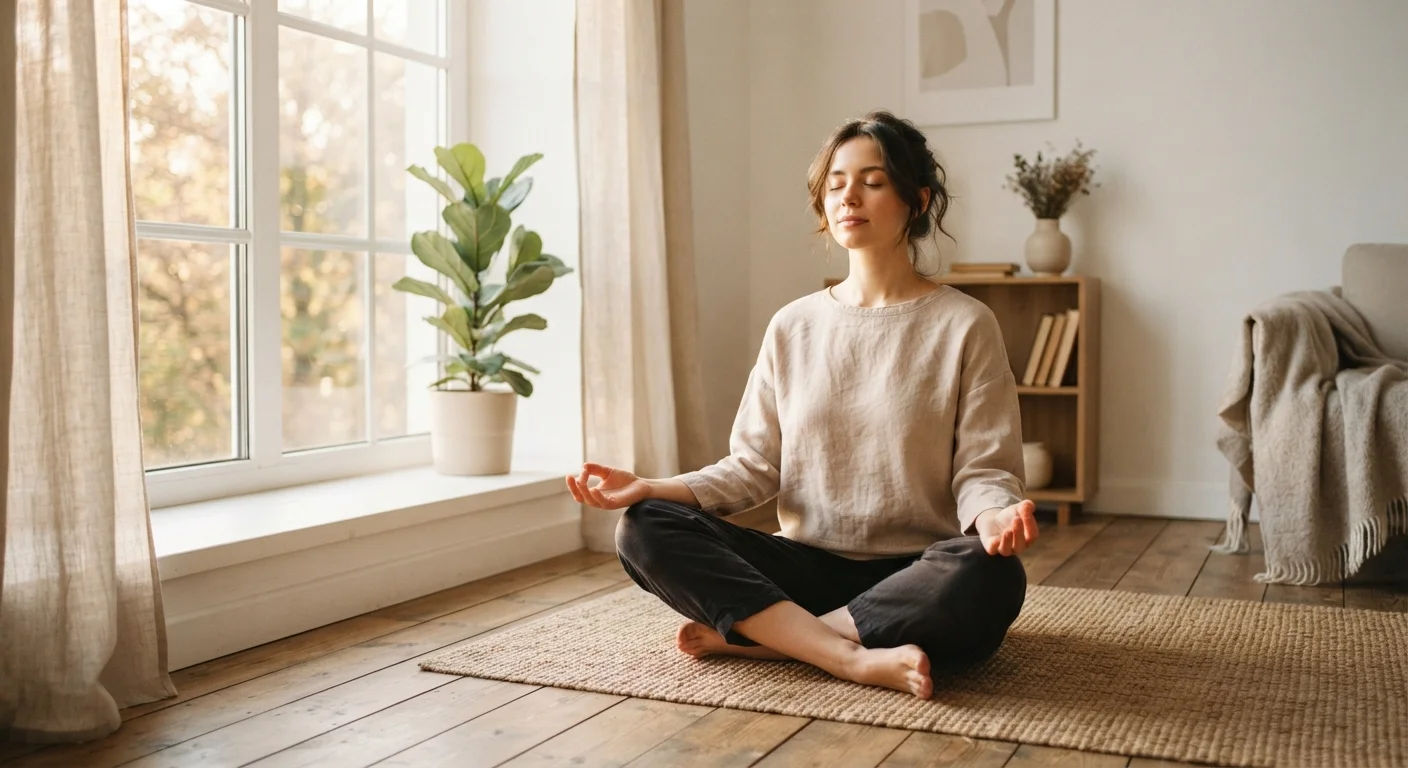
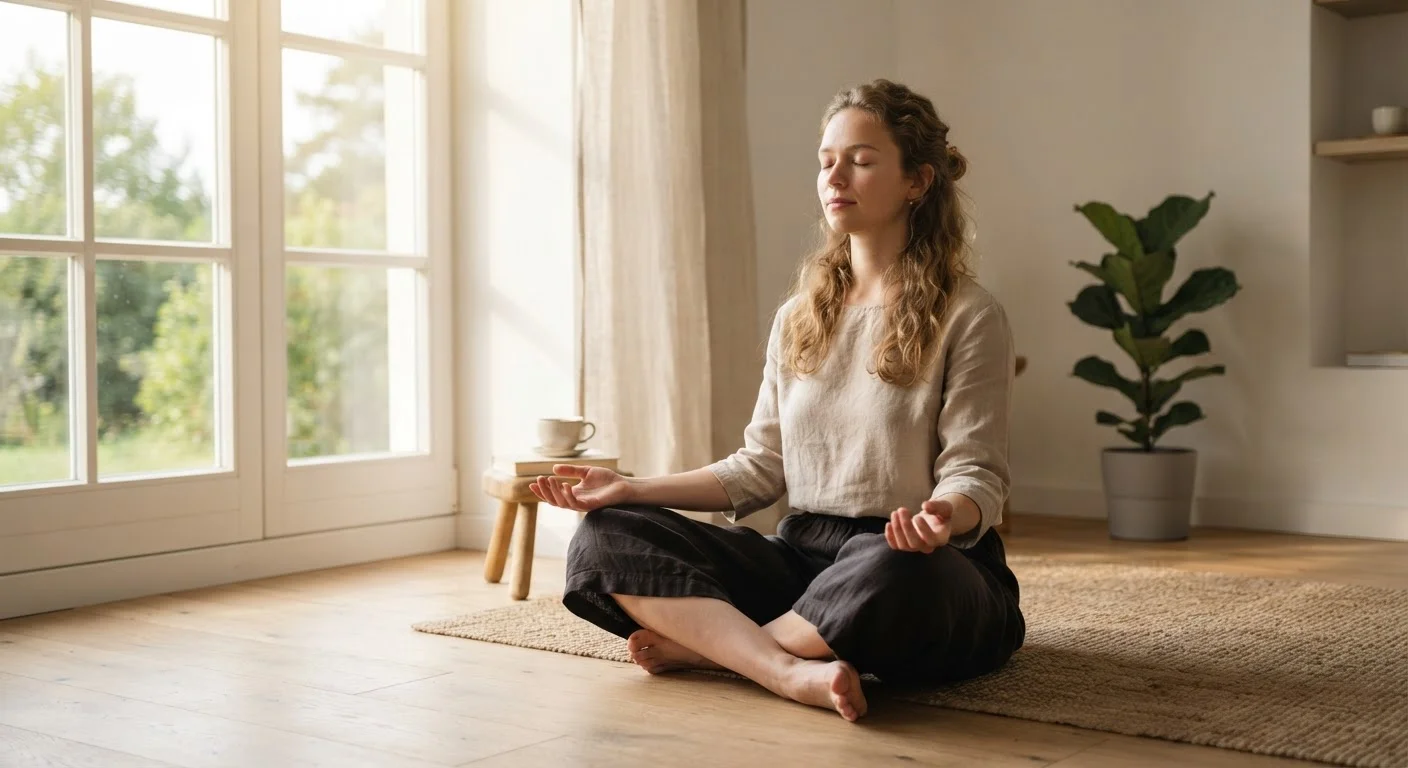
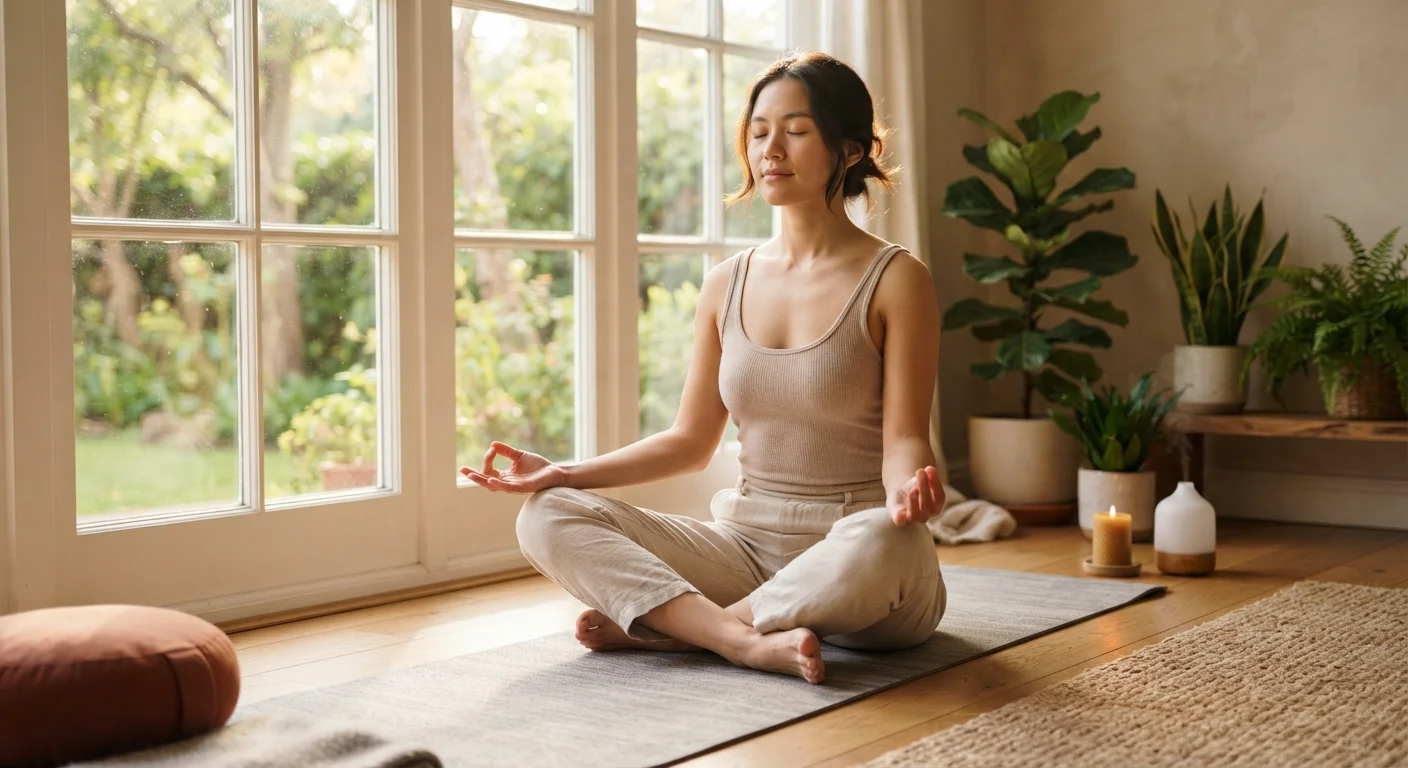
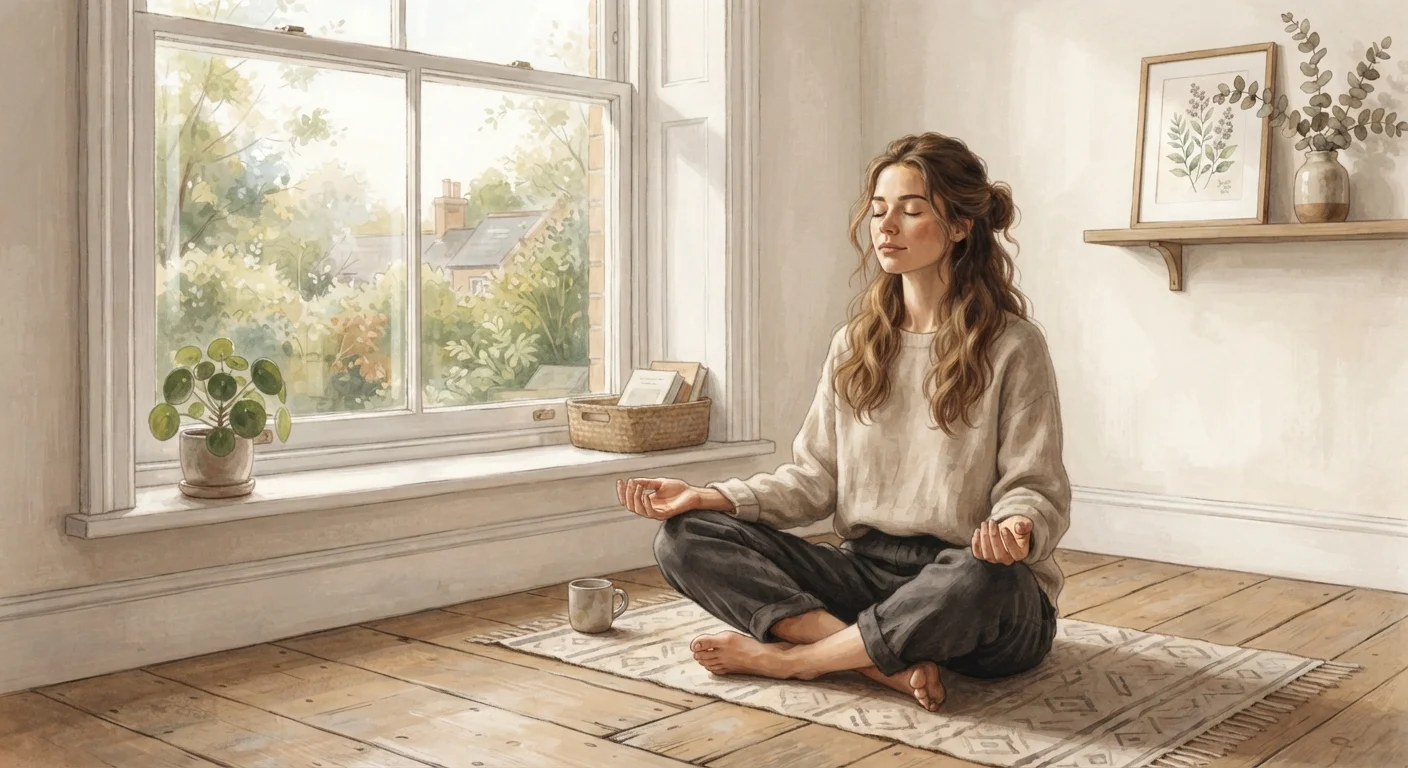
Sit on a chair with both feet flat on the floor, or cross-legged on a cushion or folded blanket on the floor. Rest your hands loosely on your thighs. The key is to keep your spine upright but not rigid — think of a posture that feels alert rather than tense. You do not need to close your eyes; a soft downward gaze at the floor a few feet in front of you works just as well.
Take three slow, deliberate breaths to settle in
Breathe in slowly through your nose for about four counts, then breathe out through your mouth for about six counts. Repeat this three times. These opening breaths activate the parasympathetic nervous system — the body's natural calming mechanism — and signal to your mind that you are shifting into a quieter mode. After these three breaths, allow your breathing to return to its own natural rhythm; don't force any particular pace.
Choose a single anchor point and focus there
Pick one physical sensation to focus on: the feeling of air passing in and out of your nostrils, the gentle rise and fall of your chest, or the expansion and contraction of your belly. There is no right choice — just select one and stay with it. Notice the texture of each breath: is the inhale cool and the exhale warm? Is one breath deeper than the last? Detailed, curious observation keeps attention grounded.
Notice when your mind wanders — then gently return
Within a minute or two, your mind will almost certainly drift to a thought, a task, a sound, or a memory. This is not failure — it is the entire practice. The moment you notice that your attention has wandered, you have already succeeded. Without self-criticism, simply redirect your attention back to your chosen anchor point. Each return is one mental repetition, like a single bicep curl at the gym. Aim for many gentle returns rather than a single unbroken focus.
Close the session mindfully when the timer sounds
When your timer goes off, resist the urge to jump up immediately. Take one conscious breath, then slowly open your eyes (if they were closed) and take a moment to notice how you feel compared to before you started. This brief transition helps carry the calm into the next part of your day rather than abruptly losing it. Jot a single word describing your experience in a notebook if you like — even a one-word log helps you notice progress over time.
Consistency Matters More Than Duration
Research on habit formation suggests that doing a short practice every day is more effective than occasional longer sessions. Try anchoring your five-minute meditation to an existing routine — right after your morning coffee or just before bed — so it becomes automatic rather than a decision.
Lightheadedness Is a Signal to Stop
If you feel dizzy, lightheaded, or uncomfortably short of breath at any point, stop the exercise and return to your normal breathing pattern. This can occasionally happen when people breathe more deliberately than usual. If it persists or you have a respiratory or cardiovascular condition, consult a healthcare provider before continuing.
Not a Substitute for Professional Care
This breathing meditation is a general wellness practice, not a medical treatment. If you are experiencing significant anxiety, depression, trauma, or any mental health crisis, please reach out to a qualified healthcare professional. This article provides educational information only and is not a diagnosis or therapy.
Once this routine feels comfortable, you may naturally want to extend your session to ten or fifteen minutes, or to explore other breathing techniques that complement focused-attention practice. The Breathing Techniques for Stress starter guide is a practical next step when you're ready.
This article is for general informational and educational purposes only and does not constitute medical advice. If you have concerns about your mental or physical health, please consult a qualified healthcare professional.