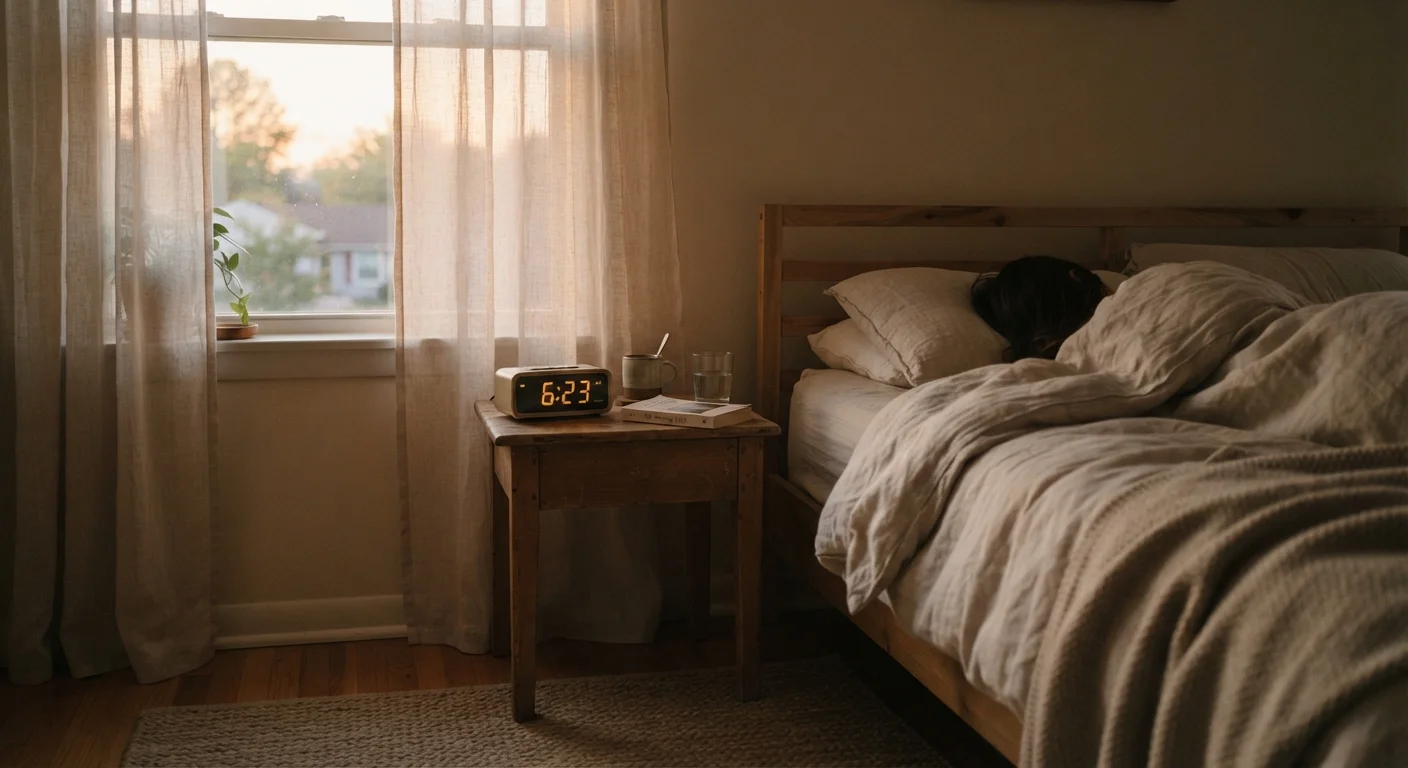

What Happens in Your Brain While You Sleep
Most people think of sleep as the body powering down. In reality, the brain remains remarkably active — cycling through distinct stages that each serve a specific restorative function.
During slow-wave sleep (also called deep sleep), the brain clears metabolic waste, consolidates factual memories, and replenishes neurotransmitters like serotonin and dopamine — the same chemicals targeted by many antidepressant medications. During REM sleep, the brain replays and reprocesses emotional experiences, essentially filing away distressing events with reduced emotional charge. This is why a problem that felt overwhelming before bed can feel more manageable in the morning.
When sleep is cut short or fragmented, these processes are interrupted. The emotional processing that REM sleep provides is especially vulnerable, since REM stages are concentrated in the final hours of a full night's sleep — the hours most commonly sacrificed by early alarms or late nights.
Sleep Stages Are Not Equal
A full night's sleep moves through multiple 90-minute cycles, each containing both REM and non-REM stages. Cutting sleep short — even by an hour — disproportionately removes REM sleep, since these stages are longer toward the end of the night. This is why 6 hours is not simply 'slightly less' than 7: the emotional processing benefits are reduced by more than the time difference suggests.
The Emotional Cost of Poor Sleep
Sleep deprivation does not just make you tired — it actively destabilizes emotional regulation. Research consistently shows that the amygdala, the brain region responsible for detecting threats and generating fear or anger responses, becomes significantly more reactive after even one night of poor sleep. At the same time, its connection to the prefrontal cortex — the area involved in rational thought and impulse control — weakens.
The result is a brain more prone to emotional flooding and less capable of stepping back to evaluate situations clearly. This is one reason that people who regularly sleep fewer than 7 hours report higher rates of irritability, anxiety, and low mood.
~1 in 3
U.S. adults not getting enough sleep
The CDC reports that about a third of American adults regularly sleep fewer than the recommended 7 hours per night.
5×
Increased amygdala reactivity after sleep loss
Neuroimaging research has found that even one night of total sleep deprivation can increase amygdala emotional reactivity by approximately five times compared to rested baseline.
For those already managing mental health challenges, this dynamic is especially significant. Sleep problems are both a symptom and a driver of conditions like depression and anxiety — creating a cycle that can be difficult to break without addressing sleep directly. Understanding this connection is a meaningful first step. You can explore how lifestyle patterns interact with stress in our article on sustainable stress relief principles.
Consistency: The Often-Overlooked Factor
Total hours of sleep matter — but timing consistency may matter just as much. Your body runs on a circadian rhythm, an internal clock roughly aligned to a 24-hour cycle. When sleep and wake times shift significantly from day to day, this rhythm becomes misaligned — a state sometimes called social jet lag.
Even without crossing time zones, irregular schedules can disrupt hormone release, impair cognitive function, and blunt mood stability. This is why weekend sleep patterns that differ sharply from weekday ones often leave people feeling foggy and emotionally flat rather than refreshed. For a closer look at this pattern, see how sleep irregularity affects mood and cognition.
Start With One Consistent Wake Time
If improving sleep feels overwhelming, anchor your effort to a single habit: wake at the same time every day, regardless of when you fell asleep. This stabilizes your circadian rhythm faster than any other single change. Over days to weeks, a consistent wake time tends to pull bedtime earlier and improve overall sleep quality.
Sleep is also one of the three pillars most consistently linked to everyday mental resilience, alongside physical movement and social connection — as explored in Sleep, Movement, and Social Connection.
Treating Sleep as a Daily Mental Health Practice
Reframing sleep as an active mental health tool — rather than a passive necessity — changes how you prioritize it. This shift is at the core of what researchers and clinicians call sleep hygiene: the set of habits and environmental conditions that support consistent, quality sleep.
Practical starting points include keeping a regular sleep and wake schedule (even on weekends), limiting exposure to bright screens in the hour before bed, and keeping the sleep environment cool and dark. These aren't rigid rules but evidence-informed defaults that support the brain's natural sleep architecture.
For a fuller introduction to these habits and what the evidence says about each one, our guide on sleep hygiene and mental energy is a practical next step.
This article is for general informational purposes only and is not a substitute for professional medical or mental health advice. If you are experiencing significant sleep difficulties or mental health symptoms, please consult a qualified healthcare provider.