
What We Mean by Soft and Hard Limits
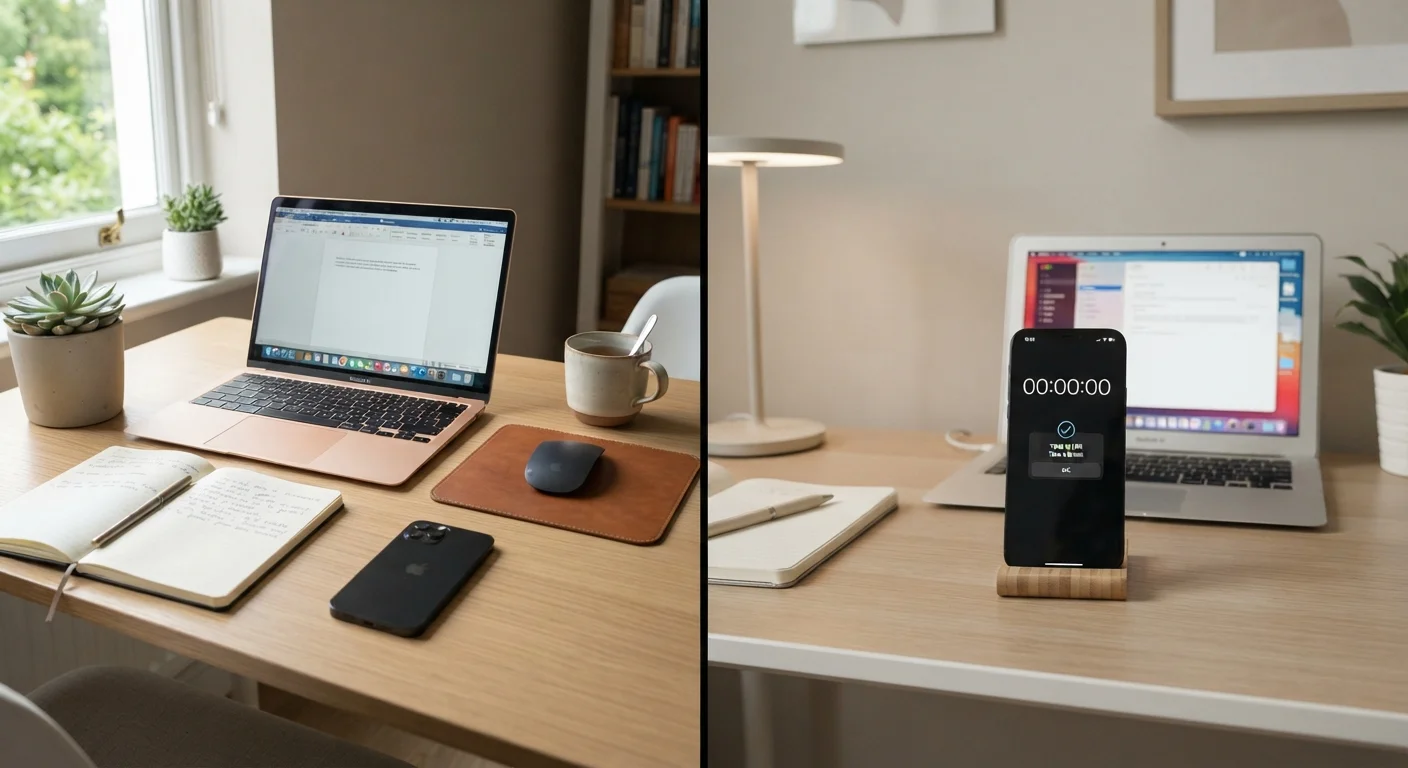
When mental health professionals and digital wellness researchers talk about screen time boundaries, they typically describe two broad categories. Soft limits are flexible, intention-based guidelines — for example, aiming to put your phone down an hour before bed, but allowing exceptions when life calls for it. Hard limits are fixed, non-negotiable cutoffs — such as enabling an app blocker that locks social media after 9 p.m. regardless of circumstance.
Neither term is clinical jargon; they're practical shorthand for two distinct philosophies. Understanding what distinguishes them — and what each demands of you — is the first step toward choosing what actually works for your life. For a broader look at why boundaries matter at all, see what the research says about digital boundaries and mental health.
The Case for Soft Limits
Soft limits appeal because they respect the reality that screen time isn't inherently harmful — context matters enormously. A video call with a distant family member and a two-hour social media scroll look identical to a screen-time tracker but have very different effects on well-being.
Adapts to real-life context and varying needs
Soft limits acknowledge that not all screen use is equal. They allow you to stay flexible on high-demand days without abandoning your broader intentions.
Builds internal awareness and self-regulation
Practicing intentional restraint — rather than outsourcing it to an app — can strengthen the metacognitive skills that support long-term habit change.
Less likely to create frustration or resentment
Overly rigid rules often backfire. A flexible boundary feels less punitive, making it easier to maintain as a lifestyle practice rather than a temporary restriction.
Suitable for varied, unpredictable schedules
For those whose work or caregiving responsibilities shift day to day, soft limits are far more practical than fixed cutoffs that conflict with legitimate obligations.
The trade-off is discipline. Soft limits require ongoing self-monitoring — recognising when "just five more minutes" has become forty, or noticing that a stressful day has quietly eroded every intention you set. If you're unsure whether your current habits are already costing you, signs your screen habits are affecting more than your time offers a useful self-check.
The Case for Hard Limits
Hard limits remove the cognitive load of repeated decision-making. When a boundary is non-negotiable, you stop negotiating — and that mental relief can itself reduce anxiety. Research on habit formation consistently shows that automaticity (doing something without deliberate choice) lowers the effort required to sustain a behavior over time.
Requires consistent willpower to enforce
Soft limits depend on you making a fresh decision each time. Decision fatigue — especially at the end of a stressful day — can quietly erode even well-intentioned guidelines.
Easier to rationalize exceptions over time
Without a firm external structure, it becomes simple to justify "just this once" repeatedly until the boundary has effectively dissolved.
Less effective during high-anxiety or compulsive periods
When anxiety is driving device use — refreshing notifications for reassurance, for example — soft limits rarely interrupt the pattern because the urge feels compelling and justified.
Harder to protect sleep without firm cutoffs
Sleep research suggests that even brief pre-bedtime screen exposure can delay melatonin onset. An intention to stop at a certain hour is far less reliable than a scheduled blocker.
~1 hr
Average delay in melatonin onset from pre-sleep screen use
Research published in journals examining light exposure and circadian rhythm suggests blue-light exposure before bed can delay melatonin production, impacting sleep quality.
23 min
Average time to regain focus after a digital interruption
Studies on attention and task-switching, including work cited by productivity researchers, estimate it takes roughly 23 minutes to fully refocus after an interruption.
Hard limits work best in predictable, high-risk windows: the hour before sleep, during focused work blocks, or during family meals. They're less practical in roles where availability is genuinely required. A digital boundaries self-audit can help you identify exactly where firm cutoffs would give you the most relief.
Choosing What Fits Your Situation
The honest answer is that most sustainable screen time strategies are hybrids. Consider applying hard limits where the stakes are highest — protecting sleep, preserving focus, guarding family time — and softer, intention-based guidance everywhere else.
Personality and Habit Patterns Matter
People higher in trait impulsivity or those experiencing elevated anxiety often benefit more from structural, hard-limit approaches — at least initially. Those with stronger baseline self-regulation may find soft limits sufficient. Neither approach is a reflection of willpower or character; they simply map onto different psychological profiles. If you're unsure which fits you, a mental health professional can help you assess your habits without judgment.
A few questions worth sitting with: Do you frequently override your own intentions around devices? If yes, soft limits may not yet be the right tool — structure first, flexibility later. Do rigid rules make you feel controlled or resentful? Then starting with soft limits and gradually tightening them may reduce resistance and improve follow-through.
If you're completely new to this process, building your first digital boundaries from scratch offers a plain-language starting point with low-pressure first steps.
This article is for general informational purposes only and is not a substitute for professional mental health advice. If screen use is significantly affecting your daily functioning or well-being, consider speaking with a qualified mental health professional.