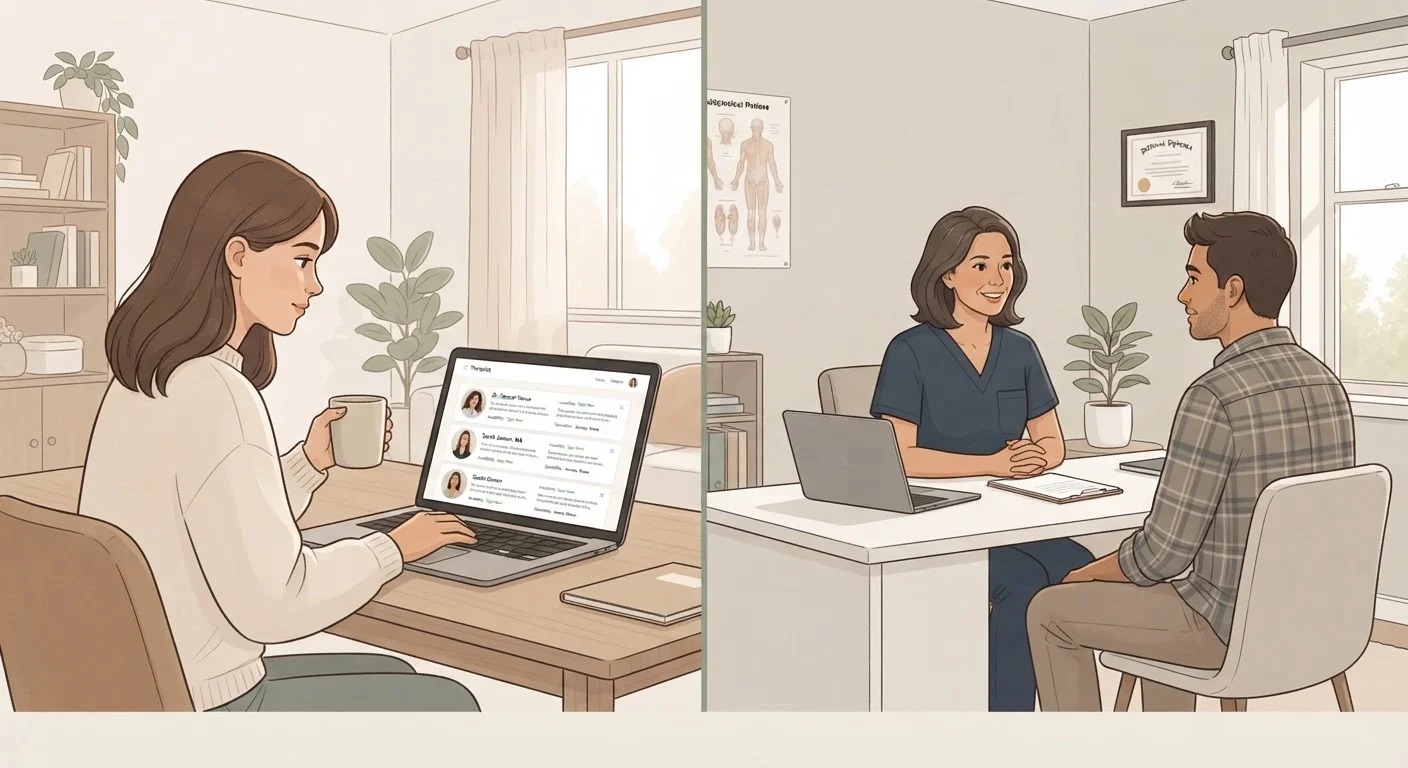

Why Your GP Is a Reasonable First Call
Many people aren't sure whether a GP is the right person to speak to about mental health. The answer, in most cases, is yes. Your GP acts as a clinical coordinator - someone who can assess your overall health picture, rule out any physical factors contributing to how you feel, and connect you with the right specialist for your situation.
This matters because mental health care isn't one-size-fits-all. The right support for persistent low mood may look different from what's appropriate for panic attacks or post-traumatic symptoms. Your GP's job is to help match your needs to the right pathway - you don't have to figure that out alone.
If you're weighing whether to go through your GP or search independently, our comparison of online directories vs. referrals from a GP can help you think through the trade-offs.
What you will need
How to Make the Most of Your GP Appointment
A GP appointment about mental health can feel vulnerable, and that's completely understandable. The steps below are designed to make the conversation as productive and low-pressure as possible - from preparation through to understanding what comes next.
Write down what you've been experiencing
Before your appointment, spend a few minutes jotting down the key things you want your GP to know. Include how long you've felt this way, how often symptoms occur, and how they affect your daily life - sleep, work, relationships, or motivation.
You don't need clinical language. Plain descriptions like "I've felt persistently low for about three months and I'm struggling to get through the day" give your GP exactly what they need.
Book an appointment and mention it's about mental health
When booking - whether online or by phone - you don't need to go into detail, but flagging that the appointment is about your mental health can help the receptionist allocate enough time. A standard 10-minute slot may not be sufficient; a double appointment is often more appropriate.
Have an honest conversation with your GP
During the appointment, share what you've written down. Be as honest as you can - GPs are trained to discuss mental health and will not judge you. Explain the impact on your daily functioning, not just the feelings themselves, as this helps your GP assess the appropriate level of care.
Your GP may ask structured questions about mood, anxiety, sleep, or daily activities. These help them build a clearer picture and are a normal part of the assessment.
Understand the referral options your GP may offer
Depending on what you share, your GP may suggest one of several pathways:
- A psychologist or licensed therapist - for talk therapy approaches such as cognitive behavioral therapy (CBT)
- A psychiatrist - a medical doctor who can assess complex conditions and, if appropriate, discuss medication options
- A community mental health team - for more intensive, coordinated support
- A counselor through your insurance or employee assistance program (EAP) - often a faster, lower-barrier route
Ask your GP to explain each option clearly so you can make an informed choice about the direction that feels right for you.
Clarify next steps before you leave
Before the appointment ends, make sure you know what happens next. Ask: Will the referral be sent automatically? Do you need to call anyone? How long might you wait? Is there anything you should do in the meantime?
Getting these details reduces the anxiety that can come from uncertainty after the appointment. If you're also exploring self-directed routes, our overview of finding mental health support when you don't know where to begin covers complementary options.
You Can Ask for a Different GP
If you don't feel comfortable with a particular GP, or if a previous conversation about mental health didn't go well, you are entitled to see a different doctor at your practice. Finding someone you feel safe speaking honestly with makes a real difference to the quality of care you receive.
Once a referral is in place, the work of finding the right fit is just beginning. Our guide on questions worth asking before committing to a therapist can help you assess whether a professional feels right for you.
This article is for general informational purposes only and does not constitute medical advice. Please consult a qualified healthcare professional about your individual circumstances.