
Anxiety Doesn't Always Look Like Panic
When most people picture anxiety, they imagine a racing heart, shortness of breath, or an outright panic attack. But for many people, anxiety is far quieter - and far more woven into the fabric of everyday life. It can look like a perpetually unfinished to-do list, difficulty saying no, or waking at 3 a.m. with a mind that refuses to slow down.
That subtlety is part of what makes anxiety so easy to miss in yourself. You might chalk these experiences up to personality traits, bad habits, or just "being a worrier" - without recognising that they may be anxiety expressing itself in a different language.
This article walks through some of the less obvious ways anxiety can show up day to day. It's not a diagnostic tool, and it isn't medical advice - but it may help you connect some dots. If these patterns resonate, consider exploring our reflective guide to recognising anxiety in yourself as a gentle next step.
Procrastination on tasks that feel "too important"
Putting things off is often framed as laziness, but for many people it's rooted in anxiety. When a task feels high-stakes - an email, a phone call, a form - anxiety can generate such intense pressure around getting it right that starting feels impossible. The delay isn't indifference; it's avoidance of the discomfort the task triggers.
This pattern is especially common with tasks that involve judgment from others, uncertainty about outcomes, or a fear of making the wrong choice. Over time, the backlog itself becomes a new source of worry.
Procrastination can be anxiety in disguise - avoidance of discomfort, not a lack of effort.
Over-apologising and excessive people-pleasing
Saying sorry when you haven't done anything wrong, agreeing to things you'd rather decline, or constantly checking whether people are upset with you - these can all be signs of social anxiety or a broader anxious pattern of trying to manage how others feel in order to feel safe yourself.
This behaviour often feels considerate, which makes it harder to recognise as anxiety-driven. But it can be exhausting and may gradually erode your sense of what you actually want. For more on how this shows up socially, see what living with social anxiety actually looks like day to day.
Constant apologising often reflects an anxious need to keep others comfortable - not genuine guilt.
Difficulty falling or staying asleep
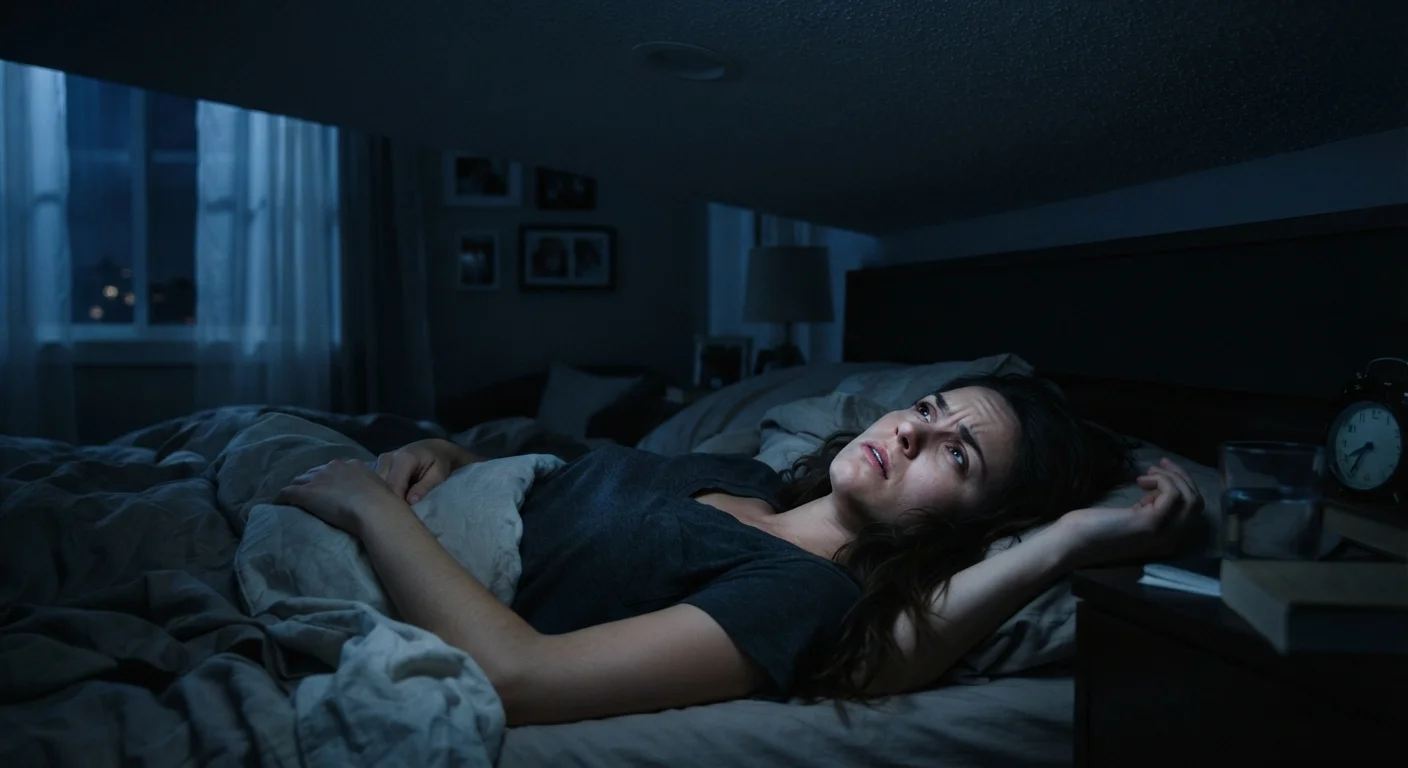
Anxiety and sleep have a well-documented, bidirectional relationship. Worry tends to intensify when distractions are removed - which is exactly what happens when you lie down at night. Racing thoughts, replaying conversations, or running through worst-case scenarios are hallmark anxiety experiences that many people only notice at bedtime.
Waking in the early hours with a sense of dread or unease is also common. If this feels familiar, it may be worth looking at the broader picture of your worry patterns during the day.
A mind that won't quiet at bedtime is one of anxiety's most common - and disruptive - hiding places.
Muscle tension, headaches, and unexplained physical symptoms
Anxiety is a full-body experience, not just a mental one. Chronic tension in the jaw, shoulders, or neck; frequent headaches; an unsettled stomach; or a persistent sense of physical unease can all be expressions of anxiety that never get labelled as such.
People often seek answers for these symptoms in physical health contexts without considering anxiety as a contributing factor - especially if they don't feel "anxious" in an obvious way. The body keeps score in ways the mind doesn't always register. For a closer look at physical manifestations, social anxiety in the body: physical symptoms that are easy to misread explores this territory in depth.
Jaw clenching, tension headaches, and stomach upset can all be the body expressing what the mind hasn't named.
Irritability and a short fuse
Anxiety isn't always quiet or inward. For some people - particularly when it's been building for a while - it surfaces as irritability, snapping at people, or feeling on edge for reasons that are hard to articulate. The nervous system is running hot, and small frustrations trigger disproportionate reactions.
This can be confusing because irritability feels more like anger than worry. But underneath, there's often an anxious baseline - a sense of being chronically braced for something to go wrong. It's worth noting that stress can look similar; our article on when stress shows up as anger, numbness, or withdrawal explores the overlap.
Irritability is sometimes anxiety wearing the mask of anger - a nervous system stretched too thin.
Reassurance-seeking and difficulty making decisions
Asking others to confirm your choices repeatedly, or finding even minor decisions feel fraught, is a common but underrecognised sign of anxiety. The uncertainty that comes with any decision can feel intolerable when anxiety is present, so seeking reassurance becomes a way of reducing that discomfort temporarily.
The difficulty is that reassurance typically provides only short-term relief - and over time, the need for it can grow. Understanding this cycle is valuable; our piece on why reassurance-seeking can quietly reinforce anxiety explains why.
Needing others to confirm your decisions may signal that uncertainty itself has become anxiety-provoking.
Avoiding situations that might trigger discomfort
Avoidance is one of anxiety's most reinforcing behaviours. Declining social invitations, putting off health appointments, steering clear of conflict, or always taking the familiar route - these choices can feel pragmatic or even self-protective, but they often function as anxiety management strategies.
The short-term relief avoidance brings tends to strengthen anxiety over time, because it sends a signal to the brain that the avoided situation was genuinely dangerous. Recognising avoidance patterns - without judgment - is one of the most useful things you can do early on in understanding your anxiety. The social anxiety hub and generalized anxiety hub both offer helpful context on how avoidance shows up across different anxiety types.
Avoidance offers relief in the moment but teaches the brain that what was avoided was truly threatening.
What to Do When You Start Recognising These Patterns
Noticing these signs in yourself isn't cause for alarm - it's a reason to pay closer attention. Anxiety, in its many forms, is one of the most common and treatable mental health experiences. Awareness really is the first step.
Start With Curiosity, Not Judgment
If you recognise some of these patterns in yourself, try approaching that recognition with curiosity rather than self-criticism. Noticing is not diagnosing. Many of these behaviours developed as ways of coping - they made sense at some point. A therapist trained in cognitive behavioural approaches (CBT) can help you explore these patterns safely and build new ways of responding to anxiety over time.
If you're curious about how worry ripples into other areas of life, our article on how chronic worry affects sleep, concentration, and daily life goes deeper into those connections. And if reassurance-seeking feels like a familiar pattern, understanding why it can quietly reinforce anxiety is worth a read.
If any of these patterns are affecting your quality of life, talking with a qualified mental health professional is always the most meaningful step you can take. You don't need a crisis to deserve support.
This article is for informational and educational purposes only and is not a substitute for professional medical or mental health advice, diagnosis, or treatment. Always consult a qualified healthcare provider with any questions you may have about your mental health.