
Why These Misconceptions Matter
Beliefs about stress shape behavior. When someone holds an inaccurate picture of what stress is, who it affects, or how it works, those beliefs directly influence whether they recognize a problem, seek help, or make changes. Misconceptions do not just cause misunderstanding - they create delay, and delay matters when chronic stress is involved.
The myths covered here are widespread and often well-intentioned. Some stem from cultural messages about resilience and self-sufficiency. Others come from a genuine lack of clear health information. Regardless of their origin, each one tends to make stress harder to see, harder to take seriously, and harder to address. Related patterns appear across many conditions - if you've noticed similar gaps in how mental health is understood more broadly, our piece on misconceptions about mental wellness is worth reading alongside this one.
Myth
If you're still functioning - going to work, meeting obligations - your stress isn't serious enough to address.
Fact
High-functioning does not mean low-stress. Many people operate effectively on the outside while experiencing significant internal strain.
This is one of the most damaging misconceptions because it turns apparent competence into a reason to delay help. The body's stress response can remain activated even when outward performance looks normal. Over time, this sustained physiological state - elevated cortisol, disrupted sleep, persistent muscle tension - accumulates damage regardless of how well someone appears to cope. If anything, the gap between external functioning and internal experience can make stress harder to recognize and address. Learn more about the physical and emotional signs in our guide to stress symptoms.
Myth
Stress is purely a mental experience - it lives in your thoughts and emotions, not your body.
Fact
Stress is a whole-body response involving hormones, the nervous system, and multiple organ systems simultaneously.
When the brain perceives a threat - whether real or anticipated - it triggers a cascade of physical changes: adrenaline and cortisol are released, heart rate climbs, digestion slows, and muscles tighten. These are not metaphors; they are measurable physiological events. Chronic activation of this system has been linked to headaches, gastrointestinal problems, high blood pressure, and a weakened immune response. Treating stress as purely psychological can lead people to overlook real physical warning signs. For a broader look at how stress signals appear, see our article on stress myths that block recognition.
Myth
Stress will eventually go away on its own if you just push through long enough.
Fact
Without changes to stressors or coping strategies, chronic stress tends to persist and compound rather than resolve naturally.
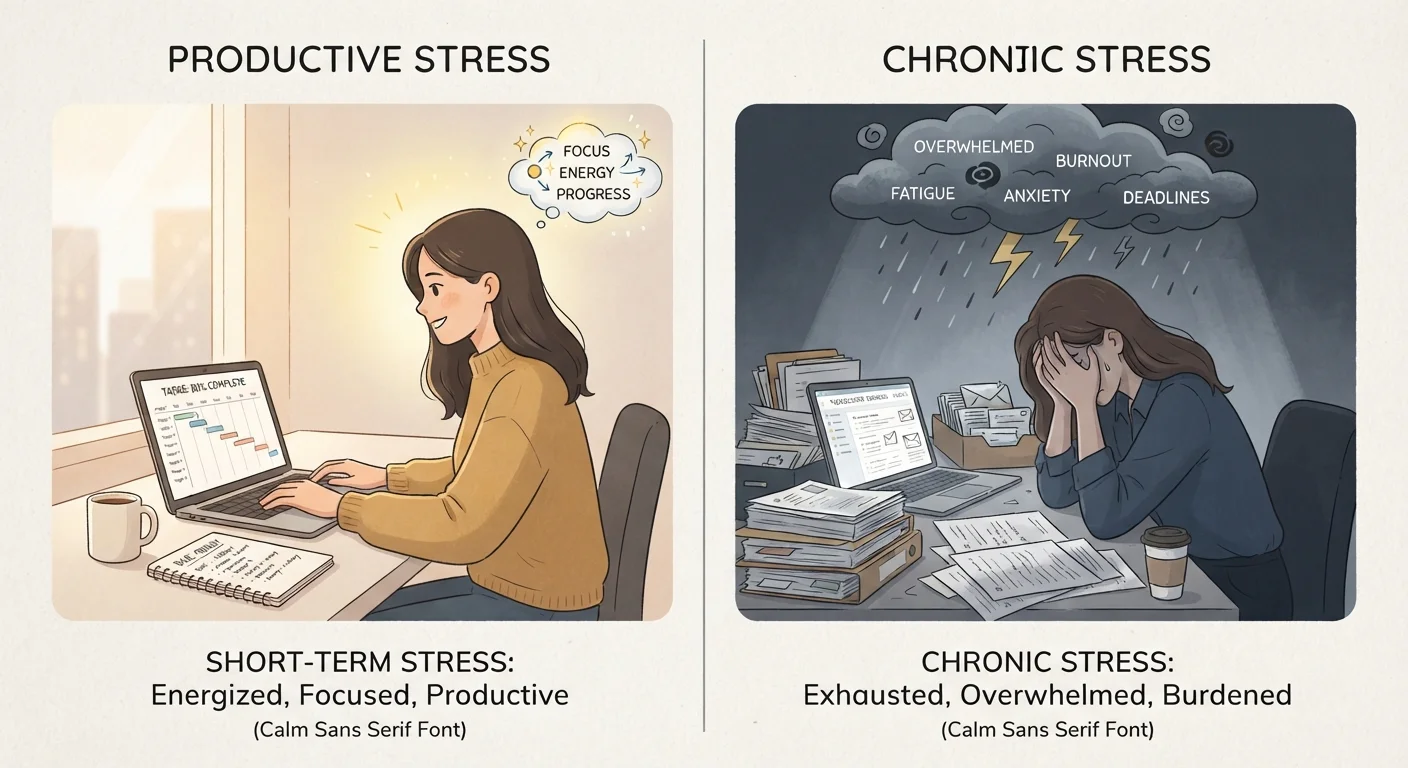
This belief is appealing because it requires no action - but it misunderstands how stress works over time. Acute stress, such as the pressure before a deadline, does resolve once the trigger passes. Chronic stress - the kind that stems from ongoing circumstances like financial strain, relationship conflict, or job demands - does not simply fade with time. The nervous system can become stuck in a state of heightened alert. Waiting it out without addressing the underlying load or building better coping capacity typically prolongs the problem. Our article on why stress won't just go away explores this in more depth.
Myth
Only anxious, sensitive, or high-strung people develop serious stress responses.
Fact
Stress affects people across all personality types, and outwardly calm individuals are not protected from its physiological impact.
Personality traits may influence how someone expresses stress or seeks help, but they do not determine whether the body mounts a stress response. Research on conditions like burnout - a state of chronic occupational stress - shows it occurs across personality types, professions, and perceived resilience levels. People who pride themselves on being calm or stoic may actually be less likely to recognize or report their stress, which can delay intervention. The absence of visible distress is not evidence of absence of stress.
Myth
If you can identify why you're stressed, managing it should be straightforward.
Fact
Understanding the source of stress and being able to effectively manage it are two entirely separate challenges.
Insight is a useful starting point, but it does not automatically translate into relief. Many people know exactly what is stressing them - a demanding job, caregiving responsibilities, financial pressure - yet still struggle to reduce it. This is because managing stress often requires changes that are difficult, resource-intensive, or only partially within a person's control. It may also require developing specific coping skills that most people were never formally taught. Knowing your stress triggers is valuable, but it is just one part of a larger process.
Myth
Stress only becomes a problem when it feels overwhelming - low-level, background stress is harmless.
Fact
Persistent low-level stress carries many of the same physiological risks as acute intense stress, sometimes more so because it goes unaddressed longer.
Background stress - the kind that hums along quietly beneath daily life - is easy to normalize and therefore easy to ignore. But the body's stress systems do not distinguish between dramatic acute stressors and steady, unrelenting low-grade ones. Sustained activation, even at a moderate level, keeps cortisol elevated and the nervous system primed. Over months and years this contributes to cumulative wear on the body and mind. For a deeper look at how different stress types compare, see not all stress is the same.
What Accurate Understanding of Stress Makes Possible
Correcting these misconceptions is not about catastrophizing stress or treating every difficult day as a crisis. It is about having a realistic, evidence-grounded understanding of what stress does to the body and mind when it goes unaddressed - and using that understanding as a reason to act thoughtfully rather than wait.
Chronic Stress Has Real Physical Consequences
Unrelenting stress is not a minor inconvenience - research consistently links it to elevated risk for cardiovascular disease, immune dysfunction, sleep disorders, and mental health conditions including anxiety and depression. The body's stress response was designed for short-term threats; when it stays activated over months or years, the cumulative toll becomes medically significant. If stress feels constant rather than occasional, speaking with a healthcare provider is worthwhile.
People who recognize stress accurately - who know it can be physical as well as emotional, that it affects calm people as readily as anxious ones, and that it does not resolve through willpower alone - are better positioned to respond to it constructively. That might mean adjusting circumstances where possible, developing coping strategies, talking to a trusted person, or consulting a healthcare professional. For a broader look at what drives stress in everyday life, the stress triggers hub is a useful starting point.
77%
Adults reporting physical symptoms of stress
According to American Psychological Association survey data, roughly three-quarters of U.S. adults report experiencing physical symptoms they associate with stress.
~33%
Adults with extreme stress levels
APA stress surveys have consistently found that around one in three U.S. adults report their stress levels as extreme - yet many do not seek support.
This article is for informational purposes only and does not constitute medical advice. If you are concerned about stress or its effects on your health, please speak with a qualified healthcare provider.