The Core Distinction: Mania vs. Hypomania
Both Bipolar I and Bipolar II involve episodes of elevated or expansive mood, but the type of elevated episode is what separates the two diagnoses. For a full explanation of what each episode type involves, see mania, hypomania, and depression explained.
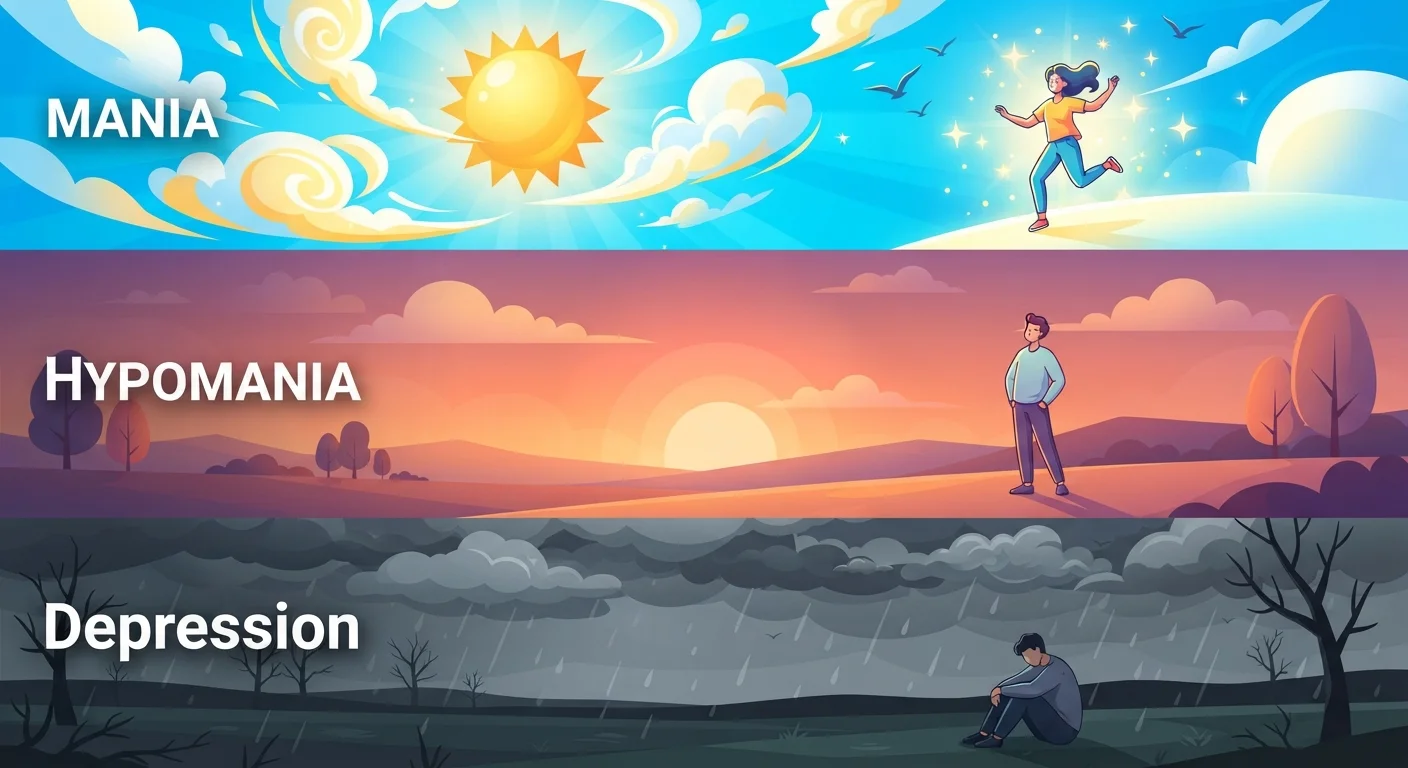
Mania - required for a Bipolar I diagnosis - is a distinct period of abnormally elevated, expansive, or irritable mood lasting at least seven days (or any duration if hospitalization is required). It causes marked impairment in daily functioning, and in some cases involves psychotic features such as delusions or hallucinations.
Hypomania - the hallmark of Bipolar II - shares many of the same qualities but is less severe. It lasts at least four consecutive days, does not cause the same level of functional impairment, and does not include psychosis. A person experiencing hypomania may feel unusually energetic, productive, or confident without their behavior reaching a point of crisis.
| Criterion | Bipolar I | Bipolar II |
|---|---|---|
| Defining episode type | Full mania (≥7 days) | Hypomania (≥4 days) |
| Psychosis possible | Yes, during manic episodes | No |
| Hospitalization risk | Higher during manic episodes | Lower for elevated episodes |
| Depressive episodes required for diagnosis | No (but common) | Yes |
| Functional impairment during highs | Marked impairment | Mild to moderate; may seem productive |
| Dominant mood pattern | Mania and/or depression | Depression with hypomanic episodes |
Depression in Both Types - and Why Bipolar II Is Not 'Milder'
Depressive episodes occur in both disorders and look similar in each: persistent low mood, loss of interest in activities, fatigue, changes in sleep or appetite, and difficulty concentrating. However, bipolar depressive episodes differ from unipolar depression in important ways that affect how each is understood clinically.
In Bipolar II, depressive episodes tend to be more frequent and longer-lasting than the hypomanic episodes. This means many people with Bipolar II spend a greater proportion of their time in depression - which is part of why the condition carries serious risks, including elevated rates of suicidal ideation. Describing Bipolar II as the 'milder' form is a clinically inaccurate characterization that can prevent people from getting appropriate care.
Bipolar II Carries Serious Risks
Bipolar II is sometimes assumed to be less serious than Bipolar I because hypomanic episodes don't cause the dramatic impairment that mania can. However, research consistently shows that people with Bipolar II spend more time in depressive episodes and may face significant challenges in functioning and quality of life. Suicidal ideation and attempts are a recognized concern in Bipolar II and should never be minimized. Anyone experiencing thoughts of self-harm should seek immediate support from a mental health professional or crisis service.
For a broader look at what living with either diagnosis can involve day to day, the article bipolar disorder explained provides helpful context.
Diagnosis, Overlap, and What Comes Next
Neither Bipolar I nor Bipolar II can be self-diagnosed. A qualified mental health professional - typically a psychiatrist or psychologist - evaluates the full history of mood episodes, their duration, severity, and functional impact before arriving at a diagnosis. Misdiagnosis is common, particularly when someone presents primarily with depression and the history of mania or hypomania goes unreported or unrecognized.
It's worth noting that a diagnosis of Bipolar I does not require a history of depressive episodes, though most people with Bipolar I do experience them. Bipolar II, by definition, requires both hypomanic and depressive episodes - hypomania alone is not sufficient.
~1%
Estimated US prevalence of Bipolar I
Epidemiological data from the National Institute of Mental Health estimates that approximately 1% of U.S. adults have Bipolar I disorder at some point in their lifetime.
~1.1%
Estimated US prevalence of Bipolar II
Bipolar II disorder affects an estimated 1.1% of U.S. adults, according to NIMH lifetime prevalence data - comparable in frequency to Bipolar I but distinct in its clinical course.
If you're curious about other patterns that fall within the broader bipolar spectrum, cyclothymia, rapid cycling, and mixed states covers conditions and features that don't fit neatly into Bipolar I or II. And for common misconceptions about both types, bipolar disorder myths is a useful read.
This article is for general informational purposes only and is not a substitute for professional medical advice, diagnosis, or treatment. If you have concerns about your mental health, please consult a qualified healthcare professional.