
Why Myths About Bipolar Disorder Matter
Misconceptions about bipolar disorder don't stay harmless. They shape how people interpret their own symptoms, how families respond to a diagnosis, and how long someone waits before seeking help. When a condition is widely misunderstood - reduced to a punchline about mood swings or romanticized as creative genius - real people in real distress can feel unseen, dismissed, or ashamed.
Bipolar disorder is a recognized medical condition involving distinct episodes of elevated or expansive mood (mania or hypomania) and depression. It is not a personality type, a character flaw, or a label applied loosely to people who feel things intensely. The following myth-and-fact pairs address the most persistent misunderstandings, drawing on established clinical knowledge to replace them with something more accurate and more useful.
For broader context on how mental health misconceptions form and why they're so durable, our overview of widely believed mental health myths is a helpful companion read.
Myth
Bipolar disorder is just having really intense mood swings - everyone goes through that sometimes.
Fact
Bipolar disorder involves distinct mood episodes - mania, hypomania, and depression - that are clinically different in duration, severity, and functional impact from ordinary emotional fluctuations.
Everyday moods shift in response to events and typically resolve within hours. Bipolar episodes, by contrast, last days to weeks, often arise without a clear external trigger, and significantly disrupt a person's ability to work, maintain relationships, or care for themselves. The DSM-5 (the standard diagnostic reference used by US clinicians) sets specific criteria for duration and symptom clusters precisely to distinguish these episodes from normal emotional variation. Calling it "just mood swings" minimizes a condition that carries real medical weight. For a fuller picture, see our introduction to bipolar disorder.
Myth
Mania just means feeling really good - it's actually the fun part of the condition.
Fact
Mania involves severely impaired judgment, reduced need for sleep, impulsivity, and behaviors that often cause lasting harm to relationships, finances, and health.
The elevated or euphoric feeling that can accompany early mania is frequently followed by grandiosity, racing thoughts, reckless decision-making, and sometimes psychosis - a break from reality. People in a manic episode may go days without sleep yet feel no fatigue, spend money they don't have, or make major life decisions they later regret. Far from enjoyable, full manic episodes are considered medical emergencies in their most severe forms. What a manic episode actually feels like from the inside explores the subjective reality that is often missed in casual portrayals.
Myth
People with bipolar disorder are constantly cycling between highs and lows.
Fact
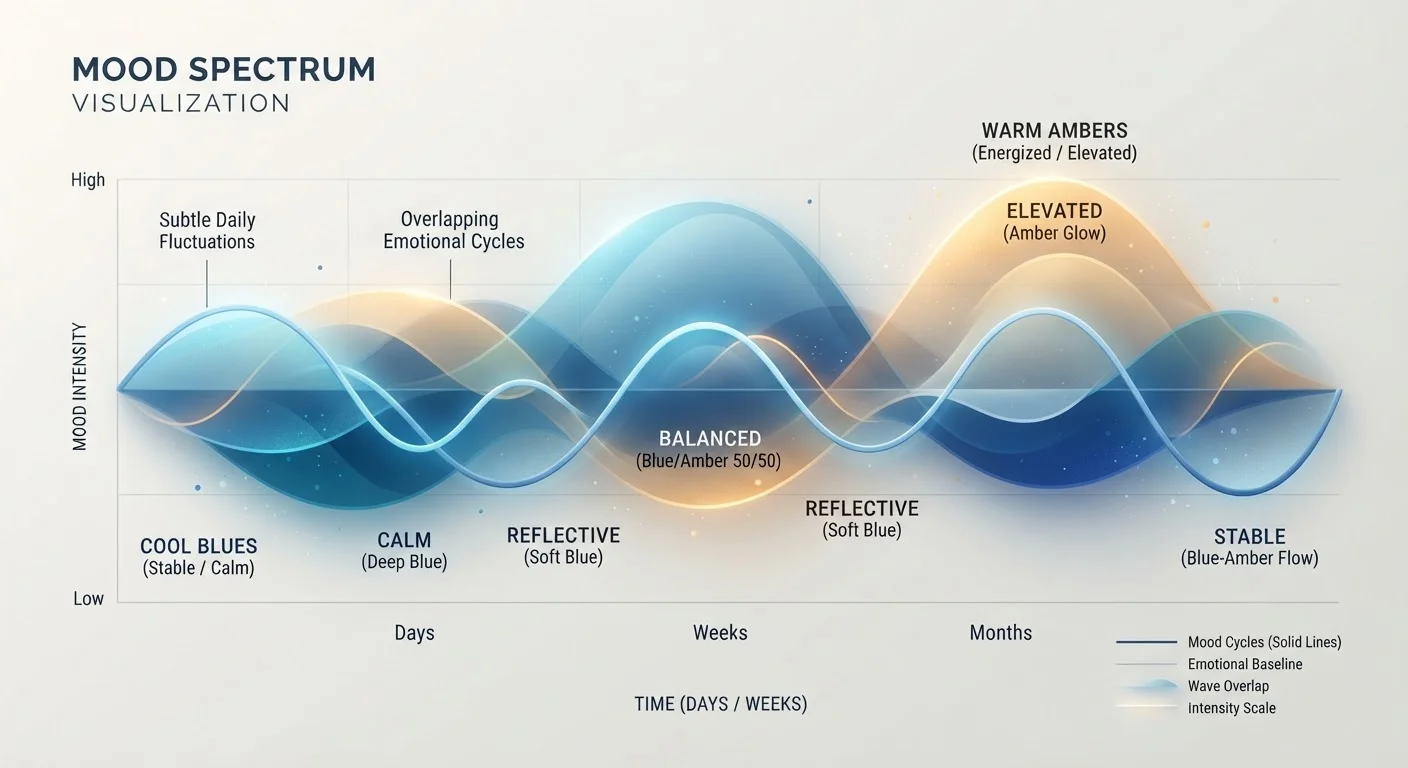
Most people with bipolar disorder spend significant time in stable mood states, and episode patterns vary considerably between individuals.
The popular image of someone flipping rapidly between extremes is largely inaccurate. While a subtype called rapid cycling does exist - defined as four or more distinct mood episodes within a year - it is not the norm. Many people experience months of stability between episodes. Depressive episodes tend to be more frequent and longer-lasting than manic ones, which means depression often carries a heavier burden than the condition's name might suggest. Understanding these patterns matters for treatment planning and realistic expectations. Cyclothymia, rapid cycling, and mixed states covers the full spectrum of episode patterns.
Myth
Bipolar I and bipolar II are basically the same diagnosis.
Fact
Bipolar I and II are distinct diagnoses with different defining features - primarily the presence or absence of full manic episodes.
Bipolar I requires at least one manic episode, which may or may not include depressive episodes. Bipolar II is characterized by hypomanic episodes - a less severe and shorter-lasting elevated state - plus at least one major depressive episode. Hypomania, by definition, does not reach the severity of full mania and does not cause the same level of functional impairment. This distinction shapes diagnosis, treatment, and risk assessment. Confusing the two can lead to inappropriate treatment approaches. Bipolar I vs. Bipolar II provides a clear side-by-side breakdown.
Myth
Bipolar disorder can't be treated - once you have it, medication just keeps you numb.
Fact
Bipolar disorder is a manageable condition. Many people achieve meaningful stability through a combination of medication, therapy, and lifestyle support.
Mood stabilizers, certain antipsychotics, and specific antidepressants (used carefully) can significantly reduce episode frequency and severity. Psychotherapy - particularly structured approaches like cognitive behavioral therapy and psychoeducation - helps people recognize warning signs and build coping strategies. Treatment is highly individualized; finding the right approach may take time and adjustment in partnership with a healthcare provider. The notion that medication simply dulls all feeling is a common fear that often deters people from seeking help, but it does not reflect how modern treatment is designed or experienced by most people.
Myth
Bipolar disorder is a rare condition that only affects a small, specific type of person.
Fact
Bipolar disorder affects roughly 2-3% of the US adult population and occurs across all genders, ages, ethnicities, and socioeconomic groups.
Population-based research consistently shows bipolar disorder is neither rare nor confined to any demographic profile. Symptoms often first emerge in late adolescence or early adulthood, though diagnosis can be delayed by years - sometimes because the condition is initially mistaken for depression, anxiety, or ADHD. This diagnostic delay is a significant public health concern. Understanding that bipolar disorder can affect anyone is an important step toward reducing stigma and encouraging earlier evaluation. For more on why misidentification is so common, see why bipolar disorder is frequently mistaken for other conditions.
What Accurate Understanding Can Change
Getting the facts right about bipolar disorder has practical consequences. Studies consistently show that the average delay between the onset of bipolar symptoms and an accurate diagnosis can stretch to several years. Myths play a role in that gap - both by discouraging individuals from describing their experiences to a doctor and by sometimes steering clinicians toward alternate explanations.
2-3%
US adults estimated to have bipolar disorder
Population-based epidemiological studies, including those referenced by the National Institute of Mental Health, consistently place the lifetime prevalence of bipolar disorder in this range.
6-10 years
Average delay from symptom onset to accurate diagnosis
Research published in peer-reviewed psychiatry journals has documented diagnostic delays of this length, often due to initial misidentification as unipolar depression or other conditions.
Up to 60%
Reduction in episode frequency with consistent treatment
Clinical evidence supports that sustained, guideline-concordant treatment - combining mood stabilizers with psychotherapy - can substantially reduce the frequency and severity of mood episodes.
If you've recognized something in these corrections that feels relevant to your own experience or someone close to you, the appropriate next step is a conversation with a qualified healthcare provider - not self-diagnosis. Bipolar disorder shares features with several other conditions, which makes professional evaluation essential. Our article on why bipolar disorder is frequently mistaken for other conditions explains why that process can be complex.
This Article Is Not a Diagnostic Tool
The information here is for general educational purposes only and is not a substitute for professional medical advice. If you or someone you know is experiencing significant mood episodes or related symptoms, please consult a qualified healthcare provider. Never adjust or stop medication based on information found online.
Accurate information is not a replacement for care - but it is often the first step toward getting it. Understanding what bipolar disorder actually is, and what it isn't, makes it easier to recognize when to ask for help and what kind of help to ask for.
This article is for informational purposes only and does not constitute medical advice. Always consult a qualified healthcare professional for questions about your health or a loved one's health.