
Why Panic Attacks Are So Widely Misunderstood
Panic attacks are among the most frightening experiences a person can have - and also among the most misunderstood. The combination of intense physical symptoms and sudden onset makes them easy to confuse with medical emergencies, and the stigma surrounding anxiety means many people receive unhelpful advice rather than accurate information.
Clearing up these misconceptions matters. When people understand what a panic attack actually is, they are better placed to respond to one without amplifying the fear. For broader context on how anxiety is often mischaracterized, see our piece on anxiety myths that delay help-seeking.
Below, we address the most common things people get wrong about panic attacks - and what the evidence actually shows.
Myth
A panic attack means something is medically wrong with your heart or lungs.
Fact
Panic attacks produce real physical symptoms but are not caused by - and do not damage - the heart or lungs.
Racing heart, chest tightness, shortness of breath, and dizziness are classic panic attack symptoms - and they are also symptoms of genuine cardiac or respiratory events. This overlap is why many people end up in emergency rooms convinced they are having a heart attack. However, once a medical cause has been ruled out, the symptoms are understood to result from the body's fight-or-flight response activating inappropriately. To understand the biology in detail, see what happens in your body during a panic attack. The physical sensations are real - but they are driven by the nervous system, not structural damage.
Myth
You can stop a panic attack just by calming down or thinking positively.
Fact
Panic attacks are driven by the autonomic nervous system, which operates largely outside conscious control.
Telling someone to "just calm down" during a panic attack misunderstands how the response works. When the brain perceives danger - real or not - the autonomic nervous system triggers a cascade of physical reactions: adrenaline surges, heart rate climbs, breathing quickens. This happens faster than rational thought can intervene. Techniques like slow diaphragmatic breathing can help shorten an attack by activating the parasympathetic nervous system (the body's brake system), but they require practice and do not work as a simple on/off switch. Willpower alone is not the mechanism.
Myth
Panic attacks always have an obvious trigger you should be able to identify.
Fact
Panic attacks frequently occur with no identifiable external trigger, including during sleep or rest.
Many people expect panic attacks to make sense - a crowded room, a stressful event, a frightening thought. But panic attacks can and do occur spontaneously: during sleep, while watching television, or in otherwise calm situations. These are sometimes called unexpected or uncued panic attacks, and they are recognized in clinical criteria (DSM-5) as a defining feature of panic disorder. The absence of an obvious trigger can itself become distressing, making people feel more vigilant and on guard. Identifying personal panic triggers is still a useful exercise, but it is important to know that some attacks have no clear external cause.
Myth
Having one panic attack means you have panic disorder.
Fact
A single panic attack and a diagnosis of panic disorder are two different things.
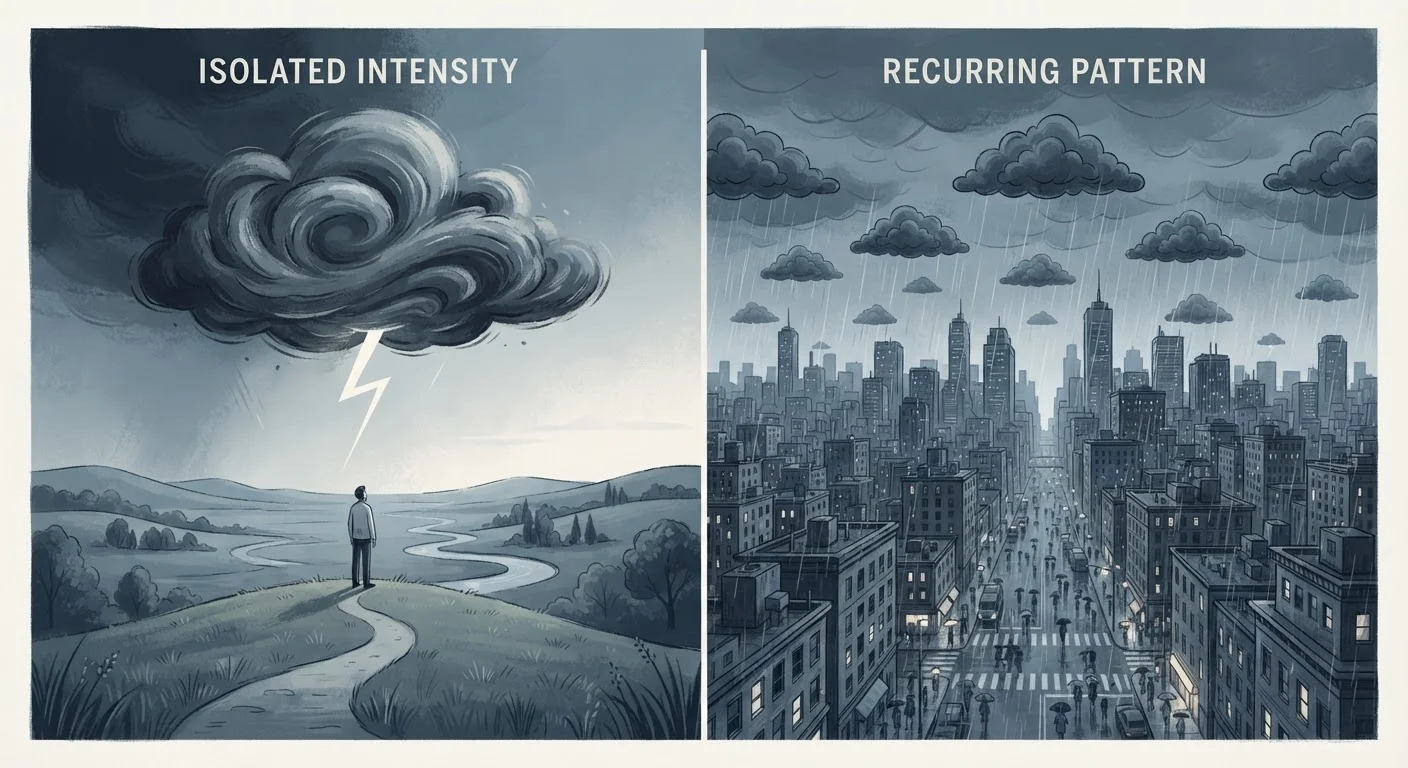
An estimated one in three adults will experience at least one panic attack in their lifetime, but most will never develop panic disorder. Panic disorder is diagnosed when attacks are recurrent and unexpected, and the person develops persistent worry about future attacks or changes their behavior significantly to avoid them. One episode - however terrifying - does not automatically lead to a diagnosis. Our article on the difference between panic attacks and panic disorder covers the clinical distinction in plain language.
Myth
Panic attacks are a sign of weakness or poor mental resilience.
Fact
Panic attacks can affect anyone regardless of personality, strength, or how well someone manages stress.
Panic attacks are not a character flaw or an indicator of emotional fragility. They occur across all demographics - in high-performing athletes, combat veterans, and people without any prior history of anxiety. The underlying mechanism is a misfiring of the threat-detection system, not a reflection of a person's ability to cope. Framing panic attacks as weakness discourages people from seeking help and adds unnecessary shame to an already distressing experience. Understanding panic as a physiological response - rather than a personal failing - is central to effective treatment.
What This Means for You
Panic attacks are well understood by mental health professionals, and there are evidence-based approaches - including cognitive behavioral therapy (CBT) and certain medications - that can meaningfully reduce their frequency and intensity. You do not have to white-knuckle your way through them or assume they are just part of life.
~11%
Adults who experience a panic attack annually
Research estimates roughly 11% of adults in the US experience a panic attack in any given year, according to epidemiological data reviewed by the National Institute of Mental Health.
2-3%
Adults with diagnosable panic disorder
While panic attacks are common, the National Institute of Mental Health estimates that only about 2-3% of U.S. adults meet criteria for panic disorder in a given year.
If you experience recurring panic attacks, it is worth speaking with a healthcare provider. A single episode is not automatically a sign of panic disorder - understanding the difference between panic attacks and panic disorder is an important first step. From there, identifying your personal panic triggers can help you build a clearer picture of your experience to share with a clinician.
This article is for informational purposes only and is not a substitute for professional medical or mental health advice. If you are concerned about panic attacks or anxiety, please consult a qualified healthcare provider.