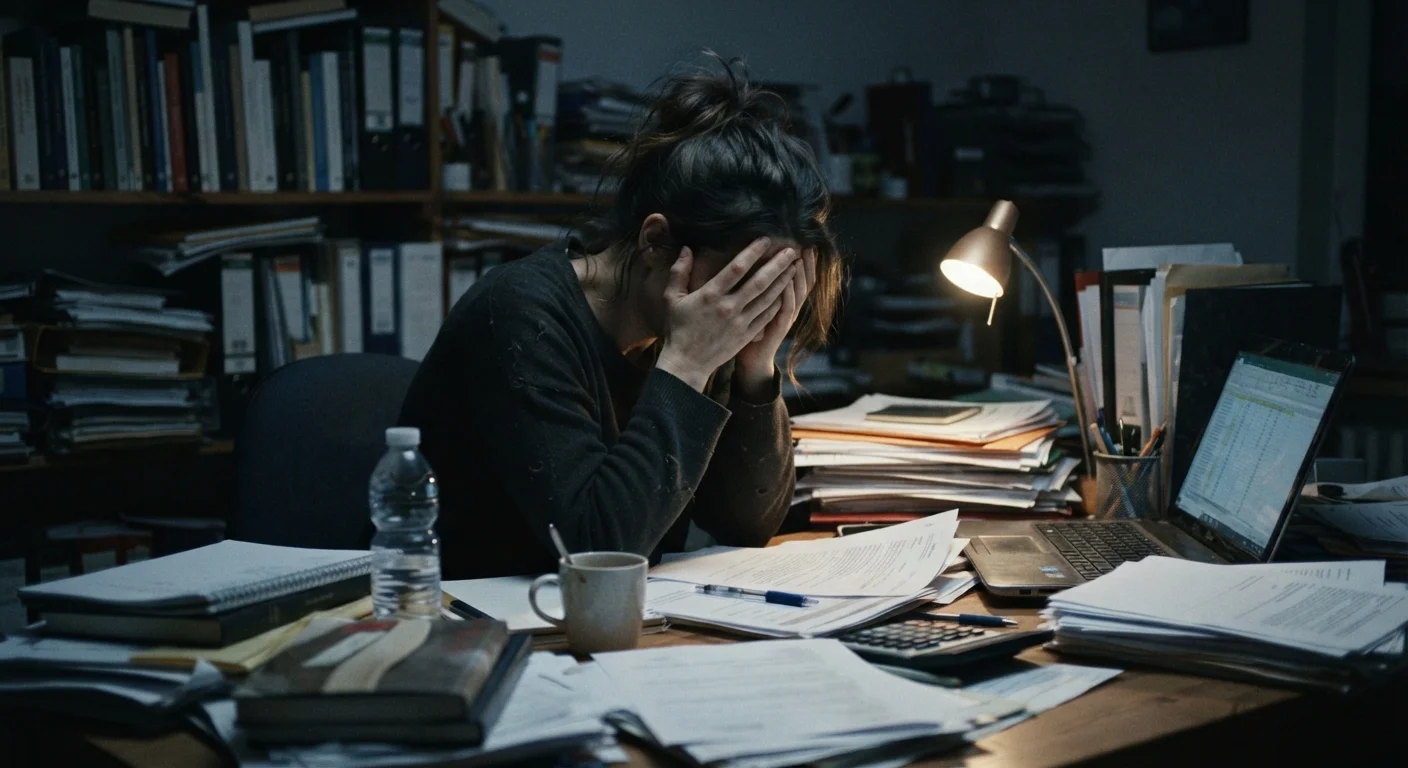

Why Burnout Gets Mistaken for Something Else
Burnout - a state of chronic workplace or caregiving stress that has not been successfully managed - doesn't usually announce itself clearly. Clinically, it is characterized by three overlapping experiences: emotional exhaustion, depersonalization (feeling detached from your work or the people around you), and a diminished sense of personal accomplishment. The World Health Organization classifies it as an occupational phenomenon, not simply a bad week.
The problem is that its earliest signs look almost identical to ordinary tiredness or run-of-the-mill stress. Most people talk themselves out of taking those signs seriously. Understanding how burnout differs from everyday stress is a key first step, because the longer burnout goes unaddressed, the harder it becomes to reverse. Below are the warning signals that are most commonly dismissed - and why they deserve your attention.
A useful rule of thumb
Ask yourself whether your symptoms feel like a temporary response to a heavy period - or whether they have become your baseline. Burnout tends to feel like a new normal rather than a passing rough patch. If you've stopped expecting to feel better, that shift in expectation is itself a signal worth bringing to a professional.
Warning Signs Worth Taking Seriously
Sunday dread that starts Friday evening
Anticipatory anxiety about the upcoming work week - sometimes called the "Sunday scaries" - is often brushed off as normal. But when that dread arrives earlier in the weekend, intensifies over time, or is accompanied by physical symptoms like a tight chest or disrupted sleep, it can signal that work has become genuinely overwhelming rather than temporarily demanding. The key distinction: occasional pre-Monday nerves ease once the week gets going. Burnout-related dread tends to persist regardless of how the day unfolds.
When dread starts Friday night and doesn't lift on Monday morning, something deeper may be driving it.
Struggling to care about things you used to care about
A gradual loss of engagement - feeling flat about projects, colleagues, or goals that once felt meaningful - is one of burnout's most telling early signs. It's frequently written off as boredom or maturity, but clinically this maps onto depersonalization: emotional distance that acts as a psychological buffer against chronic overwhelm. If you notice yourself going through the motions at work or at home without any sense of investment, that shift is worth paying attention to.
Emotional flatness toward things you once found meaningful is a hallmark feature of burnout, not just boredom.
Rest that doesn't restore you
Most people assume that feeling tired means they need more sleep. But burnout-related exhaustion is not fixed by rest alone. If you are sleeping adequately and still waking up feeling depleted - or if you feel just as drained after a holiday as before it - that is a meaningful signal. This kind of unrefreshing fatigue reflects a deeper depletion of emotional and cognitive resources, not simply a sleep deficit. It can also be confused with symptoms of other medical conditions, which is one reason a professional evaluation is valuable.
Waking up exhausted despite adequate sleep is one of burnout's most overlooked and misattributed signals.
Small tasks feel disproportionately hard
Burnout impairs executive function - the brain's ability to plan, prioritize, and initiate tasks. This shows up as difficulty starting simple tasks, being easily overwhelmed by minor decisions, or experiencing what some people describe as a kind of mental fog. People often attribute this to distraction or poor time management rather than recognizing it as a cognitive symptom. If you've noticed that replying to a routine email or making a basic decision feels strangely exhausting, that's worth noting. It contrasts with other quiet stress signals that also affect cognition but in different patterns.
Difficulty starting simple tasks is often a cognitive sign of burnout, not a personal failing or laziness.
Increased irritability with people you care about
When emotional reserves are depleted, the people who receive the least tolerance are often those closest to you - family members, close friends, or a partner. Snapping at minor things, feeling easily annoyed, or withdrawing from social interaction are common signs that your capacity to regulate emotions has been stretched too thin. This is frequently misidentified as a relationship problem or a personality issue, when it's actually a downstream effect of sustained depletion.
Irritability with loved ones at the end of the day is often a spillover effect of emotional depletion at work.
Physical symptoms with no clear medical cause
Burnout has real physical manifestations: frequent headaches, gastrointestinal discomfort, muscle tension, and a lowered immune response (getting sick more often than usual) are all documented correlates. Because these symptoms can have many causes, they are rarely linked to burnout without prompting. If you've had repeated physical complaints that haven't resolved with standard treatment and that cluster around periods of high stress, it's worth raising the possibility of burnout with your healthcare provider.
Recurring headaches, gut issues, and frequent illness can all be physical expressions of chronic burnout.
If several of these descriptions feel familiar, it may be worth reflecting more carefully on your overall pattern. You can use a structured symptom checklist to get a clearer picture of what you may be experiencing. It's also worth understanding that burnout builds gradually through identifiable stages - catching it earlier in that progression makes a real difference.
Burnout and depression can overlap
Some burnout symptoms - including persistent low mood, loss of interest, and fatigue - overlap with clinical depression. The two can also occur together. A healthcare or mental health professional can help clarify what you're experiencing and recommend appropriate support. Do not attempt to self-diagnose or self-treat either condition.
When to Seek Support
Burnout does not reliably improve with a weekend off or a vacation. If you recognize multiple warning signs - especially if they have persisted for several weeks or are affecting your relationships or physical health - speaking with a licensed mental health professional or your primary care provider is a reasonable and important next step. They can help distinguish burnout from conditions like depression, anxiety disorders, or thyroid problems that can produce similar symptoms.
Some people experiencing burnout also notice signs that overlap with physical and emotional stress symptoms more broadly, while others present in ways that aren't obvious to outside observers - a pattern sometimes called high-functioning burnout. Either way, the path forward starts with recognition.
This article is for informational purposes only and is not a substitute for professional medical or mental health advice. If you are concerned about your health or wellbeing, please consult a qualified healthcare professional.